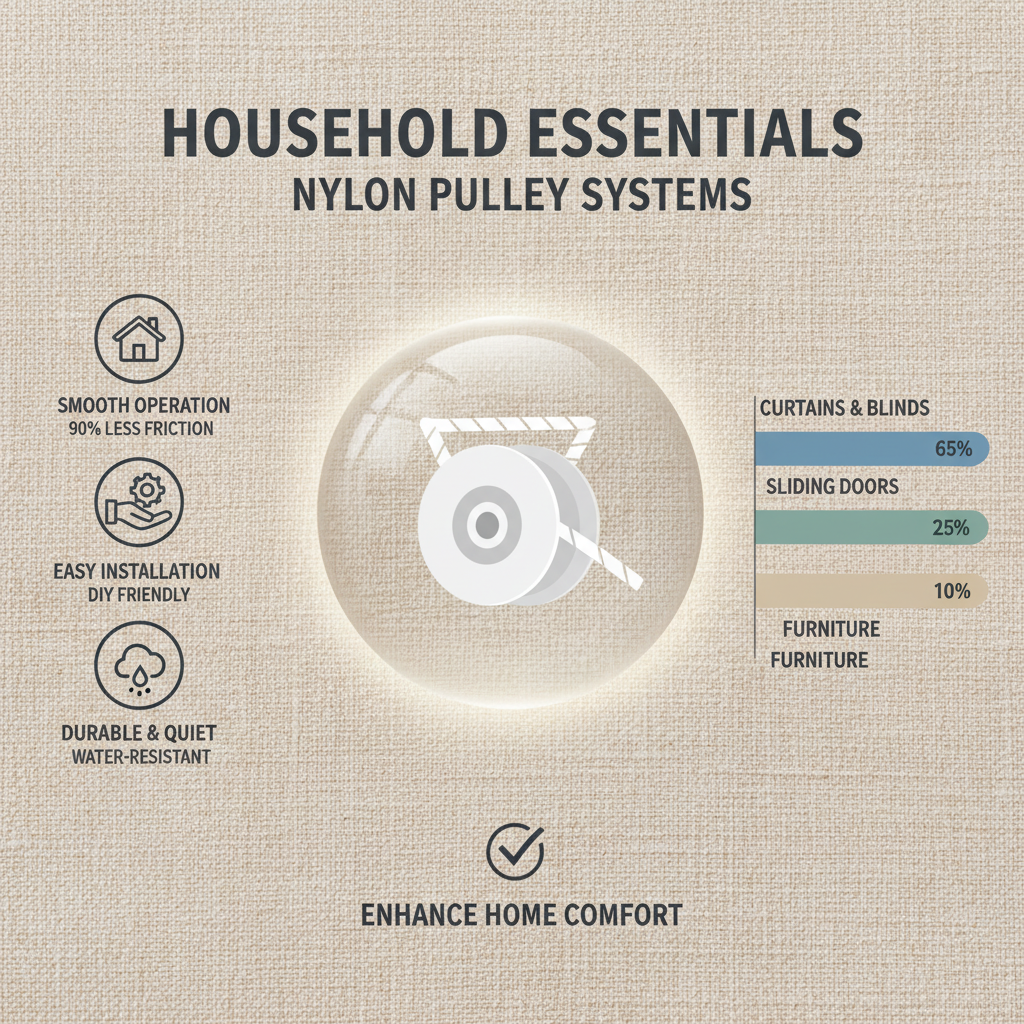
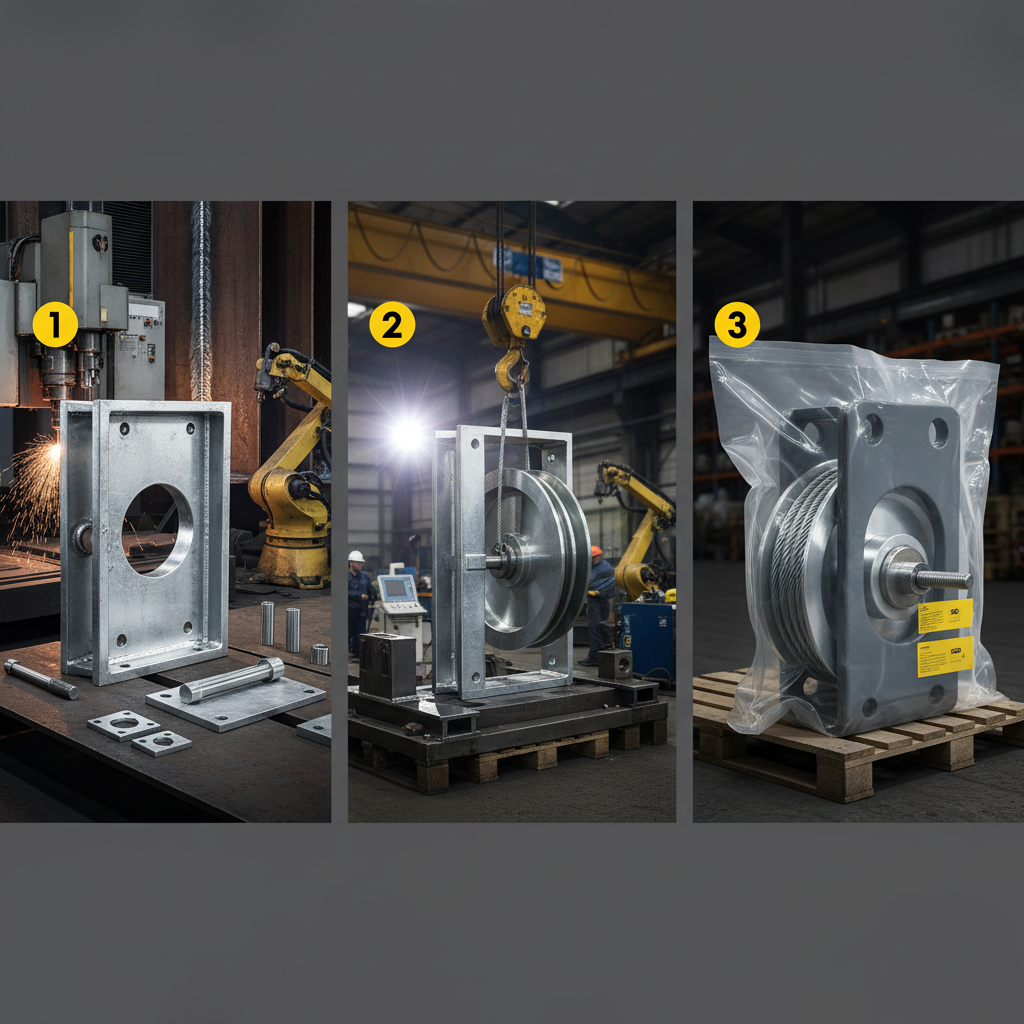
In the modern landscape of industrial hardware, the nylon pulley has emerged as a critical component for systems requiring a balance of strength, lightweight properties, and noise reduction. Whether utilized in heavy-duty sliding gates or intricate conveyor systems, these components minimize friction and extend the lifespan of mechanical assemblies. Understanding the nuances of material composition and engineering precision is essential for any business looking to optimize their operational efficiency.
Globally, the shift toward composite materials in the hardware sector is driven by the need for sustainability and reduced maintenance costs. A high-quality nylon pulley offers a compelling alternative to traditional steel or cast iron wheels, particularly in environments where corrosion is a constant threat. By integrating advanced polymers, manufacturers can now provide solutions that withstand significant loads while remaining virtually silent during operation.
Choosing the right pulley system is not merely a technical decision but a strategic one that impacts long-term ROI. From reducing the frequency of lubricant application to preventing wear on accompanying cables or belts, the implementation of a nylon pulley ensures that machinery runs smoother for longer. This guide explores the technical depths, global applications, and future trajectories of these indispensable hardware elements.
Global Industry Context of Nylon Pulleys
The global demand for high-performance polymers has surged as industries move away from heavy metals to reduce energy consumption and carbon footprints. According to ISO standards for mechanical components, the integration of nylon-based materials in pulley systems has significantly reduced the noise pollution associated with industrial automation and urban infrastructure. In regions with high humidity or coastal salt spray, traditional metal pulleys often fail due to rapid oxidation, making the corrosion-resistant nylon pulley a global standard for reliability.
The challenge currently facing the hardware industry is the balance between load-bearing capacity and material wear. While steel provides raw strength, it lacks the damping properties required for high-speed movements. This has led to a paradigm shift where engineered nylon is utilized to absorb shock and vibration, thereby protecting the rest of the mechanical chain from premature fatigue.
Defining the Modern Nylon Pulley
At its most basic level, a nylon pulley is a wheel with a grooved rim, designed to support the movement and change of direction of a cable, rope, or belt. Unlike metallic versions, these are crafted from Polyamide (PA), a synthetic thermoplastic that offers a unique combination of high mechanical strength and a low coefficient of friction. This means they can glide smoothly without the need for constant lubrication.
In the context of modern industry, these components serve as the "joints" of mechanical systems. Their connection to humanitarian needs is often seen in the development of low-cost, durable housing and infrastructure in emerging markets, where easy-to-install and low-maintenance hardware is paramount for rapid deployment and long-term stability.
Beyond simple rotation, a professional-grade nylon pulley is engineered to resist deformation under pressure. By utilizing glass-fiber reinforcement or specific molybdenum additives, manufacturers can tune the hardness and elasticity of the pulley to match the specific tension requirements of the application, whether it be a sliding door in a residential setting or a heavy-duty crane system.
Core Engineering Factors for Performance
Durability is the cornerstone of any nylon pulley. The material's inherent ability to resist abrasion means that the groove remains consistent over thousands of cycles, preventing the cable from slipping or fraying. This durability is critical in high-cycle environments where downtime for replacement is costly.
Cost efficiency is realized through the reduction of secondary processes. Because nylon can be precision-molded, the nylon pulley often requires less machining than a steel counterpart. Furthermore, the lack of a need for anti-rust coatings simplifies the supply chain and lowers the final acquisition cost for the end-user.
Weight scalability allows engineers to design larger systems without adding excessive dead weight. A nylon pulley is significantly lighter than a metal one, reducing the inertia of the system. This results in faster response times for automated machinery and lower energy requirements for the motors driving the system.
Comparative Efficiency and Scalability
When comparing different pulley materials, the efficiency of a nylon pulley becomes evident in its "smooth-start" capabilities. The slight elasticity of the nylon allows for a minute amount of give, which prevents the sudden jarring movements that often lead to belt snapping or motor strain in rigid metal systems.
Scalability is another key advantage, as these pulleys can be produced in vast quantities with extreme dimensional consistency. This allows for seamless replacement and modular upgrades across large-scale industrial plants without the need for custom fitting or onsite grinding.
Performance Ratings of Various Pulley Materials
Global Applications and Industrial Use Cases
In real-world contexts, the nylon pulley is widely deployed across diverse sectors. In the automotive industry, they are used in seat adjustment mechanisms and window regulators where silent operation is a luxury requirement. In agricultural zones, these pulleys are essential for irrigation systems and grain elevators, where they must resist organic acids and moisture without rusting.
Furthermore, in post-disaster relief operations, lightweight hardware like the nylon pulley is used in temporary shelter construction and emergency lifting rigs. Their ease of transport and lack of requirement for heavy tools for installation make them invaluable for NGOs and international aid organizations operating in remote industrial zones.
Long-Term Value and Sustainable Advantages
The long-term value of adopting a nylon pulley extends beyond simple cost savings. By reducing friction, these components lower the energy demand on motors, contributing to a overall reduction in electricity consumption. This aligns with global green energy initiatives and helps companies meet strict ESG (Environmental, Social, and Governance) targets.
From a safety perspective, the damping properties of nylon reduce the risk of catastrophic failure. While a steel pulley might snap or shear under a sudden shock load, a nylon component is more likely to deform slightly, providing a visual warning of stress before failure occurs. This enhances the safety and dignity of the workers operating the machinery.
Trust in hardware is built on reliability. When a system utilizing a nylon pulley operates without noise or vibration for years, it fosters confidence in the brand and the engineering. This reliability creates a cycle of innovation, where manufacturers can push the limits of speed and load knowing the pulleys can handle the stress.
Future Trends and Material Innovations
Looking forward, the evolution of the nylon pulley is tied to the rise of "Smart Materials." We are seeing the introduction of self-lubricating polymers that incorporate microscopic capsules of lubricant, which release as the pulley wears down. This virtually eliminates the need for manual maintenance in hard-to-reach areas of a factory.
Digital transformation is also playing a role through additive manufacturing (3D printing). High-performance nylon powders now allow for the creation of customized nylon pulley designs with internal lattice structures. This optimizes the strength-to-weight ratio even further, allowing for pulleys that are incredibly light yet capable of supporting industrial loads.
Sustainability is the final frontier. The industry is moving toward bio-based polyamides derived from castor oil rather than petroleum. These eco-friendly pulleys maintain the same mechanical properties as traditional nylon but significantly reduce the environmental impact of production, ensuring that the hardware of tomorrow is as green as it is strong.
Comparison of Nylon Pulley Material Variants and Performance
|
Material Grade
|
Wear Resistance (1-10)
|
Load Capacity (kg)
|
Primary Application
|
|
Standard Nylon 6
|
7
|
200-500
|
General Home Hardware
|
|
Glass-Filled Nylon
|
9
|
800-1200
|
Industrial Conveyors
|
|
MoS2 Filled Nylon
|
10
|
600-900
|
High-Speed Automation
|
|
Bio-Based Polyamide
|
8
|
400-700
|
Eco-Friendly Equipment
|
|
Reinforced Nylon 66
|
9
|
1000-1500
|
Heavy Duty Gates
|
|
Heat-Stabilized Nylon
|
8
|
500-800
|
Engine Compartments
|
FAQS
A nylon pulley is significantly quieter and does not require the frequent lubrication that steel pulleys do. Additionally, nylon's natural resistance to corrosion makes it ideal for outdoor gates exposed to rain and humidity, preventing the "stuttering" movement caused by rust on metal surfaces.
Yes, especially when reinforced with glass fibers or other additives. While a pure nylon pulley is for light to medium loads, glass-filled variants can support weights exceeding 1,000kg, making them suitable for industrial conveyor systems and heavy-duty lifting equipment.
Common signs of wear include a deepening of the pulley groove, an increase in noise during operation, or visible flattening of the wheel profile. Because nylon is a polymer, it will typically show surface deformation before a total failure, allowing for preemptive replacement.
Nylon is generally resistant to many oils, greases, and fuels. However, it can be sensitive to strong acids. For environments with high chemical exposure, we recommend specific grades of polyamide that are engineered for chemical stability to ensure the pulley maintains its structural integrity.
Extreme heat can cause standard nylon to soften, while extreme cold can make it brittle. However, heat-stabilized nylon pulleys are designed to operate in high-temperature environments (like automotive engines) without losing their shape or load-bearing capacity.
Most high-quality manufacturers provide international shipping and comply with ISO certifications. When importing, ensure you specify the material grade (e.g., Glass-Filled vs. Standard) and provide precise dimensions to avoid compatibility issues. Contacting a professional supplier like Aobang Metal is the best way to ensure quality control.
Conclusion
The nylon pulley represents a perfect intersection of material science and mechanical engineering. By offering a corrosion-resistant, noise-reducing, and lightweight alternative to traditional metals, it solves many of the age-old problems of industrial wear and maintenance. From its role in enhancing the efficiency of automated factories to its application in sustainable urban infrastructure, the value of high-grade nylon hardware is undeniable.
As we move toward a future of smarter, greener industry, the adoption of advanced composite pulleys will only accelerate. We suggest that businesses audit their current hardware and consider where transitioning to nylon could reduce downtime and energy costs. For those seeking premium, precision-engineered solutions, we invite you to explore our full range of products. Visit our website: www.aobangmetal.com