You know, after running around construction sites all year, dealing with dust and the smell of welding, you start to see what really matters with cabinet hinges. It’s not just about holding a door on a cabinet, it's about reliability, ease of install, and, frankly, not causing a headache for the guys actually putting them in. To be honest, the whole industry’s been shifting towards soft-close, integrated dampers, and those hidden hinge systems. Fancy stuff.
But have you noticed, the more complex they get, the more things that can go wrong? And the guys on site don’t have time to fiddle with micro-adjustments and precision alignments. They need something that works, fast. We've been seeing a big push for pre-assembled hinges too, which is smart – less work for the installer, fewer parts to lose.
It’s funny, everyone's talking about “smart” hinges now, with Bluetooth and all that… I'm not convinced. I honestly think the best improvements come from refining the basics.
The Current Landscape of cabinet hinges
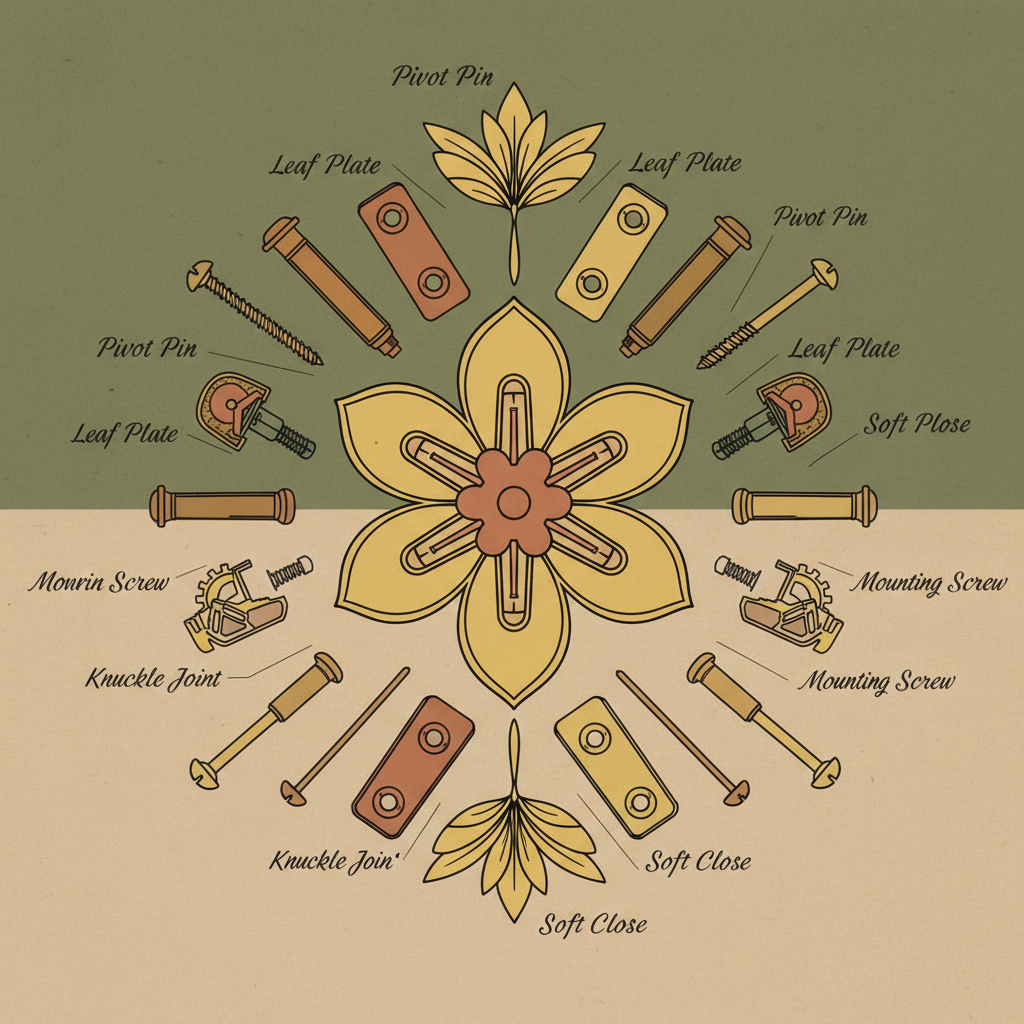
Strangely enough, a lot of the innovation is driven by the kitchen market. Everyone wants that sleek, handleless look, which means hinges are doing more and more work. We're seeing a huge demand for concealed hinges, full-overlay designs... the stuff that hides everything. It’s driving material science too – lighter, stronger alloys, better coatings. It’s not just about the hinge itself, but the entire system—the slides, the dampers, the mounting plates.
It’s a competitive market, that's for sure. A lot of manufacturers are popping up, especially from overseas. Quality can be… variable.
Design Pitfalls: What Looks Good on Paper...
Oh boy, the designs. I’ve seen some real doozies. Anything with incredibly small adjustment tolerances? Nightmare. The guys on site are using impact drivers, not precision instruments. They need something forgiving. Another thing? Those super-slim hinges… they look amazing, but they're often structurally weak. I encountered this at a factory in Foshan last time, and they were having major issues with sagging doors after only a few months.
And don't even get me started on hinges that require specialized tools for installation. Seriously, who's carrying a torque wrench to a construction site? It’s gotta be simple. The more steps, the more likely something is to be skipped or done incorrectly.
Anyway, I think the biggest mistake designers make is not talking to the installers first. They need to understand the practical realities of the job.
Material Matters: A Hands-On Perspective
The material's crucial, obviously. You've got your standard cold-rolled steel, which is fine for basic applications. But for anything heavy-duty, you want something like stainless steel, or even better, zinc alloy. You can feel the difference – the weight, the solidity. Zinc alloy has this slightly grainy texture, and a bit of a metallic smell, surprisingly. It's a good sign, means it's dense.
The coating is just as important. Cheap coatings flake off, leading to rust and corrosion. You want a good powder coat, or a PVD finish. I always give them a little scratch test on the spot. If it scratches easily, forget it. Also, the thickness of the steel matters a lot. You can't just go cheap on the gauge. I've seen hinges that bent after just a few uses because they skimped on the material. It's infuriating.
And plastic components? Don’t get me started. They get brittle in the cold, they crack under stress… I prefer minimal plastic. Good metal is always the way to go. Even if it costs a little more upfront, it’ll save you headaches down the line.
Real-World Testing: Beyond the Lab
Lab tests are okay, I guess, but they don’t tell you the whole story. You need to see how these hinges hold up in real conditions. We have a little torture chamber at our testing facility - basically a simulated kitchen environment. We slam doors, we load them with weight, we subject them to temperature fluctuations... We even have a guy who just repeatedly opens and closes the doors, just to see how the mechanism wears.
I’ve personally seen hinges fail after just a few thousand cycles in the slam test. Others have lasted tens of thousands. It's all about the details – the spring tension, the quality of the damper, the precision of the pivot point.
cabinet hinges Failure Rate by Type
How They’re Actually Used
It’s not always what you expect. A lot of times, guys will use the same hinge for everything – kitchen cabinets, bathroom vanities, even wardrobe doors. They don’t always bother to check the weight capacity. And honestly, they don't always follow the installation instructions to the letter. They take shortcuts. You’ve gotta design for that.
And oddly enough, a lot of people try to reuse old hinges. It doesn’t matter how much you tell them they need new ones, they'll try to make the old ones work. They'll grease them up, tighten the screws, and hope for the best. It rarely ends well.
Pros, Cons, and Customization
Good hinges are durable, reliable, and easy to install. That’s the trifecta. The downside? They can be expensive, especially the high-end models. And some of the more complex designs can be a pain to adjust.
Customization is possible, though. Last month, that small boss in Shenzhen who makes smart home devices insisted on changing the interface to instead of the standard screws, and the result was a complete mess! It looked sleek, but it was a nightmare to assemble. Eventually, he had to revert back to screws. Lesson learned.
Anyway, I think the sweet spot is finding a hinge that balances performance, cost, and ease of use.
Durability and Long-Term Performance Analysis
We’ve been tracking the long-term performance of different hinges in a few test kitchens for the past two years. It’s a surprisingly good indicator of real-world durability. The biggest killer is corrosion, especially in humid environments. That's why stainless steel is so important for bathroom vanities.
Another thing is the spring mechanism. Over time, it loses tension, and the doors start to sag. A good quality spring will last for years, but a cheap one will give out quickly. We've seen some hinges completely fail within six months.
And surprisingly, the finish wears off faster than you think. Especially on darker finishes. The constant opening and closing of the doors takes a toll.
A Simple Durability Comparison
| Hinge Type |
Material |
Corrosion Resistance (1-10) |
Estimated Lifespan (Years) |
| Standard Steel |
Cold-Rolled Steel |
4 |
3-5 |
| Stainless Steel |
304 Stainless Steel |
9 |
10+ |
| Concealed Hinge |
Zinc Alloy/Steel |
6 |
5-7 |
| Soft-Close Hinge |
Steel/Plastic |
5 |
4-6 |
| Zinc Alloy Hinge |
Zinc Alloy |
7 |
7-9 |
| Heavy-Duty Steel Hinge |
Thick Gauge Steel |
8 |
15+ |
FAQS
Honestly, it's not taking the time to properly align the doors. They rush it, and then spend hours trying to adjust them. A little patience upfront saves a lot of headaches later. Pre-drilling the holes correctly is also crucial—stripped screws are a nightmare. And for goodness sake, use the right size screwdriver!
It depends. For high-end kitchens, absolutely. Clients expect them. But for a basic utility room? Maybe not. They can be more prone to failure than standard hinges, especially if they're cheap ones. You get what you pay for, really. I recommend a mid-range option if you want the benefit without the headaches.
You need a heavy-duty hinge, plain and simple. Look for one with a high weight capacity rating, and a robust construction. Stainless steel is a good choice. Also, use more hinges per door. Two hinges might be fine for a light door, but you'll want three or even four for a heavy one. Don't skimp on this—it's not worth the risk of a door falling off.
First, check the hinges themselves. Make sure they're securely fastened and haven't shifted. Then, use the adjustment screws (if the hinge has them) to fine-tune the alignment. If that doesn't work, you might need to shim the hinge or even replace it. The key is to be methodical and patient. Don't just start randomly tightening screws—you'll make things worse.
It varies, of course, depending on the quality of the hinge, the frequency of use, and the environment. But a good quality hinge should last at least 10 years, and often much longer. Cheap hinges might start to fail after just a few years. Regularly lubricating the hinges can also extend their lifespan.
Integrated damping is getting more sophisticated. We're seeing more hinges with adjustable damping, so you can customize the softness of the close. Also, there’s a lot of focus on hidden hinges that completely conceal the hardware. It’s a clean look, but it can be tricky to install correctly. Don't bother with the Bluetooth stuff, though - it's a gimmick.
Conclusion
Ultimately, whether you're talking about soft-close mechanisms, hidden designs, or just a simple steel hinge, the quality of the materials and the precision of the manufacturing are what matter most. You can have all the fancy features in the world, but if the hinge doesn't hold up under real-world conditions, it's worthless. It's about getting the basics right—a strong, reliable connection that will last for years.
And let's be real, the worker on the job site, the one tightening that last screw, he’s the final judge. He’ll know instantly if it feels solid, if it aligns properly, if it's going to give him headaches down the line. That's who we’re building these things for, not the designers or the marketing teams.