up2
wx
ewm
tel2
email2
up
0%

Table of Contents

You know, these days everyone's talking about smarter, more reliable power transmission. It's not just about bigger motors anymore, it's about efficiency, durability – things that actually matter when you're out in the field. Heavy duty pulley systems are at the heart of it all, really. We've seen a lot of changes, a lot of 'improvements'… some good, some not so much. To be honest, I’ve seen systems fail in spectacular fashion.

Have you noticed how everyone’s obsessed with lighter materials? Carbon fiber, composites… sounds great on paper. But try getting a welder to work with that stuff on a dusty construction site. Nightmare. It’s all about balance, right? Strength and practicality. We need things that can take a beating and still keep spinning. That’s where a well-designed heavy duty pulley really shines.

And the demand is up. Everything from mining operations in Australia to wind farms popping up everywhere… they all need robust, dependable power transmission. It's not a glamorous job, designing these things, but someone's gotta do it.
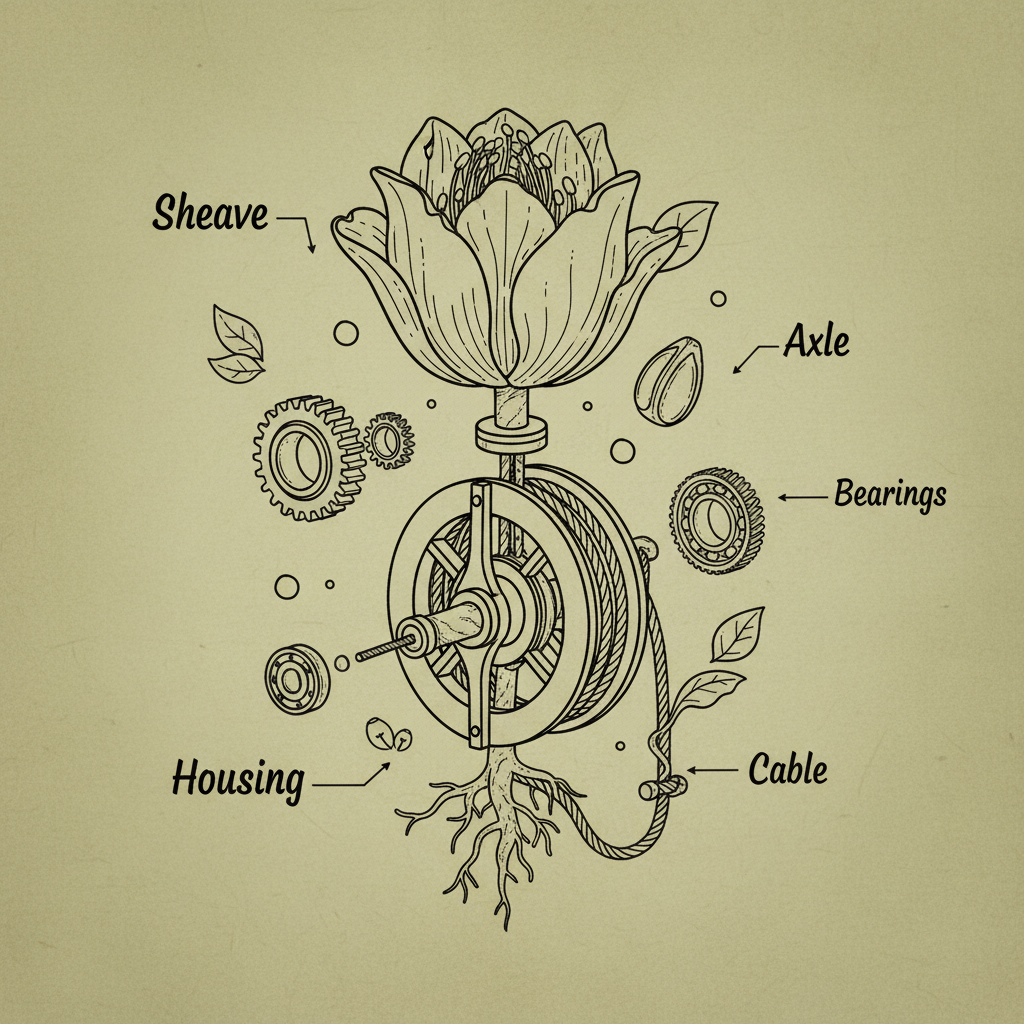

Optimizing Power Transmission with Robust Heavy Duty Pulley Systems

The Current Landscape of Heavy Duty Pulley Systems

Optimizing Power Transmission with Robust Heavy Duty Pulley Systems

Strangely enough, the biggest trend I’ve seen lately isn’t about inventing something entirely new. It’s about refining the basics. People are finally realizing that a well-engineered, cast iron heavy duty pulley, properly maintained, can outlast a lot of these fancy composites. Don’t get me wrong, I’m not against innovation, but there’s something to be said for reliability.

You’re seeing more demand for systems that can handle higher torque and speeds, especially with the rise of variable frequency drives (VFDs). Everyone wants to squeeze every last bit of efficiency out of their operations, and that puts a lot of stress on the transmission components. We've got to design for that.

Common Design Pitfalls and What to Avoid

I encountered this at a cement factory in Vietnam last time. They'd switched to a 'high-efficiency' pulley system that was, frankly, a disaster. The problem? Insufficient lubrication points. Dirt and grit got in, things seized up, and they were down for a week. Simple stuff, really. But overlooked. It’s always the simple stuff.

Another common mistake is underestimating the dynamic load. Engineers sometimes get too caught up in the static calculations. Real-world applications are rarely static. There’s always shock loading, vibration, and wear and tear to account for. You need to build in a safety factor, a significant safety factor.

And don't even get me started on cheap bearings. That’s just asking for trouble.

Materials Matter: A Hands-On Perspective

Now, materials. Cast iron is still king for a lot of applications. It’s got the mass, the damping characteristics, and the machinability. You can feel the quality, you can smell the oil on it when you’re greasing it up… it's a good feeling. It's solid.

But you also need to consider the environment. If you’re in a corrosive environment, like a desalination plant, you'll need to look at stainless steel or coated cast iron. And for high-speed applications, you might need to consider ductile iron for its higher tensile strength and shock resistance. It smells different too, a bit cleaner, less… earthy.

We’re starting to see more demand for polymers in certain applications, particularly for smaller pulleys where weight is a concern. But again, it’s about finding the right balance. You don't want something that’s going to degrade under UV exposure or become brittle in cold temperatures. It's all about knowing your environment, knowing your load, and picking the right material.

Real-World Testing and Performance Evaluation

Forget the lab tests. They’re useful for initial validation, sure, but the real test is out in the field. I want to see these pulleys running under actual operating conditions, with real loads, real vibrations, and real dirt. That’s when you find out what they’re really made of.

We do a lot of field testing with our clients. We’ll install a new pulley system, monitor its performance for several months, and collect data on vibration, temperature, and wear. It's not glamorous work, standing in a dusty factory for hours, but it gives us invaluable insights.

Heavy Duty Pulley Performance Metrics


How Users Actually Employ Heavy Duty Pulleys

This is where things get interesting. You design a system for a specific application, but the users always find a way to… adapt it. I’ve seen pulleys used as makeshift flywheels, as counterweights, even as makeshift doorstops. It's amazing, and frustrating, all at the same time.

Anyway, I think a lot of users underestimate the importance of proper alignment. Misalignment puts a lot of stress on the bearings and can lead to premature failure. It's a simple thing to fix, but it's often overlooked.

Advantages and Limitations: The Honest Truth

The advantages are pretty straightforward: reliability, durability, and efficiency. A good heavy duty pulley system will run for years with minimal maintenance. But there are limitations. They can be heavy, bulky, and expensive.

And let's be honest, they're not the most aesthetically pleasing components. But who cares about aesthetics when you're trying to keep a factory running? Function over form, always.

They also require regular inspection and lubrication. Neglect that, and you're asking for trouble.

Customization Options and a Recent Case Study

We get a lot of requests for customization. Last month, that small boss in Shenzhen who makes smart home devices insisted on changing the interface to . He wanted a 'sleek, modern look'. The result? It took three times as long to install, and the technician nearly threw the pulley across the room. Sometimes, less is more.

But we can do things like change the bore size, add keyways, or modify the flange. We recently had a customer who needed a pulley with a specific coating to resist corrosion in a saltwater environment. We were able to deliver a custom solution that met their exact requirements.

We also do a lot of work with different mounting configurations. It’s all about tailoring the system to the specific application.

Heavy Duty Pulley Customization Details

Customization Type Complexity Level Typical Lead Time Estimated Cost Impact
Bore Size Adjustment Low 1-2 weeks Minimal
Keyway Addition Medium 2-3 weeks Moderate
Surface Coating Application Medium 3-4 weeks Moderate to High
Flange Modification High 4-6 weeks High
Material Change (e.g., Stainless Steel) Very High 6+ weeks Very High
Custom Tooth Profile Design Very High 8+ weeks Very High

FAQS

What’s the biggest mistake people make when selecting a heavy duty pulley?

Honestly? Underestimating the load. They look at the theoretical calculations and forget about shock loads, vibrations, and the inevitable wear and tear. Always over-engineer! It's cheaper in the long run than dealing with a catastrophic failure. And always, always factor in a generous safety margin. I've seen too many systems pushed right to their limit. That's a recipe for disaster.

How often should I lubricate a heavy duty pulley?

It depends on the application, but generally, more often than you think. Check your manufacturer’s recommendations, of course, but as a rule of thumb, if it’s a critical application, you should be lubricating at least once a month. In dusty or harsh environments, you might need to do it weekly. A little grease goes a long way in preventing wear and extending the life of the system. It’s boring work, I know, but it’s essential.

Can heavy duty pulleys be used in reverse?

That’s a tricky one. Technically, yes, some can, but it's generally not recommended. The design isn't optimized for reverse rotation, and you can experience increased wear and tear on the bearings and teeth. It really depends on the specific pulley and the application. If you're considering running it in reverse, talk to the manufacturer first. Don't just assume it'll work.

What’s the difference between a V-belt pulley and a timing pulley?

Simple: timing pulleys are designed for precise, synchronous power transmission. They have teeth that mesh directly with the belt, ensuring no slippage. V-belt pulleys, on the other hand, rely on friction between the belt and the pulley. They're more tolerant of misalignment, but they're also more prone to slippage. So, if you need precise timing, go with a timing pulley. Otherwise, a V-belt pulley will usually do the trick.

How do I know when a heavy duty pulley needs to be replaced?

Look for cracks, excessive wear on the teeth, or any signs of deformation. Listen for unusual noises, like grinding or squealing. And check the bearings for play. If you're seeing any of these signs, it's time to replace the pulley. Don't wait until it fails completely, or you could end up with a much bigger problem on your hands.

Are there any new materials being used in heavy duty pulley manufacturing?

Yeah, we’re seeing some interesting stuff with high-strength alloys and advanced polymers. They're trying to get the weight down without sacrificing durability. But honestly, a lot of it is still in the testing phase. I'm a bit skeptical. I've learned to trust the tried-and-true materials. Cast iron and good quality steel still reign supreme in most applications. It's not always about the newest thing, it's about what works.

Conclusion

So, where does all this leave us? Heavy duty pulley systems aren’t glamorous, but they’re absolutely critical to keeping the world turning. From manufacturing plants to wind farms, these components are the unsung heroes of modern industry. Understanding the materials, the design principles, and the real-world applications is essential for anyone involved in power transmission.

Ultimately, whether this thing works or not, the worker will know the moment he tightens the screw. Don’t overcomplicate things. Focus on quality, reliability, and proper maintenance. And don’t be afraid to get your hands dirty. You can find a range of solutions, including custom options, at Aobang Metal.

Michael Davis

Michael Davis

Michael Davis is Aobang’s Quality Control Supervisor, ensuring all products meet stringent international standards like EN71 and ASTM. He has a meticulous attention to detail and a deep understanding of quality assurance protocols. Michael joined Aobang in 2012 and has played a critical role in maintaining our BSCI certification. He
Previous Optimizing Industrial Performance with Durable and Reliable Belt Pulley Systems
Next Navigating Modern Construction Trends with Iron Art Company Expertise