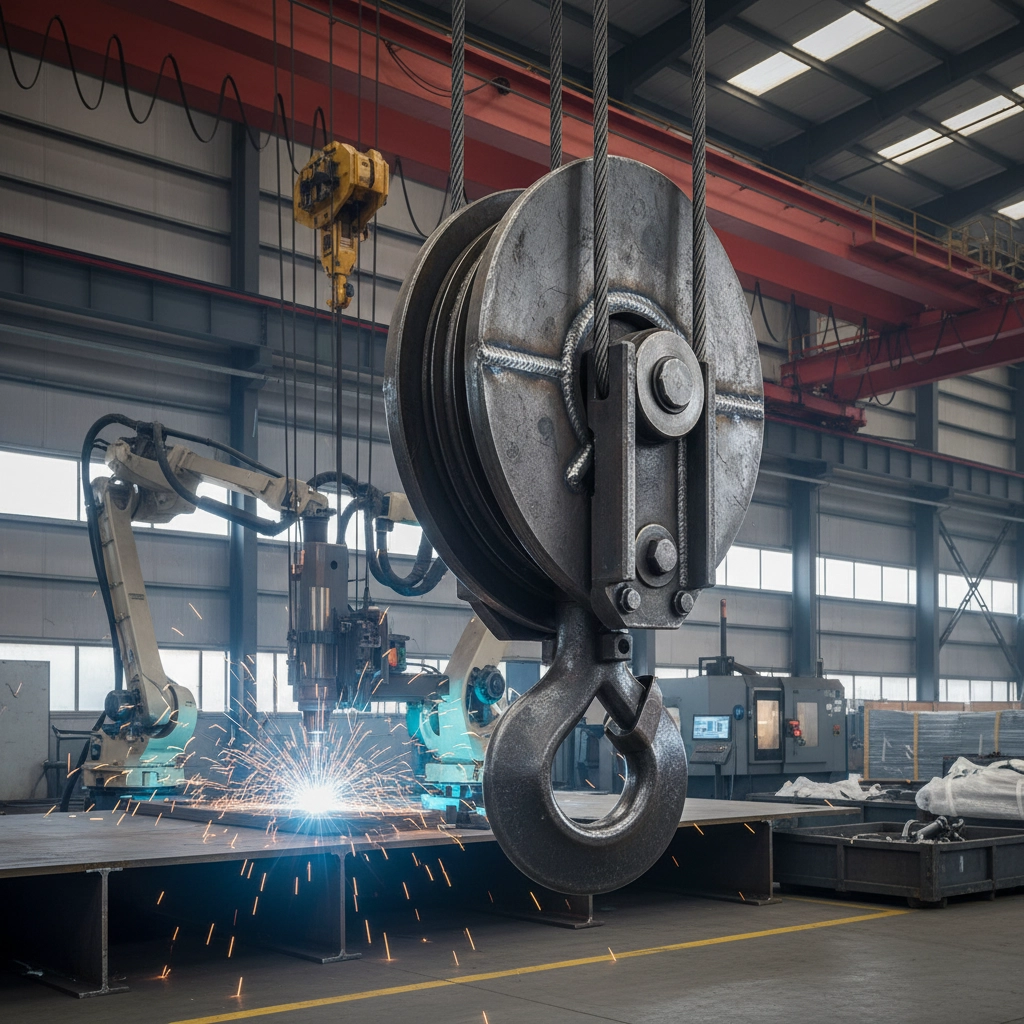


Selecting a reliable steel pulley supplier is a critical decision for engineers and procurement managers within the metal products manufacturing sector. Because pulleys serve as the primary mechanism for power transmission and tensioning, the structural integrity of the steel used directly impacts the operational uptime and safety of industrial machinery.
The primary challenge for buyers is often balancing the requirement for high load-bearing capacity with the need for corrosion resistance, especially in harsh environments. Without precise specifications and quality control from the manufacturer, premature wear or catastrophic failure can lead to significant production downtime and increased maintenance costs.
This guide provides a comprehensive framework for evaluating supplier capabilities, understanding technical material requirements, and establishing a selection matrix to ensure that the pulleys procured meet the rigorous demands of modern hardware and machinery applications.

Essential Material Standards for Industrial Pulleys

The foundation of any high-performance pulley is the grade of steel employed during fabrication. In the hardware and building materials industry, manufacturers typically choose between carbon steel for general-purpose applications and alloy steel for high-stress environments. The choice affects not only the tensile strength but also the wear rate of the pulley groove over thousands of cycles.
When engaging with a steel pulley supplier, it is necessary to verify that the materials adhere to international export standards. For instance, utilizing precision-engineered steel ensures that the dimensional tolerances remain consistent, preventing belt slippage and reducing vibrational energy loss during high-speed operation.
Matching Pulley Configurations to Load Requirements
Configuration determines how efficiently a pulley transfers torque. Depending on the application—whether it is a standard pulley or a more specialized triangular trapezoidal pulley—the geometry of the groove must match the belt profile exactly. An incorrect fit leads to accelerated friction and thermal degradation of the belt.
For heavy-duty industrial use, the hub design and bore precision are as important as the outer diameter. Suppliers capable of providing customized ODM solutions can optimize the pulley's weight-to-strength ratio, ensuring that the component can handle peak torque loads without deformation while minimizing the rotational inertia of the system.
Surface Treatment and Corrosion Protection Strategies
Steel is inherently susceptible to oxidation, which is particularly problematic in moisture-heavy or chemical-rich environments. To counter this, professional suppliers apply various surface treatments. Zinc plating and powder coating are common, but for extreme conditions, advanced anti-rust formulations are required to maintain the smoothness of the pulley surface.
Effective corrosion protection does more than just prevent rust; it reduces the coefficient of friction. A smooth, treated surface prevents the "grabbing" effect that can occur when oxidized steel interacts with a synthetic belt, thereby extending the service life of both the pulley and the transmission belt.
Relative Performance Index by Steel Grade
Different steel grades offer varying levels of durability and cost-efficiency. The following conceptual framework illustrates the relative performance across five key dimensions: Load Capacity, Wear Resistance, Corrosion Stability, Machinability, and Cost-Effectiveness. This normalized index helps buyers determine which material aligns with their specific operational priority.
As shown in the illustrative data, while high-alloy steels maximize load and wear resistance, they often sacrifice machinability and cost. Conversely, standard carbon steel remains the most viable option for low-to-medium stress applications where budget constraints are a primary driver.
Evaluating Supplier Quality Management Systems
A supplier's technical capability is only as reliable as their quality control (QC) process. When vetting a steel pulley supplier, buyers should look for evidence of systemic testing, such as hardness testing, dimensional inspection via CMM, and surface roughness analysis. Integrated production facilities generally offer better traceability than those relying on fragmented outsourcing.
Experience in global exports is another key indicator of reliability. A manufacturer that has successfully supplied products to over 50 countries typically possesses a deeper understanding of varying international standards and the logistical requirements necessary to ensure timely delivery without compromising product integrity.
Common Procurement Risks and Mitigations
One of the most frequent risks in pulley procurement is "specification drift," where the delivered product deviates slightly from the requested tolerances. This can cause alignment issues that lead to premature belt wear. To mitigate this, buyers should insist on a detailed technical drawing approval process and request sample validation before mass production.
Another risk involves the mismatch between the pulley's hardness and the belt's material. If a pulley is too hard and the groove finish is too rough, it can act as an abrasive, shredding the belt. Selecting a supplier that offers a comprehensive range of products—from pulleys to specialized hinges and hanging wheels—often indicates a broader expertise in metal-to-metal interaction.
Strategic Decision Matrix for Supplier Selection
To simplify the selection process, the following matrix compares three common sourcing approaches. Whether you require a standard off-the-shelf component or a fully customized engineered solution, matching the sourcing model to the application is key to optimizing the total cost of ownership.
| Sourcing Model | Best Use Case | Technical Flexibility | Lead Time Risk |
|---|---|---|---|
| Standard Catalog | General Maintenance | Low | Minimal |
| OEM Customization | Specific Machinery | Medium | Moderate |
| ODM Development | New Product Design | High | Significant |
| Bulk Commodity | Low-Cost Projects | Low | Variable |
| Precision Engineered | High-Speed Systems | High | Moderate |
| Specialized Alloy | Corrosive Environments | Medium | Significant |
Ultimately, the decision should be driven by the criticality of the pulley in the overall system. For mission-critical components, the higher investment in ODM or precision-engineered sourcing is justified by the reduction in potential downtime and failure risks.
Frequently Asked Questions
Verify material quality by requesting Material Test Reports (MTRs) or Mill Certificates that specify the chemical composition and mechanical properties of the steel used.
A standard pulley typically has a V-shaped or flat groove, while a triangular trapezoidal pulley features a specific geometry designed for belts that require a combination of high grip and specific angular distribution.
For high-humidity areas, hot-dip galvanizing or specialized epoxy powder coatings are recommended over simple zinc plating to provide a thicker, more durable barrier against oxidation.
Yes, most professional suppliers offer OEM and ODM services, allowing you to specify bore diameter, outer diameter, and groove profile according to your engineering drawings.
Inspection intervals depend on load and speed, but a quarterly check for groove wear, misalignment, and surface corrosion is generally recommended for industrial applications.
High-quality pulleys are characterized by precise concentricity, a smooth groove finish without machining marks, and a uniform surface coating free of pinholes or bubbles.
Conclusion
Finding the right steel pulley supplier requires a balance between technical specification verification and supplier capability assessment. By focusing on material standards, surface protection, and a structured selection matrix, procurement managers can significantly reduce the risk of mechanical failure and optimize the lifespan of their industrial equipment.
For those seeking precision-engineered solutions in the hardware and metal products sector, detailed product specifications and customization options can be reviewed at www.aobangmetal.com to ensure alignment with specific operational needs.