




Introduction to Advanced wrought iron panels in B2B Applications
In the realm of architectural and industrial design, the demand for durable, aesthetically pleasing, and highly functional materials is paramount. Wrought iron panels stand as a testament to this demand, offering unparalleled strength, intricate design versatility, and longevity. Unlike cast iron, wrought iron, meaning "worked iron," is a ferrous alloy with a very low carbon content, typically less than 0.08%, which gives it unique malleability and resistance to fatigue and corrosion. This characteristic makes it an ideal material for a wide array of B2B applications, from robust security fencing to decorative architectural elements like wrought iron rosettes and custom balustrades. This article delves into the technical specifications, manufacturing processes, application scenarios, and strategic advantages of integrating these panels into modern industrial and commercial projects.
The selection of the right material is a critical decision for engineers, architects, and procurement specialists. Factors such as material integrity, ease of customization, installation efficiency, and long-term maintenance costs are always at the forefront. Wrought iron panels excel in these areas, providing a robust solution that combines historical craftsmanship with contemporary engineering precision. Their inherent strength and ability to be forged into complex shapes make them suitable for both protective and decorative functions, ensuring structural integrity while enhancing visual appeal in diverse environments, from urban infrastructure to high-security facilities.
Industry Trends and Market Dynamics for Iron Panels
The market for iron panels, particularly those crafted from wrought iron, is experiencing steady growth driven by several key trends. There's a notable resurgence in demand for bespoke, artisanal metalwork in high-end construction and restoration projects. Simultaneously, the need for enhanced security infrastructure in commercial and public sectors continues to drive demand for durable rod iron fence panels. Industry analysts predict a compound annual growth rate (CAGR) of approximately 4.5% for the global ornamental ironwork market from 2023 to 2028, primarily fueled by urbanization, increasing infrastructure development, and a growing appreciation for classic yet resilient materials.
Key market drivers include:
- Increased investment in public infrastructure and commercial real estate.
- Aesthetic preferences shifting towards classic, durable, and customizable building materials.
- Rising security concerns necessitating robust perimeter and access control solutions.
- Technological advancements in forging and finishing techniques, allowing for greater design complexity and corrosion resistance.
Sustainability also plays a growing role, with clients increasingly seeking materials known for their long service life and recyclability. Wrought iron, with its inherent durability and minimal maintenance requirements over decades, aligns perfectly with these eco-conscious construction paradigms.
Manufacturing Process Flow of Wrought Iron Panels
The production of high-quality wrought iron panels is a meticulous process that combines traditional forging techniques with modern precision engineering. The objective is to achieve superior material properties, intricate designs, and consistent quality that meets international standards.
1. Material Selection and Preparation:
- Raw Material Sourcing: High-grade low-carbon steel billets or bars, specifically chosen for their ductility and forgeability, are selected. Typical carbon content is below 0.08%, with impurities meticulously controlled.
- Cutting and Heating: The raw material is cut to approximate lengths and then heated in industrial furnaces to temperatures typically between 900°C to 1200°C (1650°F to 2200°F) until it reaches a malleable, cherry-red to orange-hot state.
2. Forging and Shaping:
This is the core of the wrought iron process, where the material is shaped through compressive forces.
- Hammering/Pressing: Skilled artisans and automated hydraulic presses or power hammers deform the hot metal. This process refines the grain structure, removing internal voids and improving the material's tensile strength and impact resistance.
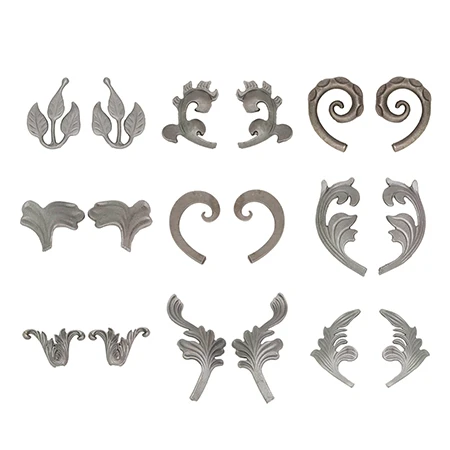
- Bending and Twisting: Specific design elements, such as scrolls, volutes, and twists for wrought iron rosettes or decorative elements, are formed by bending and twisting the hot iron using specialized tools and jigs.
- CNC Machining (for precision components): For intricate, repetitive patterns or precise fitments, CNC machining may be employed to ensure tight tolerances and consistent quality, especially in components that interface with other structural elements.
3. Assembly and Welding:
- Component Integration: Individual forged pieces, such as pickets, rails, decorative panels, and wrought iron rosettes, are assembled according to design specifications.
- Welding: Components are typically joined using MIG or TIG welding, ensuring strong, clean joints that maintain the aesthetic integrity and structural strength of the panel. All welding procedures adhere to AWS D1.1 (Structural Welding Code – Steel) standards.
4. Finishing and Corrosion Protection:
- Grinding and Polishing: Welds are ground smooth, and the entire surface is prepared for finishing, removing any scale or imperfections.
- Surface Treatment: For superior corrosion resistance, panels undergo hot-dip galvanization (per ASTM A123/A123M), creating a metallurgical bond between the iron and a zinc coating. This provides cathodic protection, significantly extending service life.
- Powder Coating/Painting: Post-galvanization, an electrostatic powder coating (e.g., AkzoNobel Interpon or PPG Envirocron) is applied and baked on, offering an additional layer of protection, UV resistance, and a wide range of aesthetic finishes. This multi-layer protection can extend the service life of panels beyond 50 years even in harsh environments.
5. Quality Control and Testing:
Every stage involves rigorous quality checks.
- Dimensional Accuracy: Panels are checked against engineering drawings.
- Weld Integrity: Visual inspection and, for critical applications, non-destructive testing (NDT) such as ultrasonic or magnetic particle inspection.
- Coating Adhesion: Cross-hatch adhesion tests (per ISO 2409) and salt spray tests (per ASTM B117) are performed on coated samples to ensure durability.
- Compliance: All products are manufactured to meet or exceed industry standards such as ISO 9001:2015 for quality management, and relevant ANSI/ASTM specifications for material composition and structural performance.
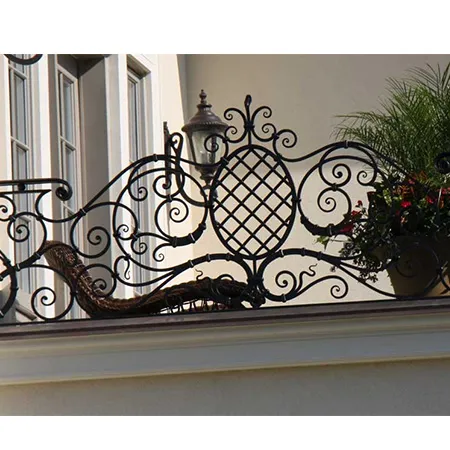
Technical Specifications and Performance Parameters
Understanding the precise technical specifications of wrought iron panels is crucial for B2B decision-makers to ensure optimal performance and compliance with project requirements. The following table details typical parameters for high-quality panels designed for demanding industrial and commercial applications.
Typical Product Specifications for Forged Wrought Iron Panels
| Parameter | Specification | Relevant Standard |
|---|---|---|
| Material Composition | Low Carbon Steel (C < 0.08%, Mn 0.3-0.6%, Si < 0.03%, P < 0.05%, S < 0.05%) | ASTM A36 / EN 10025 S235JR |
| Tensile Strength | ≥ 360 MPa (52 ksi) | ASTM A36 |
| Yield Strength | ≥ 240 MPa (36 ksi) | ASTM A36 |
| Elongation at Break | ≥ 20% | ASTM A36 |
| Hardness (Brinell) | 110-140 HB | ASTM E10 |
| Corrosion Protection | Hot-Dip Galvanization (min. 85 µm coating) + Powder Coating (min. 60 µm) | ASTM A123 / ISO 1461, AAMA 2604 |
| Impact Resistance | Charpy V-Notch (room temp) ≥ 20 J | ASTM E23 |
| Typical Panel Dimensions | Standard (H x W): 1.2m-2.4m x 1.8m-3.0m; Custom dimensions available | Client Specifications |
| Service Life (Estimated) | 50+ years (with proper maintenance) | Industry Data |
Comparison: Wrought Iron vs. Cast Iron Panels
While both materials have historical significance, their properties and ideal applications differ significantly for modern B2B projects.
| Feature | Wrought Iron Panels | Cast Iron Panels |
|---|---|---|
| Carbon Content | Very Low (0.02-0.08%) | High (2-4%) |
| Manufacturing Method | Forging, Hammering, Welding | Melting and Pouring into Molds |
| Ductility / Malleability | High (Can be bent, twisted, re-forged) | Low (Brittle, prone to cracking) |
| Tensile Strength | High (Strong in tension) | Low (Weak in tension) |
| Impact Resistance | Excellent | Poor (Can shatter) |
| Design Intricacy | Achieved through skilled forging, intricate patterns | Achieved through mold design, repetitive patterns |
| Repairability | Easily repairable by welding or re-forging | Difficult to repair, often requires replacement |
| Corrosion Resistance (untreated) | Good, forms a protective patina | Moderate, surface rust quickly |
Application Scenarios and Target Industries
The robust nature and aesthetic versatility of wrought iron panels make them indispensable across a spectrum of industries requiring durable, secure, and visually appealing solutions. Their application extends beyond mere perimeter security to critical infrastructure and architectural ornamentation.
- Petrochemical Industry: Used for secure perimeter fencing around refineries, storage facilities, and processing plants. The panels' high tensile strength and resistance to mechanical impact provide critical access control. Their robust coatings withstand corrosive atmospheric conditions prevalent in these environments, significantly reducing maintenance cycles and ensuring long-term asset protection.
- Metallurgy and Heavy Manufacturing: Employed in creating safety barriers, equipment enclosures, and secure zones within foundries and heavy machinery plants. The material's resilience against physical wear and tear, coupled with its non-sparking properties (when compared to certain other metals), makes it suitable for environments with heavy industrial operations.
- Water Supply & Drainage Systems: Utilized for securing pumping stations, reservoirs, water treatment facilities, and critical pipeline access points. The superior corrosion resistance from galvanization and powder coating ensures integrity in damp, humid, or chemically treated water environments, preventing unauthorized access and protecting vital public utilities.
- Commercial and High-Security Facilities: From corporate campuses to data centers and government buildings, rod iron fence panels provide an imposing yet elegant security solution. They integrate seamlessly with surveillance systems and access control technologies. Custom designs, often incorporating intricate wrought iron rosettes, can reinforce brand identity while providing superior protection.
- Public and Urban Infrastructure: Widely used for bridges, pedestrian railings, park fencing, and public space demarcation. Their durability stands up to heavy public use and urban vandalism, while their aesthetic appeal contributes positively to cityscapes.
- Historic Restoration and High-End Residential: Though B2B focused, the principles apply to larger scale heritage projects where authenticity and durability are key. Wrought iron's ability to be replicated or forged into period-accurate designs makes it invaluable for preserving historical integrity.
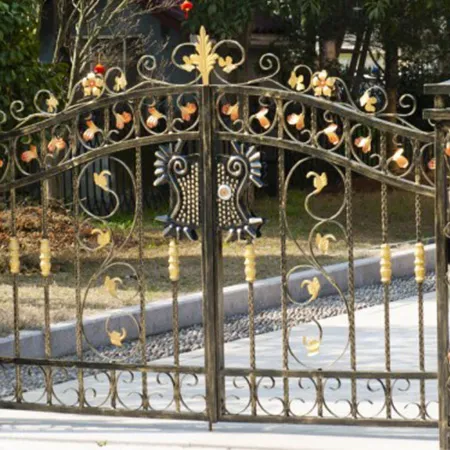
In each of these scenarios, the combination of strength, anti-corrosion properties, and design flexibility of wrought iron panels provides significant advantages over alternatives, ensuring long-term value and operational efficiency.
Key Technical Advantages of Wrought Iron Panels
The selection of wrought iron panels for industrial and commercial projects is justified by a series of intrinsic technical advantages that contribute to their superior performance and cost-effectiveness over the project lifecycle.
- Exceptional Durability and Service Life: Wrought iron's low carbon content and fibrous structure, resulting from the forging process, impart excellent resistance to fatigue and impact. When combined with advanced protective coatings such as hot-dip galvanization and architectural-grade powder coating, panels can achieve an estimated service life exceeding 50 years, even in harsh environmental conditions. This longevity drastically reduces replacement and maintenance costs over time.
- Superior Corrosion Resistance: The multi-layer protection system, starting with galvanization conforming to ISO 1461, creates a robust barrier against rust and oxidation. The zinc coating acts as a sacrificial layer, protecting the underlying steel. The subsequent powder coating further seals the surface, offering UV stability and chemical resistance, making these panels ideal for coastal, industrial, or high-humidity environments.
- High Security and Impact Resilience: The inherent strength of forged iron and the solid construction of the panels make them highly resistant to forced entry, vandalism, and accidental impacts. This makes them a preferred choice for critical infrastructure, high-security perimeters, and areas requiring robust physical deterrence.
- Aesthetic Versatility and Customization: Wrought iron's malleability allows for the creation of intricate designs, including detailed wrought iron rosettes, custom patterns, and unique architectural features. This design flexibility ensures that security installations do not detract from the visual appeal of a facility but can, in fact, enhance it, aligning with specific architectural styles or corporate branding.
- Low Maintenance Requirements: Thanks to their robust construction and advanced protective coatings, wrought iron panels require minimal maintenance. Periodic cleaning is usually sufficient to maintain their appearance and integrity, translating into significant operational savings for facilities managers.
- Environmental Resistance: These panels perform reliably across a broad temperature range and are unaffected by extreme weather conditions, including heavy winds, snow, and rain. The material does not degrade under prolonged UV exposure, ensuring color retention and structural stability over decades.
Customized Solutions and Vendor Comparison
In the B2B sector, standardized products rarely fit every unique project requirement. Therefore, the ability to provide customized wrought iron panels is a critical differentiator for manufacturers. This includes bespoke dimensions, unique decorative elements like intricate wrought iron rosettes, specific anti-climb features, and integration with advanced security systems.
Customization Capabilities:
- Design Flexibility: From traditional ornate patterns to sleek, modern minimalist designs, manufacturers can adapt to any architectural brief.
- Dimension and Configuration: Tailoring panel height, width, picket spacing, and gate configurations to exact site specifications.
- Security Enhancements: Incorporation of spear tops, anti-climb spikes, specialized locking mechanisms, and integration points for CCTV or access control.
- Finish Options: A wide palette of powder coating colors, textures, and even multi-tone finishes to match branding or architectural aesthetics.
Vendor Comparison: Key Selection Criteria
Selecting the right vendor for wrought iron panels involves evaluating several critical factors beyond just price. A holistic assessment ensures project success and long-term satisfaction.
| Criterion | Description | Why It Matters |
|---|---|---|
| Manufacturing Expertise | Years in business, adherence to forging techniques, quality control protocols. | Ensures product quality, structural integrity, and consistency. |
| Certification & Compliance | ISO 9001, ASTM, AWS, CE markings, etc. | Verifies adherence to international quality and safety standards. |
| Customization Capabilities | Ability to produce bespoke designs, dimensions, and integrate features. | Crucial for meeting unique project aesthetics and functional requirements. |
| Surface Treatment Options | Range of galvanization and powder coating options, guarantee on finishes. | Directly impacts corrosion resistance, durability, and visual appeal. |
| Project Management & Support | Technical consultation, design assistance, installation guidance, after-sales support. | Ensures smooth project execution, minimizes risks, and provides ongoing reliability. |
| Lead Times & Logistics | Realistic production and delivery schedules, global shipping capabilities. | Critical for adhering to project timelines and budget constraints. |
| Warranty & Guarantees | Comprehensive product and finish warranties. | Provides assurance of product quality and vendor accountability. |
Real-World Case Studies
Experience from diverse projects underscores the efficacy and versatility of wrought iron panels.
Case Study 1: Perimeter Security for a Major Data Center
- Client: Global Technology Corporation
- Challenge: Secure a new, expansive data center in a high-risk urban area while maintaining a professional, non-intrusive aesthetic. The client required exceptional physical deterrence against intrusion and vehicle impact.
- Solution: Custom-designed rod iron fence panels, 3 meters high, with closely spaced pickets and integrated anti-climb features were deployed. The panels were hot-dip galvanized and powder-coated in a dark, neutral color to blend with the architectural scheme. Integrated conduits for fiber optics and sensors were pre-fabricated into the panel design.
- Outcome: The installation provided a robust, multi-layered security barrier that met ISO 27001 physical security requirements. The long-term maintenance costs were significantly reduced due to the anti-corrosion treatments, contributing to the facility's operational efficiency.
Case Study 2: Architectural Facade for a Luxury Commercial Complex
- Client: Renowned Real Estate Developer
- Challenge: Create an elegant yet durable street-level facade and balcony railings for a luxury retail and office complex that would withstand heavy pedestrian traffic and provide a lasting aesthetic appeal.
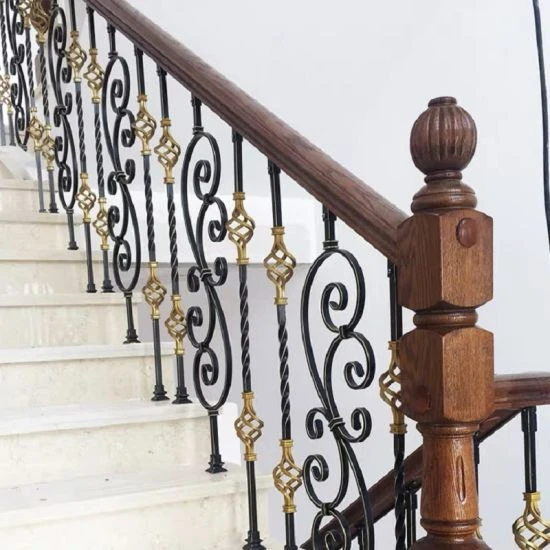
- Solution: Intricately forged wrought iron panels, featuring bespoke wrought iron rosettes and scrollwork, were manufactured. Each panel received a specialized metallic powder coat finish to complement the building's stone and glass elements.
- Outcome: The panels transformed the complex's exterior, significantly enhancing its visual identity and perceived value. Customer feedback highlighted the exquisite craftsmanship and the panels' ability to elevate the overall architectural language. The robust finish ensured minimal upkeep, a crucial factor for a high-traffic commercial property.
Ensuring Quality and Reliability ( Focus)
Commitment to quality and reliability is fundamental in B2B transactions, particularly for long-life assets like wrought iron panels. Our approach encompasses stringent quality assurance, transparent operational processes, and robust client partnerships.
Authoritativeness and Certifications:
- ISO 9001:2015 Certified: Our manufacturing facilities adhere to the highest international standards for quality management systems, ensuring consistent product quality from raw material sourcing to final inspection.
- ASTM & ANSI Compliance: All materials and processes conform to relevant American Society for Testing and Materials (ASTM) and American National Standards Institute (ANSI) specifications for steel, galvanization, and coatings.
- Experienced Team: Our engineering and fabrication teams possess decades of combined experience in metal forging and fabrication, holding certifications in advanced welding techniques (e.g., AWS Certified Welders).
- Partner Clients: We proudly serve a diverse portfolio of clients across the petrochemical, government, luxury residential, and public infrastructure sectors, demonstrating our capability and reliability in demanding environments.
Test Data and Quality Assurance:
- Material Certificates: Provided for all raw steel, confirming chemical composition and mechanical properties.
- Coating Adhesion Tests: Regular cross-hatch tests and pull-off adhesion tests on galvanized and powder-coated samples ensure robust finish longevity.
- Salt Spray Testing: Independent laboratory reports confirm over 1,000 hours of salt spray resistance (ASTM B117) for our multi-layer coated products, exceeding industry benchmarks.
- Dimensional Accuracy: Every finished panel undergoes stringent dimensional verification against approved shop drawings.
Frequently Asked Questions (FAQ)
-
Q1: What is the typical lead time for custom wrought iron panels?
A1: Lead times vary depending on the complexity, volume, and current production schedule. For standard designs, typical lead times range from 4-6 weeks after design approval. Complex custom projects may require 8-12 weeks. We provide a detailed project schedule upon order confirmation.
-
Q2: What kind of warranty is offered on your wrought iron panels?
A2: We offer a comprehensive 10-year warranty on structural integrity and a 5-year warranty on our powder coat finish against peeling, blistering, or excessive fading, provided installation and maintenance guidelines are followed. Specific terms are detailed in our warranty documentation.
-
Q3: How are the panels transported and delivered?
A3: Panels are securely packaged in robust crates or on specialized pallets to prevent damage during transit. We collaborate with trusted logistics partners for both domestic and international shipping, offering various delivery options including FOB, CIF, and DDP to suit client needs.
-
Q4: Can your rod iron fence panels be integrated with electronic security systems?
A4: Absolutely. Our panels are designed with flexibility for integration. We can pre-fabricate mounting points, conduits for wiring, and reinforce sections for security cameras, access control readers, and other perimeter intrusion detection systems (PIDS).
-
Q5: What after-sales support do you provide?
A5: Our commitment extends beyond delivery. We offer technical assistance for installation, guidance on maintenance, and responsive support for any product-related queries. Our dedicated customer service team is available via phone and email during business hours.
Conclusion
The strategic integration of high-quality wrought iron panels offers a multifaceted solution for modern B2B demands. From providing unparalleled security and durability in critical infrastructure to enhancing architectural aesthetics with custom designs and intricate wrought iron rosettes, these panels stand as a premium choice. Their proven longevity, superior corrosion resistance, and adaptability to complex specifications translate into significant long-term value, reduced operational expenditures, and enhanced asset protection. By prioritizing robust manufacturing processes, adherence to international standards, and comprehensive client support, manufacturers ensure that these panels are not just products, but investments in lasting quality and security for diverse industrial and commercial applications.
References
- ASTM International. (2022). ASTM A36/A36M-19, Standard Specification for Carbon Structural Steel. ASTM International, West Conshohocken, PA.
- ISO (International Organization for Standardization). (2018). ISO 9001:2015, Quality management systems – Requirements. ISO, Geneva, Switzerland.
- ISO (International Organization for Standardization). (2015). ISO 1461:2009, Hot-dip galvanized coatings on fabricated iron and steel articles – Specifications and test methods. ISO, Geneva, Switzerland.
- American Welding Society. (2020). AWS D1.1/D1.1M:2020, Structural Welding Code – Steel. American Welding Society, Miami, FL.
- U.S. Department of Transportation, Federal Highway Administration. (2009). Design and Construction of Wrought Iron Bridges. FHWA Publication No. FHWA-HRT-09-026.
-
Heavy Duty Ramp Gate Hinges Guide for Industrial EquipmentNewsApr.16,2026
-
Guide to Selecting the Right Ramp Door Spring Hinge for TrailersNewsApr.09,2026
-
Comprehensive Guide to Livestock Trailer Gate Hinges for Durable PerformanceNewsApr.07,2026
-
Choosing the Right Heavy Duty Hinges for Ramps A Comprehensive GuideNewsApr.04,2026
-
Comprehensive Guide to Choosing the Right Enclosed Trailer Ramp Door Extension HingeNewsMar.31,2026
-
Comprehensive Guide to Bi Fold Trailer Gate Hinges for Optimal PerformanceNewsMar.28,2026
-
Comprehensive Guide to Durable Aluminum Trailer Ramp Hinges for Optimal PerformanceNewsMar.26,2026