Selecting a hinge may seem like a minor detail in product design, but for industrial applications, it is often the primary point of mechanical failure. When standard off-the-shelf components fail to meet specific load-bearing or environmental requirements, the shift toward customized manufacturing becomes a necessity.
The demand for precision-engineered hardware has led many firms to seek specialized partnerships to integrate durable, custom-fitted components. This transition is driven by a need for higher corrosion resistance, specific dimensional tolerances, and the integration of advanced material coatings that standard retail products simply cannot provide.
For businesses looking to optimize their hardware supply chain, understanding the nuances of oem hinges is essential for ensuring long-term product reliability and reducing maintenance overhead.


Historically, many manufacturers relied on generic hardware, adapting their product designs to fit available parts. However, the rise of highly specialized equipment—ranging from architectural iron art to heavy-duty ground piles—has reversed this logic. Modern engineering now dictates that the hardware must be built to the design's exact specifications.
This shift is characterized by a transition from "buying what is available" to "creating what is required." For companies like Aobang Imp. & Exp. Co., Ltd., this means providing comprehensive OEM and ODM solutions that allow clients to specify precise dimensions and load requirements, ensuring the hinge is not a bottleneck in the overall product performance.
Durability in metal hinges is not a single metric but a combination of material purity, joint tolerance, and surface treatment. The load-bearing capacity depends heavily on the pin diameter and the alloy composition of the knuckle. In high-cycle applications, the friction coefficient between the pin and the barrel determines the rate of wear, making lubrication channels or self-lubricating materials critical for long-term operation.
Precision in manufacturing is equally vital. Even a slight misalignment in the pivot axis can lead to uneven stress distribution, causing the hinge to bind or fail prematurely. This is why industrial-grade production utilizes advanced CNC machining and rigorous quality control to maintain tight tolerances across large production batches.
Furthermore, the method of attachment—whether through welding, bolting, or embedding—affects the overall structural stability. A hinge may be strong, but if the interface between the hardware and the structure is weak, the entire assembly remains vulnerable to shear forces.
Metal oxidation is the primary enemy of outdoor hardware. While stainless steel is a common choice, wrought iron treated with advanced anti-corrosion technology offers a unique balance of aesthetic appeal and functional strength, particularly for decorative architectural elements and garden infrastructure.
True corrosion resistance is achieved through a multi-layered approach: combining high-quality base metal with specialized surface treatments that create an impermeable barrier against moisture and saline environments.
For products such as garden border fencing or outdoor gates, the treatment process must withstand constant exposure to soil acidity and varying weather cycles. By utilizing advanced coating technologies, manufacturers can ensure that the hardware remains functional without the need for frequent reapplications of protective paints or oils.
The suitability of a hinge varies drastically depending on the operational environment. A hinge designed for an indoor cabinet will fail instantly if used in a coastal outdoor setting. Therefore, engineers use a relative value index to assess how different materials and coatings perform across various stress factors, such as humidity, load frequency, and chemical exposure.
The following analysis illustrates the relative performance of typical hardware configurations across five critical environmental stressors. This index helps buyers determine if their current hardware specifications align with the actual demands of the installation site.
In practical application, high-performance hinges are integrated into a wide array of systems. For example, in landscaping, small iron fences used as animal barriers or vegetable borders require hinges that can withstand direct contact with moist earth while maintaining a modern, elegant aesthetic. The ability to maintain a "stylish look" without compromising the structural integrity of the pivot point is a key requirement for high-end architectural hardware.
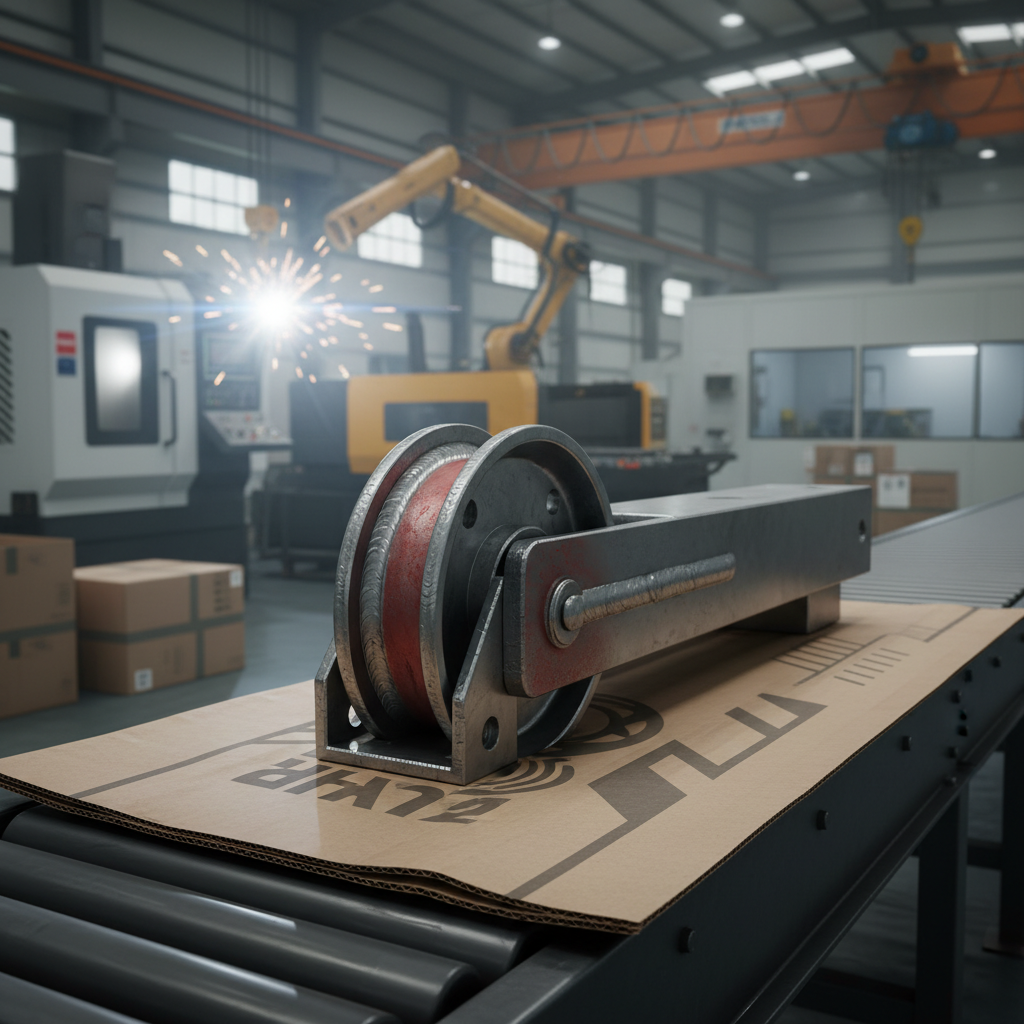
Beyond aesthetics, these components are critical in industrial setups where they support hanging wheels or pulleys. In these scenarios, the hinge is not merely a pivot but a structural support that must resist deformation under constant tension. This duality—aesthetic versatility and industrial strength—defines the current requirement for professional hardware sourcing.
The hardware industry is moving toward "smart" materials and more sustainable coating processes. We are seeing a shift away from traditional heavy-metal plating toward eco-friendly, high-performance polymers and advanced powder coatings that offer superior adhesion and chemical resistance.
Additionally, there is a growing trend toward modularity. Instead of replacing an entire assembly when a hinge wears out, new designs are incorporating replaceable pins or modular knuckle segments. This approach reduces waste and lowers the total cost of ownership for the end-user.
As global supply chains stabilize, the focus is shifting from mere availability to verifiable quality. Certifications like BSCI and adherence to standards such as ASTM and EN71 are becoming baseline requirements rather than competitive advantages, pushing manufacturers to elevate their internal quality management systems.
For procurement managers and designers, the challenge lies in balancing cost, lead time, and technical specification. A common mistake is over-specifying hardware—paying for aerospace-grade tolerances in a garden fence—or under-specifying, which leads to costly field failures and brand damage.
A structured evaluation framework should prioritize environmental exposure first, then load requirements, and finally aesthetic integration. By mapping these needs against the capabilities of an OEM partner, buyers can optimize their budget without risking structural integrity.
The table below provides a conceptual comparison of different hardware paths based on typical project requirements.
| Project Type | Critical Factor | Recommended Material | Suitability Index |
|---|---|---|---|
| Landscape Edging | Corrosion Resistance | Treated Wrought Iron | High |
| Industrial Gates | Load Capacity | Heavy-Duty Steel | High |
| Architectural Art | Aesthetic Finish | Custom Alloy Iron | Medium |
| Coastal Barriers | Salt Tolerance | Marine-Grade Steel | High |
| Interior Fitting | Cycle Frequency | Zinc-Plated Steel | Medium |
| Pet Barriers | Installation Ease | Lightweight Iron | High |
OEM hinges are manufactured to the specific technical drawings and requirements of the client rather than a general market standard. This includes custom dimensions, specific material alloys, and tailored surface treatments. While standard hardware forces the designer to adapt the product to the part, OEM solutions allow the part to be engineered for the product's exact load, environment, and aesthetic needs, ensuring a more precise fit and higher reliability.
Corrosion resistance is typically evaluated through salt spray testing and humidity chamber exposure, which simulate years of outdoor wear in a compressed timeframe. For wrought iron, resistance is not inherent to the metal but is a result of the anti-corrosion technology applied. This involves cleaning the base metal and applying advanced coatings that prevent oxygen and moisture from reaching the iron surface, thereby stopping the oxidation process.
Buyers should prioritize three main factors: Technical Capability (can they meet your exact tolerances?), Quality Certification (do they hold BSCI or ASTM standards?), and Integration Experience (have they worked with similar products like pulleys or ground screws?). A manufacturer that offers a full suite of services, including OEM, ODM, and OBM, generally possesses a more robust infrastructure for handling complex, custom orders from initial consultation to delivery.
While the initial procurement cost of a custom hinge is typically higher than a mass-produced one, the total cost of ownership is often lower. Custom hardware reduces the frequency of replacements, lowers maintenance labor costs, and prevents expensive product recalls caused by hardware failure. By optimizing the part for the specific load and environment, you avoid the "over-engineering" costs of high-end standard parts or the "failure costs" of cheap generic ones.
The most effective way to specify dimensions is through a detailed technical drawing that includes the knuckle diameter, pin length, leaf thickness, and the exact center-to-center distance of the pivot points. It is also important to specify the mounting method (e.g., pre-drilled holes or weld-on plates). Providing a physical sample of a current part or a 3D CAD model significantly reduces the risk of errors during the prototype phase.
Yes, provided they have an integrated production facility. The core metallurgy and machining processes for a decorative wrought iron hinge and an industrial pulley are similar. The primary difference lies in the finishing process—decorative items focus on elegance and rust prevention, while industrial items focus on load-bearing strength and wear resistance. Companies with broad portfolios can often leverage their industrial expertise to create more durable decorative products.
The movement toward specialized, custom-engineered hardware reflects a broader industry trend where precision and durability are no longer optional. Whether it is for architectural beauty or industrial function, the hinge serves as the critical link that determines the lifespan of the entire assembly.
By partnering with manufacturers who understand the intersection of material science and custom fabrication, businesses can move beyond the limitations of generic hardware and build products that are truly designed for their environment.