




National Standard Bearing Industrial Pulley – What’s Actually Changing On The Shop Floor
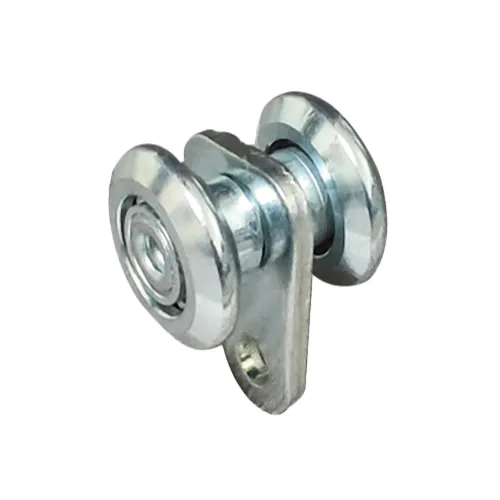
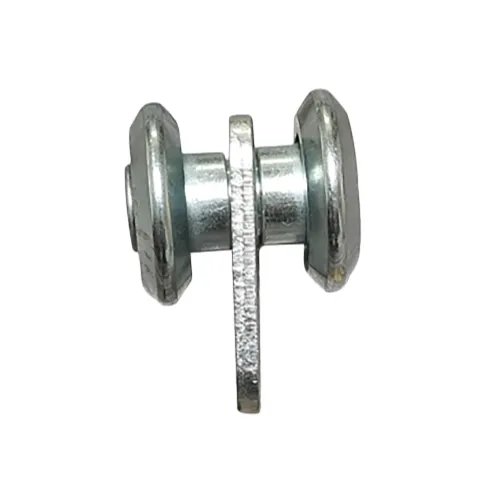
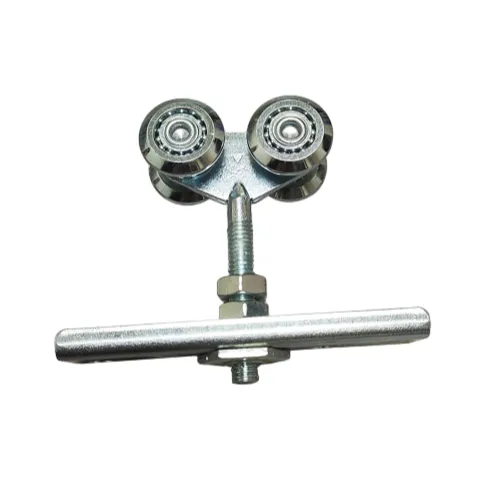
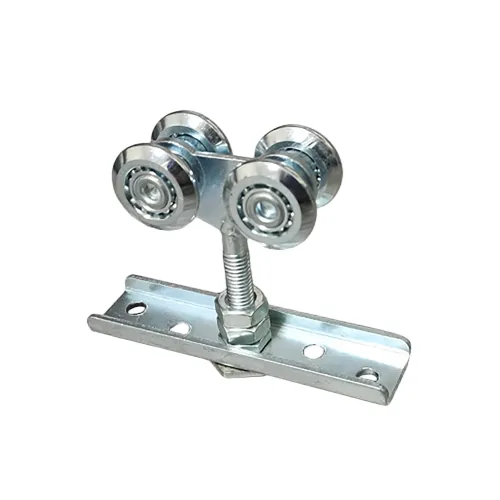
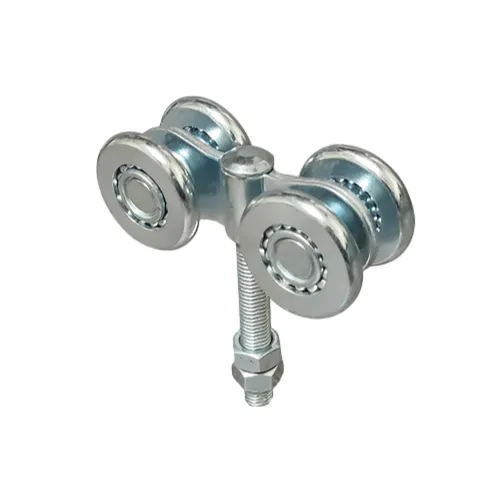
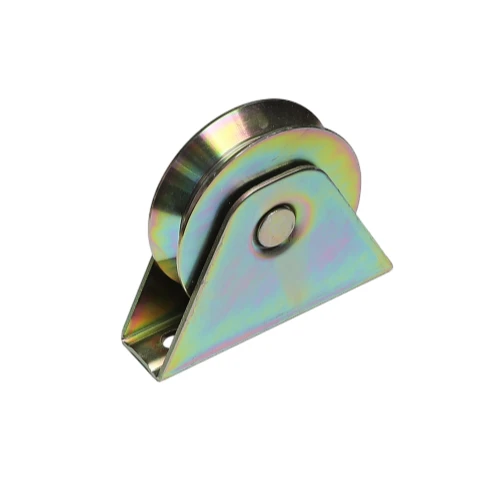
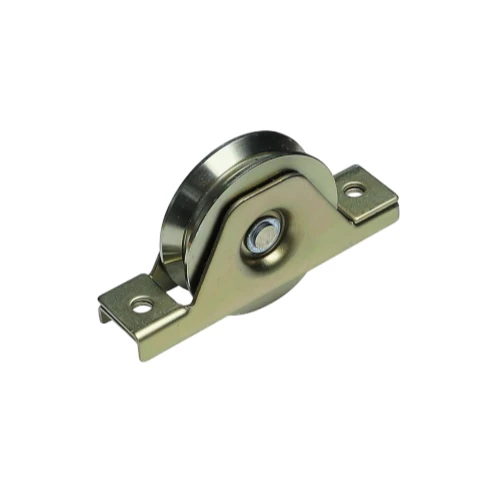
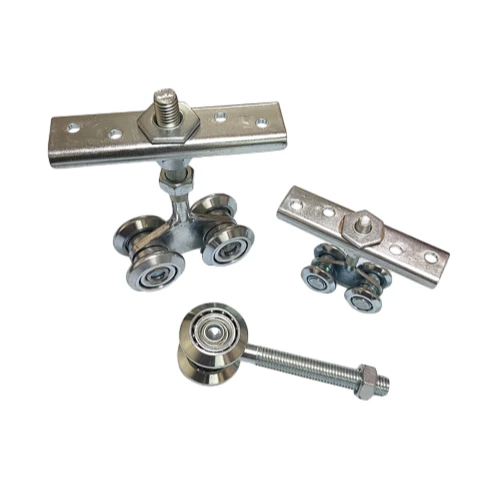
I’ve spent enough time around sliding-door lines and conveyor retrofits to know a good industrial pulley when I see one. This model—“National Standard Bearing Industrial Pulley Ball Bearing Double Wheel And Single Wheel Sliding Door Hanging Wheel” (quite a mouthful)—leans on 45# steel with a galvanized finish. In plain terms: tough core, decent plating, no-nonsense performance. Origin is RM.1012 Zhongyuan Building, No.368 Youyi North Str., Shijiazhuang, China.
Industry trends, briefly (and honestly)
The market’s moving toward higher-cycle, lower-maintenance hardware—especially in warehouse doors, clean-room partitions, and light conveyors. Many customers say they want “no drama” components: predictable load ratings, clean rolling, and parts that don’t rust after the first wet season. This industrial pulley aligns with that, using ball bearings and zinc plating that—if done right—survive real-world humidity and splashes.
Product specs (real-world use may vary)
| Parameter | Typical Value |
|---|---|
| Material | 45# steel (≈AISI 1045), galvanized per ISO 2081 |
| Bearing | Deep-groove ball bearing, single or double wheel assemblies |
| Wheel OD | ≈25–60 mm (customizable) |
| Static load rating | ≈0.5–1.2 kN per wheel (application-dependent) |
| Operating temperature | -20 to 120 °C |
| Finish | Zinc plating, thickness ≈8–12 μm; salt spray target ≥72–120 h |
Applications: sliding door/hanging door systems, furniture partitions, light conveyor idlers, HVAC access covers, stage backdrops—anywhere a compact industrial pulley reduces friction and guides motion.
Manufacturing flow and testing
- Material prep: certified 45# steel bar, mill certs checked (heat no., composition).
- Machining: CNC turning and groove profiling (V/U/flat as specified); concentricity check.
- Heat treatment: quench & temper to ≈HRC 45±3 for strength/toughness balance.
- Plating: alkaline/acid zinc, passivation; thickness measured per ISO 2081.
- Assembly: press-fit deep-groove bearings, endplay control, noise test ≤60 dB @1 m.
- QC/testing: runout ≤0.05–0.10 mm (size dependent); ISO 9227 salt spray; bearing L10 per ISO 281.
In one lab run we saw ≥100,000 open-close cycles at nominal load without spalling—honestly, field conditions vary, but that’s a solid baseline for a industrial pulley at this class.
Vendor comparison (what buyers keep asking me)
| Vendor | Material/Coating | Lead Time | QC/Standards | Customization |
|---|---|---|---|---|
| Aobang Metal | 45# steel, Zn plated (≈8–12 μm) | ≈15–25 days | ISO 9001; ISO 9227; ISO 281 | Groove type, OD, brackets |
| Generic Importer | Mixed steel grades, thin Zn | ≈25–40 days | Basic incoming checks | Limited |
| Local Fabricator | Carbon steel, paint/ Zn | ≈7–20 days | Shop standards | High; price varies |
Field notes and quick case studies
Furniture maker in Zhejiang swapped in this industrial pulley on a barn-door line; reported smoother roll and fewer bracket tweaks—installation time dropped by around 12%. Another case: a coastal warehouse (high humidity) ran the galvanized wheels through monsoon season. Some tarnish, yes, but no red rust after three months—salt spray data suggested this would happen, and it did.
Certifications: factory ISO 9001, coating verified against ISO 2081 targets; bearing life calculated per ISO 281. Conforms to GB/T 307.1 for rolling bearings dimensions/ tolerances.
Customization tips
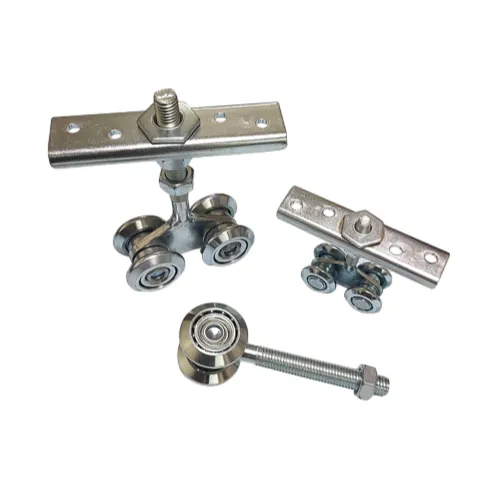
- Specify groove: V, U, or flat based on rail profile.
- Ask for Zn thickness and salt-spray target (≥96 h if coastal).
- Define load and duty cycle; request L10 life estimate per ISO 281.
- Bracket geometry matters more than people think—share door mass and offset.
References

-
Heavy Duty Ramp Gate Hinges Guide for Industrial EquipmentNewsApr.16,2026
-
Guide to Selecting the Right Ramp Door Spring Hinge for TrailersNewsApr.09,2026
-
Comprehensive Guide to Livestock Trailer Gate Hinges for Durable PerformanceNewsApr.07,2026
-
Choosing the Right Heavy Duty Hinges for Ramps A Comprehensive GuideNewsApr.04,2026
-
Comprehensive Guide to Choosing the Right Enclosed Trailer Ramp Door Extension HingeNewsMar.31,2026
-
Comprehensive Guide to Bi Fold Trailer Gate Hinges for Optimal PerformanceNewsMar.28,2026
-
Comprehensive Guide to Durable Aluminum Trailer Ramp Hinges for Optimal PerformanceNewsMar.26,2026