




Industry Trends in Ground Foundation Solutions
The global demand for efficient, sustainable, and rapidly deployable foundation solutions is experiencing unprecedented growth. Driven by the expansion of renewable energy infrastructure, particularly solar farms and wind power projects, as well as the need for agile construction in challenging terrains, traditional concrete-intensive foundation methods are increasingly being re-evaluated. Engineers and project developers are actively seeking alternatives that offer superior performance, reduced environmental impact, and accelerated project timelines.
Key industry trends highlight a shift towards pre-engineered, modular, and non-invasive foundation systems. This includes the rising adoption of solutions like spiral pile technology. These innovative ground anchor systems are gaining traction due to their minimal soil disturbance, rapid installation capabilities, and adaptability to a wide range of soil conditions, effectively functioning as a form of rigid inclusion piles in many applications. Furthermore, the emphasis on circular economy principles has increased the appeal of reusable foundation components, aligning with modern sustainability objectives.
The market is also demanding higher standards for corrosion resistance and structural longevity, leading to widespread specification of hot-dip galvanized steel components. This evolution underscores a critical need for reliable, high-performance foundation elements capable of withstanding harsh environmental conditions for decades.
Understanding the Spiral Pile: A Foundational Innovation
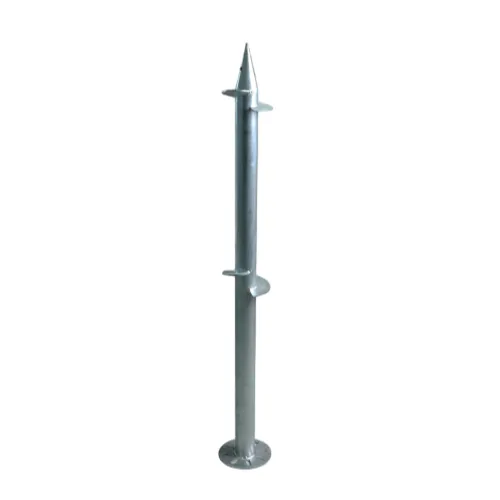
A spiral pile, often referred to as a ground screw or helical pile, represents a sophisticated advancement in deep foundation engineering. Unlike traditional concrete foundations, which involve extensive excavation, formwork, and curing times, spiral piles are designed to be screwed directly into the ground, achieving significant load-bearing capacity through their helical blades and direct embedment. This method minimizes environmental impact and significantly reduces project timelines.
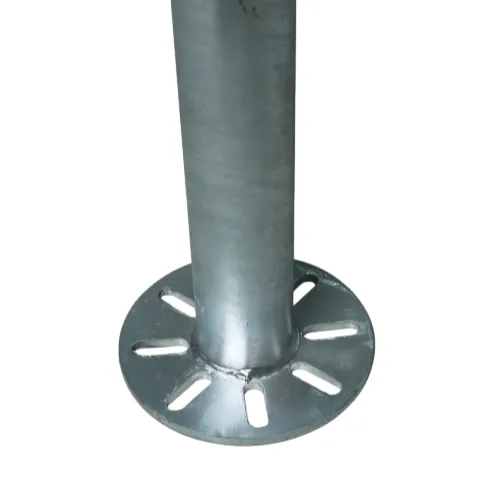
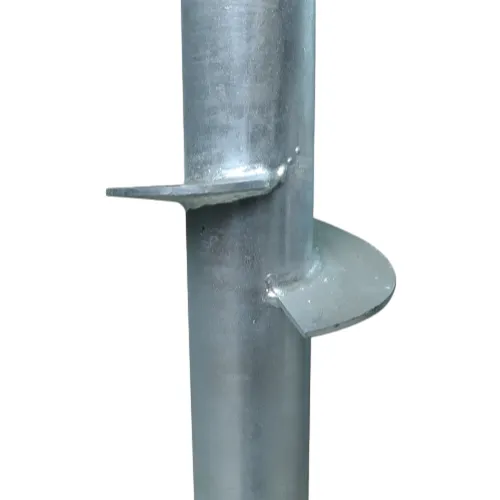
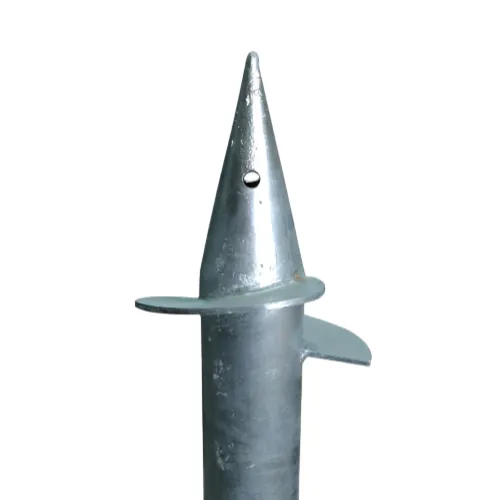
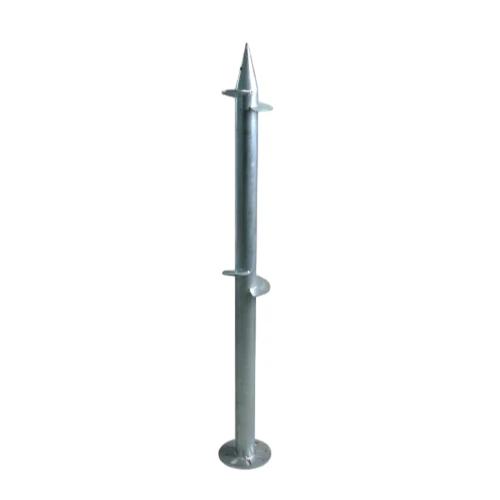
The core structure of a standard spiral pile consists of a central steel shaft with one or more helical bearing plates (helices) welded to it. These helices function much like a screw thread, advancing the pile into the ground and transferring axial and lateral loads to competent soil strata. The product, specifically the Hot Dip Galvanized Spiral Pile For Steel Structure Foundation, is engineered for robust performance and extended service life, making it ideal for supporting a wide array of steel structures.
Its versatility allows for use in diverse geological conditions, from soft clays to dense sands, and even in certain rocky formations with pre-drilling. The primary function is to provide a stable, durable, and highly efficient foundation for structures requiring rapid deployment and minimal ground disturbance, making it a pivotal solution in modern piling ground techniques.
Manufacturing Process: Precision and Durability
The production of high-quality Hot Dip Galvanized Spiral Pile for Steel Structure Foundations involves a meticulously controlled manufacturing process, adhering to stringent international standards to ensure optimal performance and longevity.
Process Flow Overview:
- Material Selection: High-grade carbon steel, typically Q235, Q345, or S355, is selected for its superior strength and weldability. These materials comply with international standards such as ASTM A36 for Q235B equivalent or EN 10025 for S355.
- Shaft Preparation: Steel pipes or solid bars are cut to specified lengths using automated CNC cutting machines, ensuring dimensional accuracy and minimizing material waste.
- Helical Blade Forming: Steel plates are precisely cut and cold-formed into helical blades using specialized hydraulic presses and rolling machines. This process ensures consistent pitch and diameter for efficient ground penetration.
- Welding: The helical blades are meticulously welded to the central shaft using advanced MIG/MAG welding techniques. Robotic welding systems are often employed to guarantee uniform, high-strength welds that conform to AWS D1.1 standards, preventing structural failure under load.
- Surface Preparation: After welding, the assembled spiral piles undergo thorough cleaning, including pickling and fluxing, to remove scale, rust, and impurities. This prepares the surface for optimal adhesion during galvanization.
- Hot-Dip Galvanization: The cleaned piles are immersed in a bath of molten zinc at approximately 450°C (840°F). This process creates a metallurgically bonded, corrosion-resistant zinc coating, typically exceeding 85 microns in thickness (in accordance with ASTM A123 or ISO 1461). This robust coating provides exceptional protection against rust and extends the service life to 50+ years, even in aggressive environments.
- Quality Control & Testing: Each spiral pile undergoes rigorous inspection, including visual checks for weld integrity and coating uniformity, non-destructive testing (NDT) such as ultrasonic or magnetic particle inspection, and coating thickness measurements. Load testing can also be performed to verify load-bearing capacity. Manufacturing processes are certified under ISO 9001:2015, ensuring consistent quality management.
- Finishing & Packaging: Post-inspection, piles are carefully packaged to prevent damage during transit, ensuring they arrive on-site in pristine condition.
This meticulous process ensures that each hot-dip galvanized spiral pile delivers superior corrosion resistance, high structural integrity, and a long service life, making it suitable for demanding target industries like petrochemicals, metallurgy, water supply & drainage, and various infrastructure projects. Its robust design contributes significantly to energy-saving and environmental protection efforts by reducing the need for material replacement over time.
Technical Specifications and Performance Parameters
The performance of a spiral pile is defined by a precise set of technical specifications, engineered to meet diverse structural requirements and challenging soil conditions. These parameters ensure optimal load distribution, stability, and longevity.
Standard Hot Dip Galvanized Spiral Pile Specifications
These parameters are meticulously engineered and tested to ensure that our Hot Dip Galvanized Spiral Pile systems provide robust, reliable, and long-lasting foundations for various steel structures, including those acting as rigid inclusion piles in weak soil environments.
Technical Advantages of Spiral Piles
The strategic adoption of hot-dip galvanized spiral pile foundations offers a multitude of technical and operational advantages over conventional foundation systems, making them a preferred choice for modern construction and infrastructure projects.
- Superior Corrosion Resistance: The hot-dip galvanization process provides a metallurgical bond between steel and zinc, creating a highly durable, sacrificial coating. This protective layer ensures exceptional resistance to rust and corrosion in diverse environments, including saline soils, acidic conditions, and coastal areas, guaranteeing a service life of 50 years or more. This significantly reduces maintenance costs and enhances structural integrity over the long term.
- Rapid and Clean Installation: Spiral pile installation requires no concrete, curing time, or extensive excavation. Specialized hydraulic drivers rapidly screw the piles into the ground, drastically reducing installation time from days to hours, and even minutes per pile. This "dry" installation process means minimal soil disturbance, no spoils removal, and a clean, safe worksite, translating to significant labor and equipment cost savings.
- High Load-Bearing Capacity & Uplift Resistance: The helical design efficiently transfers compressive, tensile, and lateral loads to competent soil layers. The helical plates act as bearing elements, distributing the load over a greater area. This makes them exceptionally effective as rigid inclusion piles, capable of stabilizing weak piling ground and providing robust support against uplift forces, which is critical for structures like solar arrays and telecommunication towers.
- Versatility Across Soil Conditions: Spiral piles can be successfully installed in a wide range of soil types, including cohesive soils (clays, silts), non-cohesive soils (sands, gravels), and even in areas with high water tables or expansive soils. Their design allows for consistent performance where traditional driven piles or cast-in-place foundations might be problematic or prohibitively expensive.
- Environmental Sustainability: The minimal excavation, lack of concrete, and reduced carbon footprint associated with manufacturing and installation make spiral pile systems an environmentally friendly choice. Furthermore, they are fully removable and reusable, allowing for easy relocation or decommissioning of structures without leaving a permanent footprint, supporting principles of circular economy.
- Cost-Effectiveness: The combined benefits of faster installation, reduced labor, minimal site preparation, and long service life contribute to substantial overall project cost savings. The elimination of concrete-related expenses, including procurement, mixing, and curing, further enhances their economic appeal.
These advantages collectively position spiral pile foundations as a leading-edge solution for infrastructure development, offering a blend of technical superiority, economic efficiency, and environmental responsibility.
Application Scenarios and Industry Impact
The adaptability and robust performance of hot-dip galvanized spiral pile foundations have led to their widespread adoption across numerous industries and challenging application scenarios.
- Solar Energy Projects: Spiral piles are the foundation of choice for large-scale ground-mounted photovoltaic (PV) systems. Their rapid installation, precise alignment capabilities, and superior uplift resistance (critical for wind loads on solar panels) significantly accelerate project completion and reduce overall costs. They are particularly effective in remote locations or uneven terrain where traditional concrete foundations would be impractical.
- Telecommunications and Transmission Towers: For supporting telecom masts, antenna arrays, and transmission line towers, spiral piles offer quick deployment, crucial for expanding network coverage. Their ability to handle significant axial and lateral loads, combined with minimal site impact, makes them ideal for sensitive environments or areas requiring fast infrastructure build-out.
- Modular Buildings and Temporary Structures: From temporary classrooms and construction site offices to event stages and modular housing, spiral piles provide a stable, reusable foundation. Their ease of removal means structures can be deployed and then relocated with minimal environmental footprint.
- Fencing, Signposts, and Utility Poles: For linear infrastructure, spiral piles offer a fast and cost-effective solution for securing various elements. Their precision installation ensures proper alignment and stability, reducing the need for manual post-hole digging and concrete mixing.
- Road and Rail Infrastructure: Used for retaining walls, noise barriers, and embankment stabilization, spiral piles provide robust support in challenging geotechnical conditions. They can be installed adjacent to active lines with minimal disruption.
- Challenging Ground Conditions: In areas with weak or expansive soils, high water tables, or contaminated ground, spiral piles excel. They bypass problematic near-surface soils by transferring loads to deeper, more competent strata, effectively functioning as rigid inclusion piles and providing a stable piling ground solution without extensive soil remediation.
These diverse applications underscore the versatility and engineering efficacy of the Hot Dip Galvanized Spiral Pile, demonstrating its critical role in sustainable and efficient B2B construction and infrastructure development globally.
Vendor Comparison: Choosing the Right Spiral Pile Partner
When sourcing Hot Dip Galvanized Spiral Pile for significant B2B projects, a thorough vendor comparison is essential. While many suppliers exist, key differentiators impact project success, cost-efficiency, and long-term reliability. Our commitment to excellence positions us as a leading choice in this specialized market.
Key Comparison Factors:
Our focus on precision engineering, robust materials, and rigorous quality control ensures that every spiral pile delivered not only meets but exceeds industry expectations, providing unparalleled value and reliability for your foundation projects, especially in critical piling ground scenarios.
Customized Solutions for Unique Project Requirements
Recognizing that no two construction projects are identical, we specialize in providing bespoke Hot Dip Galvanized Spiral Pile solutions. Our engineering expertise allows for extensive customization, ensuring that the foundation system perfectly matches the specific demands of your site, structure, and geotechnical conditions.
Areas of Customization:
- Length and Diameter: Piles can be manufactured to specific lengths (e.g., up to 6 meters) and shaft diameters to achieve the required embedment depth and load capacity based on soil stratification and structural loads.
- Helix Configuration: The number, diameter, thickness, and pitch of helical blades can be customized. Single, double, or multiple-helix designs are available to optimize performance in various soil types and to achieve specific bearing or uplift capacities, including designs optimized for rigid inclusion piles.
- Connection Types: We offer a variety of top connections to seamlessly integrate with different steel structures, including U-flanges, square plates, circular plates, adjustable brackets, and custom fabricated adaptors.
- Material Grade: While Q235B is standard, higher strength steels such as Q345B or S355JR can be specified for projects demanding enhanced structural performance under extreme loads or in seismic zones.
- Special Coatings: In exceptionally aggressive chemical environments, supplementary coatings or enhanced galvanization specifications can be explored in conjunction with standard hot-dip galvanization.
Our team of experienced engineers works closely with clients from initial design to final installation, providing geotechnical analysis, structural design assistance, and value engineering to ensure the most efficient and cost-effective spiral pile solution. This collaborative approach minimizes risks and optimizes project outcomes, particularly when dealing with complex piling ground conditions.
By choosing a customized spiral pile, you gain a foundation specifically tailored to your project's unique challenges, guaranteeing superior performance and longevity.
Application Case Studies: Proven Performance
Our Hot Dip Galvanized Spiral Pile systems have been successfully deployed in a diverse array of projects globally, demonstrating their reliability, efficiency, and adaptability. These case studies highlight real-world applications and the tangible benefits our solutions provide to B2B clients.
Case Study 1: Large-Scale Solar Farm in Arid Region
Challenge: A major renewable energy developer required foundations for a 50 MW solar farm in a remote, arid region characterized by highly variable soil conditions, including hardpan and loose sandy layers, with significant wind uplift concerns.
Solution: Over 15,000 customized Hot Dip Galvanized Spiral Pile units (114mm shaft diameter, 2.5m length, double helix design) were specified. These were designed to penetrate the challenging piling ground and provide robust uplift resistance. Installation was performed using specialized hydraulic drivers.
Result: The project achieved an installation rate of over 100 piles per day, significantly ahead of schedule. The spiral pile foundations demonstrated exceptional stability, passing rigorous pull-out tests, and minimized environmental disturbance in the sensitive desert ecosystem. The galvanized coating ensured long-term durability against extreme desert weather conditions.
Case Study 2: Rapid Deployment Telecom Tower in Urban Environment
Challenge: A telecommunications provider needed to rapidly erect a new communication tower in a densely populated urban area with limited access and significant concerns about noise and vibration from traditional piling methods. Soil investigations revealed soft, compressible fill material over a deeper, stiffer clay layer.
Solution: Four heavy-duty Hot Dip Galvanized Spiral Pile foundations (140mm shaft diameter, 5m length, triple helix) were engineered and installed. These were designed to function as rigid inclusion piles, efficiently transferring the tower's substantial loads through the weak fill to the competent clay beneath. The installation was completed without any noise pollution or vibration issues.
Result: The foundations for the entire tower were installed within two days, dramatically reducing the construction timeline compared to conventional concrete foundations. Minimal disruption to surrounding businesses and residents was achieved. The spiral pile system provided superior axial and lateral stability for the telecom tower, ensuring uninterrupted service.
Case Study 3: Remote Modular Building Project on Uneven Terrain
Challenge: A mining company needed to establish a modular camp in a remote, mountainous region with uneven topography and highly variable soil composition, ranging from shallow bedrock to loose gravel. Access for heavy concrete trucks was extremely difficult.
Solution: A matrix of Hot Dip Galvanized Spiral Pile foundations of varying lengths (from 1m to 4m, 76mm shaft diameter) was deployed. Each pile was individually specified based on localized ground conditions identified during preliminary geotechnical surveys. Specialized compact installation equipment was used to navigate the difficult terrain.
Result: The entire foundation system for the modular camp was installed in a fraction of the time and cost compared to traditional methods. The adaptability of the spiral pile system eliminated the need for extensive site grading or concrete delivery, proving invaluable in the remote location. The camp was swiftly operational, supported by robust and level foundations.
Quality Assurance, Certifications, and Authoritativeness
Our commitment to delivering exceptional Hot Dip Galvanized Spiral Pile solutions is underpinned by stringent quality assurance protocols, adherence to international standards, and a proven track record in the industry. These factors collectively establish our authoritative standing in the B2B foundation market.
- ISO 9001:2015 Certified Manufacturing: Our production facilities operate under a certified Quality Management System, ensuring consistent quality, process efficiency, and continuous improvement in every stage of spiral pile manufacturing. This includes rigorous material traceability, in-process inspections, and final product verification.
- International Standards Compliance: Our products are manufactured to meet or exceed relevant international standards, including ASTM A123/A123M for Zinc (Hot-Dip Galvanized) Coatings, ISO 1461 for Hot Dip Galvanized Coatings, and EN 1090 for Execution of Steel Structures and Aluminium Structures. This ensures global applicability and acceptance of our rigid inclusion piles.
- Decades of Experience: With over 15 years in the metal fabrication and foundation solutions industry, we bring unparalleled experience to every project. Our extensive portfolio includes successful collaborations with leading EPC contractors, renewable energy developers, and infrastructure companies worldwide.
- Advanced Testing Capabilities: We utilize both in-house and third-party laboratories for comprehensive material and product testing. This includes chemical composition analysis, mechanical properties testing (tensile strength, yield strength), galvanization thickness measurements, and full-scale load testing for axial compression, tension, and lateral capacity, providing verifiable test data for customer confidence in our piling ground solutions.
- Expert Engineering Team: Our team of civil and structural engineers possesses deep expertise in geotechnical principles and foundation design. They are available to provide technical consultation, design optimization, and support throughout the project lifecycle, ensuring optimal and compliant solutions.
Our unwavering dedication to quality, combined with our certifications and extensive industry experience, establishes us as a trusted and authoritative partner for all your spiral pile foundation needs.
Frequently Asked Questions (FAQs)
Q1: How long does a Hot Dip Galvanized Spiral Pile last?
A1: With proper hot-dip galvanization (minimum 85 microns coating thickness), our spiral piles are engineered to have a service life of 50 years or more, even in harsh environmental conditions. The zinc coating provides both a barrier and sacrificial protection against corrosion.
Q2: What soil types are suitable for spiral pile installation?
A2: Spiral piles are highly versatile and can be installed in most soil types, including sands, silts, clays, gravels, and mixed fills. They are particularly effective in weak or expansive soils where they act as rigid inclusion piles. Pre-drilling may be required for very dense or rocky ground conditions.
Q3: What is the typical lead time for ordering spiral piles?
A3: Lead times vary based on order volume, customization requirements, and current production schedules. Typically, standard orders can be fulfilled within 3-4 weeks from order confirmation. Large or highly customized orders may require 6-8 weeks. We work closely with clients to meet project deadlines and offer expedited options where feasible.
Q4: Are spiral piles reusable?
A4: Yes, one of the significant advantages of spiral piles is their reusability. They can be unscrewed from the ground, leaving minimal environmental impact, and then relocated and re-installed for new projects, making them an excellent choice for temporary structures or projects prioritizing sustainability.
Q5: What warranty is provided with your spiral pile products?
A5: We offer a comprehensive warranty package, typically including a 25-year structural warranty against manufacturing defects and a 10-year warranty on the hot-dip galvanization against premature corrosion under normal operating conditions. Specific warranty details are provided with each order and project contract.
Lead Time, Warranty, and Customer Support
Our dedication to client satisfaction extends beyond product delivery to comprehensive logistical and post-sales support, ensuring a seamless experience for every B2B partner.
Lead Time and Fulfillment:
We understand the critical nature of project timelines. Our optimized manufacturing processes and robust supply chain management allow us to offer competitive lead times. For standard Hot Dip Galvanized Spiral Pile orders, typical lead times range from 3-4 weeks. For highly customized or large-volume projects, a detailed production and delivery schedule will be provided, generally spanning 6-8 weeks, factoring in design, fabrication, galvanization, and logistics. We maintain open communication channels to provide real-time updates on order status and shipping information, leveraging global logistics networks for efficient worldwide delivery.
Warranty Commitments:
We stand behind the quality and durability of our products. All our Hot Dip Galvanized Spiral Pile products come with a robust warranty: a 25-year structural warranty guaranteeing against manufacturing defects and a 10-year warranty on the hot-dip galvanization against corrosion when installed and maintained according to industry best practices and our guidelines. This commitment ensures your investment is protected and that our foundations provide reliable performance for decades, even in challenging piling ground conditions.
Customer Support and After-Sales Service:
Our dedicated customer support team and technical specialists are available to assist you throughout your project lifecycle. This includes:
- Technical Assistance: Expert guidance on product selection, design considerations, load capacity calculations, and installation best practices for rigid inclusion piles.
- Installation Support: Recommendations for suitable installation equipment and onsite training or supervision upon request.
- Troubleshooting: Prompt and effective resolution of any issues that may arise during or after installation.
- Post-Project Review: Follow-up to ensure complete satisfaction and gather feedback for continuous improvement.
Your success is our priority, and our comprehensive support services are designed to ensure the optimal performance and longevity of your spiral pile foundation system.
References
- American Society for Testing and Materials (ASTM) International. ASTM A123/A123M-17: Standard Specification for Zinc (Hot-Dip Galvanized) Coatings on Iron and Steel Products.
- International Organization for Standardization (ISO). ISO 1461:2022: Hot-dip galvanized coatings on fabricated iron and steel articles — Specifications and test methods.
- Brown, D. A., & Hyde, C. (2018). Helical Piles: A Practical Guide to Design and Installation. ASCE Press.
- European Committee for Standardization (CEN). EN 1090-2:2018: Execution of steel structures and aluminium structures — Part 2: Technical requirements for steel structures.
- National Renewable Energy Laboratory (NREL). Cost of Utility-Scale Solar PV. U.S. Department of Energy.
-
Heavy Duty Ramp Gate Hinges Guide for Industrial EquipmentNewsApr.16,2026
-
Guide to Selecting the Right Ramp Door Spring Hinge for TrailersNewsApr.09,2026
-
Comprehensive Guide to Livestock Trailer Gate Hinges for Durable PerformanceNewsApr.07,2026
-
Choosing the Right Heavy Duty Hinges for Ramps A Comprehensive GuideNewsApr.04,2026
-
Comprehensive Guide to Choosing the Right Enclosed Trailer Ramp Door Extension HingeNewsMar.31,2026
-
Comprehensive Guide to Bi Fold Trailer Gate Hinges for Optimal PerformanceNewsMar.28,2026
-
Comprehensive Guide to Durable Aluminum Trailer Ramp Hinges for Optimal PerformanceNewsMar.26,2026