




Understanding the Modern Foundation: spiral pile Technology
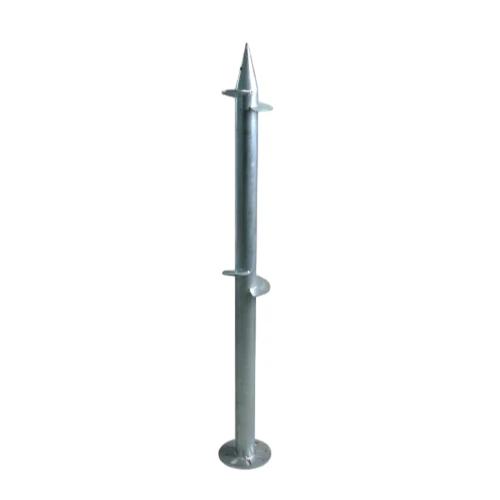
In the rapidly evolving landscape of civil engineering and construction, foundational solutions must balance durability, cost-effectiveness, and environmental impact. The spiral pile, also known as a helical pile or screw pile, stands out as an innovative and highly efficient deep foundation system. This technology is increasingly preferred for its speed of installation, minimal ground disturbance, and versatility across diverse soil conditions. Unlike traditional concrete foundations, spiral piles are typically manufactured from high-strength steel, designed with helical bearing plates that transfer structural loads to competent soil strata.
The demand for robust and adaptable foundation solutions has driven significant advancements in the design and application of spiral pile technology. Engineers and project managers are increasingly recognizing the long-term benefits of these foundations, particularly in sectors requiring rapid deployment and minimal environmental footprint. This comprehensive overview delves into the technical aspects, applications, and advantages of spiral piles, providing crucial insights for B2B decision-makers.
Current Industry Trends and Market Dynamics for Helical Foundations
The global market for deep foundations is experiencing substantial growth, with a particular surge in demand for sustainable and rapidly deployable solutions. spiral pile systems are at the forefront of this trend, driven by several key factors:
- Sustainability & Environmental Impact: Reduced concrete usage, minimal excavation, and lower carbon footprint compared to traditional concrete piles. This aligns with increasing global mandates for greener construction practices.
- Rapid Construction & Cost Efficiency: Installation of spiral pile systems is significantly faster, reducing project timelines and overall labor costs. This is particularly critical in time-sensitive infrastructure projects.
- Versatility in Soil Conditions: Effective in challenging soil conditions, including expansive clays, soft silts, and high water tables, where conventional methods might be impractical or more expensive. This broad applicability enhances their market appeal.
- Increased Adoption in Renewable Energy: The booming solar and wind energy sectors are major drivers, as spiral pile foundations are ideal for supporting solar panel arrays, wind turbine guy wire anchors, and substation equipment, offering speed and flexibility in remote locations.
- Resilience to Uplift and Compression: Their unique design provides exceptional resistance to both compressive and tensile forces, making them suitable for structures susceptible to uplift, such as transmission towers and communication masts.
The market is projected to expand robustly, with reports indicating a compound annual growth rate (CAGR) exceeding 6% for the global deep foundations market from 2023 to 2030, largely influenced by the adoption of innovative solutions like the spiral pile and rigid inclusion piles. This growth is also fueled by advancements in manufacturing techniques and material science, leading to more durable and higher-capacity pile options.
Detailed Manufacturing Process Flow of spiral pile
The production of high-quality Hot Dip Galvanized spiral pile For Steel Structure Foundation involves a meticulous multi-stage process to ensure durability, structural integrity, and superior corrosion resistance. Our manufacturing adheres strictly to international standards such as ISO 9001 and ASTM A123.
Process Steps:
- Material Selection & Inspection:
High-grade structural steel (e.g., Q235, Q345, or equivalent ASTM A572 Grade 50) is sourced. Incoming materials undergo stringent quality checks for chemical composition, mechanical properties, and surface defects, ensuring compliance with EN 10025 or ASTM A36 standards.
- Cutting & Shaping of Shaft:
Steel pipes or square tubes are precisely cut to specified lengths using automated CNC plasma or laser cutting machines. This ensures dimensional accuracy critical for consistent performance.
- Helix Plate Fabrication & Welding:
Steel plates, typically 8mm-16mm thick, are precision-cut and formed into helical blades using specialized hydraulic presses or CNC bending machines. These helix plates are then expertly welded to the central shaft using ASME-certified welding procedures (e.g., MIG/MAG), ensuring robust structural connection and load transfer capability. Non-destructive testing (NDT) such as ultrasonic or magnetic particle inspection is performed on critical welds.
- Head Plate/Cap Fabrication & Welding:
The top attachment (e.g., pile cap, connection plate, or universal saddle) is fabricated and welded to the shaft. This component is crucial for connecting the spiral pile to the superstructure.
- Surface Preparation (Cleaning & Pickling):
- Fluxing:
The clean steel is then immersed in a flux solution (typically zinc ammonium chloride). This step prevents oxidation of the steel surface prior to galvanizing and promotes uniform wetting by the molten zinc.
- Hot Dip Galvanization:
- Cooling & Inspection:
After galvanizing, the pile is slowly cooled and visually inspected for coating thickness, uniformity, and adherence. Adhesion tests and coating thickness measurements are routinely performed.
- Final Quality Control & Packaging:
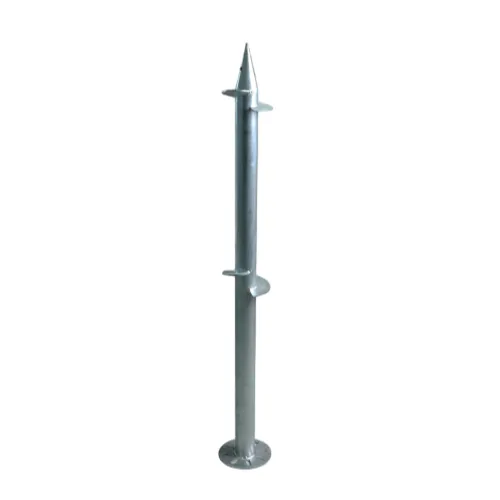
Schematic of spiral pile manufacturing process.
Technical Specifications & Performance Parameters
Typical Product Specifications:
| Parameter | Specification/Range | Standard/Note |
|---|---|---|
| Material Grade (Shaft) | Q235, Q345, S235JR, S355JR | EN 10025, ASTM A36/A572 |
| Shaft Diameter | Ø60mm to Ø219mm (2.375" to 8.625") | Customizable |
| Shaft Wall Thickness | 3.0mm to 10.0mm | Dependent on load requirements |
| Helix Plate Diameter | Ø150mm to Ø600mm (6" to 24") | Single or multiple helices |
| Helix Plate Thickness | 8.0mm to 16.0mm | Enhances load bearing |
| Length | 1.0m to 6.0m (up to 20m with extensions) | Project specific |
| Corrosion Protection | Hot Dip Galvanized | ISO 1461:2009, ASTM A123 |
| Zinc Coating Thickness | ≥85 µm (typically 100-120 µm) | Ensures 50+ years service life |
| Ultimate Compressive Capacity | Up to 500 kN (50+ tons) per pile | Site-specific geotechnical design |
| Ultimate Uplift/Tension Capacity | Up to 300 kN (30+ tons) per pile | Critical for wind/seismic loads |
| Connection Type | U-Head, Flange Plate, Adjustable Screw Head | Adapters for timber, steel, concrete structures |
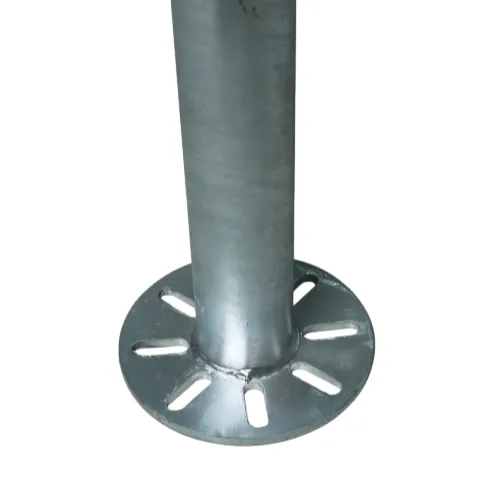
Hot Dip Galvanized spiral pile showcasing multiple helical plates.
Versatile Application Scenarios and Target Industries
- Renewable Energy (Solar Farms & Wind Turbines): Rapid installation for solar panel mounting structures and anchoring for wind turbine guy wires. Our piles offer superior uplift resistance and minimal ground disturbance, crucial for greenfield projects.
- Telecommunications: Foundations for communication towers, microwave relays, and cellular base stations, particularly in remote or challenging terrains. The quick installation reduces downtime and access requirements.
- Oil & Gas / Petrochemical: Supports for pipe racks, compressor stations, small equipment foundations, and temporary structures in industrial environments where corrosion resistance and rapid deployment are paramount.
- Power Transmission & Distribution: Foundations for utility poles, transmission line towers, and substations. The ability to resist both compressive and uplift forces is critical for these structures.
- General Civil Infrastructure: Bridge abutments, pedestrian bridges, boardwalks, retaining walls, sign structures, and various light-to-medium industrial buildings.
- Residential & Commercial Construction: Foundations for modular buildings, decks, additions, underpinning existing structures, and temporary event structures.
- Water Supply & Drainage: Supports for pumping stations, water treatment facilities, and pipeline anchors, where long-term corrosion resistance is vital.
- Environmentally Sensitive Areas: Their minimal impact makes them ideal for wetlands, coastal regions, and areas requiring preservation of natural landscapes, supporting boardwalks and observation platforms.
In typical application scenarios, the advantages of spiral pile are clearly demonstrated:
- Energy Saving: Reduced need for heavy machinery, concrete mixing, and curing processes translates to lower energy consumption on-site.
- Corrosion Resistance: Hot-dip galvanization provides superior, long-lasting protection against rust and degradation, even in aggressive soil conditions or marine environments, ensuring a service life of 50 years or more.
- Minimized Ground Disturbance: Helical installation generates virtually no spoils, reducing waste disposal and site remediation costs, and preserving the surrounding ecosystem.
- Immediate Load Bearing: Unlike concrete, spiral pile foundations can be loaded immediately after installation, accelerating project timelines significantly.
Technical Advantages and Engineering Superiority
Our Hot Dip Galvanized spiral pile For Steel Structure Foundation offers distinct technical advantages over traditional foundation methods, making them an ideal choice for challenging projects:
- Predictable Performance: Installation torque correlation to load capacity provides real-time verification of foundation capacity, a significant advantage over methods relying solely on soil borings. This reduces risk and enhances design reliability.
- High Load Capacity in Difficult Soils: The helical plates effectively transfer loads to deeper, more competent soil strata, bypassing problematic upper layers. This makes them highly effective in soft clays, silts, and loose sands, and even suitable as piling ground solutions where traditional methods might struggle.
- Superior Uplift Resistance: The design of multiple helical bearing plates provides substantial resistance to tensile forces, critical for structures exposed to high wind loads (e.g., billboards, towers) or buoyancy (e.g., waterfront structures).
- Vibration-Free Installation: Unlike driven piles, spiral pile are screwed into the ground, eliminating harmful vibrations that can disturb adjacent structures or sensitive equipment.
- Adaptability to Existing Structures: Ideal for underpinning and foundation repair, as they can be installed with minimal disruption in confined spaces or close to existing buildings.
- Year-Round Installation: Installation is less affected by adverse weather conditions (e.g., freezing temperatures) compared to concrete work, ensuring project continuity.
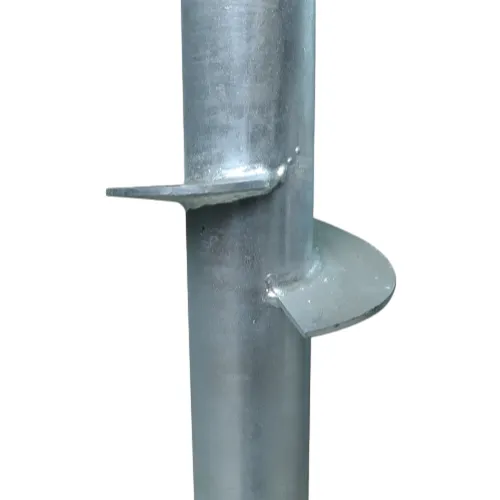
Installation of spiral pile for a solar farm.
Vendor Comparison: Why Choose Our spiral pile Solutions?
When selecting a supplier for foundation systems, B2B clients prioritize reliability, quality, and comprehensive support. Our commitment to excellence sets us apart in the competitive market of spiral pile manufacturing.
Comparison with Competitors:
| Feature | Our Solution (Aobang Metal) | Typical Competitor |
|---|---|---|
| Material Certification | Q235/Q345 (EN 10025, ASTM A36/A572) with MTC (Mill Test Certificate) | Often generic steel, sometimes without verifiable MTC |
| Galvanization Standard | Hot Dip Galvanized to ISO 1461:2009 / ASTM A123 (min. 85µm) | Lower quality galvanization, thinner coating, potential for premature corrosion |
| Welding Quality | ASME/AWS certified welders, NDT performed on critical welds | Standard industrial welding, less stringent QC |
| Design Customization | Full engineering support for custom shaft, helix, and connection designs | Limited standard sizes and designs only |
| Quality Control | Multi-stage QC: material, in-process, final inspection, load testing data available | Basic visual inspection, limited testing documentation |
| Lead Time Reliability | Streamlined production, transparent scheduling, 98% on-time delivery rate | Variable, often extended lead times with poor communication |
| Warranty & Support | Comprehensive product warranty, dedicated after-sales support | Limited or unclear warranty, minimal post-purchase support |
With over 15 years of experience in metal fabrication and foundation solutions, Aobang Metal has established itself as a trusted partner for industrial and infrastructure projects globally. Our adherence to ISO 9001 quality management systems and CE certification ensures that every spiral pile meets the highest international standards for performance and longevity.
Customized Solutions for Unique Project Requirements
Recognizing that no two projects are identical, we specialize in providing bespoke spiral pile solutions tailored to the specific geotechnical conditions, load requirements, and structural interfaces of your project. Our engineering team collaborates closely with clients to optimize design parameters, ensuring maximum efficiency and cost-effectiveness.
Customization options include:
- Shaft Diameter & Thickness: Adjusted based on vertical load, lateral load, and buckling considerations.
- Helix Plate Configuration: Number, diameter, and pitch of helices are optimized for specific soil types and desired bearing capacity, acting as effective rigid inclusion piles.
- Length & Extensions: Piles can be manufactured in various lengths and can be extended on-site using bolted or welded couplers to reach suitable bearing strata.
- Connection Types: A wide array of pile caps, adjustable top plates, U-heads, or custom flange designs to interface seamlessly with timber, steel, or concrete superstructures.
- Material Grade: Selection of steel grades to meet specific strength and ductility requirements for demanding structural applications.
- Corrosion Protection: While hot-dip galvanization is standard, additional coatings or sacrificial anodes can be integrated for extreme corrosive environments.
Our design process leverages advanced geotechnical software and structural analysis tools to validate custom designs against relevant codes and standards, providing clients with comprehensive engineering reports and confidence in the proposed solution.
Application Case Studies & Client Successes
Our extensive portfolio includes successful implementations across diverse industries and challenging environments. These case studies highlight the practical advantages and reliability of our Hot Dip Galvanized spiral pile.
Case Study 1: Large-Scale Solar Farm Foundation, Southwest USA
Challenge: Foundation for a 50 MW solar farm on expansive clay soils with seasonal moisture variations, requiring thousands of foundations and rapid installation to meet tight project deadlines.
Solution: We supplied over 15,000 custom-designed spiral pile (Ø89mm shaft, 300mm/350mm dual helices, 3.5m length, hot-dip galvanized). Our piles were installed using compact equipment, mitigating the need for extensive site grading and minimizing soil disturbance.
Outcome: The project achieved an installation rate of over 150 piles per day per crew, significantly reducing the overall project schedule by 25% compared to concrete pier alternatives. The real-time torque monitoring ensured each pile met specified load requirements, providing reliable long-term support despite challenging soil conditions. The galvanized coating ensures a design life exceeding 40 years in the arid environment.
Case Study 2: Underpinning for Industrial Facility, Coastal Region
Challenge: An existing industrial building experienced differential settlement due to localized soft soil lenses and fluctuating groundwater levels in a corrosive coastal environment, requiring underpinning without disrupting operations.
Outcome: The foundation was stabilized within a 4-week period, restoring structural integrity and halting further settlement. The vibration-free installation allowed the facility to maintain full operation throughout the underpinning process, avoiding costly downtime. Client feedback praised the minimal impact and efficiency of the helical system.
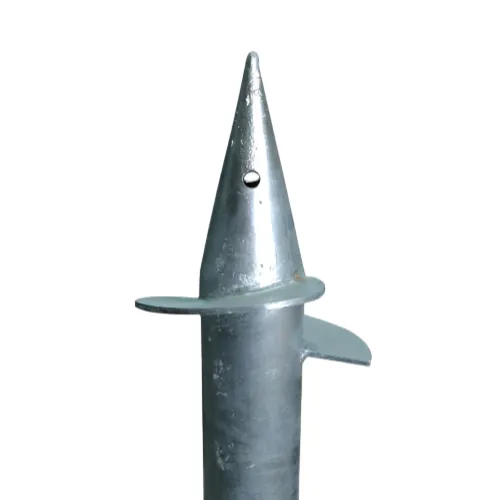
A fully installed spiral pile awaiting connection.
Trustworthiness & Client Assurance ()
Frequently Asked Questions (FAQ)
A1: Our hot-dip galvanized spiral pile are designed for a service life exceeding 50 years in most typical soil conditions, thanks to the robust zinc coating conforming to ISO 1461 standards. In less aggressive environments, it can last significantly longer.
A3: Lead times vary depending on project complexity, order volume, and customization requirements. For standard orders, our lead time typically ranges from 3-5 weeks from confirmed design to factory gate. For large or highly customized projects, we provide a detailed production schedule upon project initiation. We maintain a high on-time delivery rate (98%+) through efficient production planning.
A4: We offer a comprehensive product warranty covering manufacturing defects and material integrity for a specified period (e.g., 10-25 years, depending on product type and application). Full warranty details are provided with each quotation and contract, underscoring our confidence in our product quality and longevity.
Customer Support & After-Sales Service
Our commitment to client satisfaction extends beyond product delivery. We provide:
- Dedicated Project Management: A single point of contact for all project-related inquiries, from design consultation to post-installation support.
- Technical Assistance: Our engineering team is available for technical queries, site-specific design optimization, and troubleshooting.
- Documentation & Certification: Provision of all necessary material certificates, test reports, galvanization reports, and compliance documentation.
- Logistics Support: Assistance with global shipping and delivery coordination to ensure timely arrival at your project site.
Our enduring partnerships with leading construction firms and renewable energy developers attest to our reliability and superior product performance.
Conclusion: The Future of Foundation Engineering
The Hot Dip Galvanized spiral pile represents a paradigm shift in foundation engineering, offering a compelling blend of structural integrity, rapid installation, environmental responsibility, and long-term cost savings. As industries increasingly seek efficient and sustainable solutions, the adoption of spiral pile technology is set to continue its upward trajectory. By choosing our expertly engineered and manufactured products, you are investing in a foundation solution that is not only robust and durable but also contributes to faster project completion and reduced environmental impact. Partner with us to build the future, one strong foundation at a time.
References
- International Code Council Evaluation Service. (2012). Acceptance Criteria for Helical Piles (AC358). Retrieved from icc-es.org.
- ASTM International. (2015). ASTM A123/A123M-17: Standard Specification for Zinc (Hot-Dip Galvanized) Coatings on Iron and Steel Products. Retrieved from astm.org.
- ISO. (2009). ISO 1461: Hot dip galvanized coatings on fabricated iron and steel articles -- Specifications and test methods. Retrieved from iso.org.
- AASHTO. (2010). LRFD Bridge Design Specifications, 5th Edition. American Association of State Highway and Transportation Officials.
-
Heavy Duty Ramp Gate Hinges Guide for Industrial EquipmentNewsApr.16,2026
-
Guide to Selecting the Right Ramp Door Spring Hinge for TrailersNewsApr.09,2026
-
Comprehensive Guide to Livestock Trailer Gate Hinges for Durable PerformanceNewsApr.07,2026
-
Choosing the Right Heavy Duty Hinges for Ramps A Comprehensive GuideNewsApr.04,2026
-
Comprehensive Guide to Choosing the Right Enclosed Trailer Ramp Door Extension HingeNewsMar.31,2026
-
Comprehensive Guide to Bi Fold Trailer Gate Hinges for Optimal PerformanceNewsMar.28,2026
-
Comprehensive Guide to Durable Aluminum Trailer Ramp Hinges for Optimal PerformanceNewsMar.26,2026
Understanding the Modern Foundation: spiral pile Technology
In the rapidly evolving landscape of civil engineering and construction, foundational solutions must balance durability, cost-effectiveness, and environmental impact. The spiral pile, also known as a helical pile or screw pile, stands out as an innovative and highly efficient deep foundation system. This technology is increasingly preferred for its speed of installation, minimal ground disturbance, and versatility across diverse soil conditions. Unlike traditional concrete foundations, spiral piles are typically manufactured from high-strength steel, designed with helical bearing plates that transfer structural loads to competent soil strata.
The demand for robust and adaptable foundation solutions has driven significant advancements in the design and application of spiral pile technology. Engineers and project managers are increasingly recognizing the long-term benefits of these foundations, particularly in sectors requiring rapid deployment and minimal environmental footprint. This comprehensive overview delves into the technical aspects, applications, and advantages of spiral piles, providing crucial insights for B2B decision-makers.
Current Industry Trends and Market Dynamics for Helical Foundations
The global market for deep foundations is experiencing substantial growth, with a particular surge in demand for sustainable and rapidly deployable solutions. spiral pile systems are at the forefront of this trend, driven by several key factors:
- Sustainability & Environmental Impact: Reduced concrete usage, minimal excavation, and lower carbon footprint compared to traditional concrete piles. This aligns with increasing global mandates for greener construction practices.
- Rapid Construction & Cost Efficiency: Installation of spiral pile systems is significantly faster, reducing project timelines and overall labor costs. This is particularly critical in time-sensitive infrastructure projects.
- Versatility in Soil Conditions: Effective in challenging soil conditions, including expansive clays, soft silts, and high water tables, where conventional methods might be impractical or more expensive. This broad applicability enhances their market appeal.
- Increased Adoption in Renewable Energy: The booming solar and wind energy sectors are major drivers, as spiral pile foundations are ideal for supporting solar panel arrays, wind turbine guy wire anchors, and substation equipment, offering speed and flexibility in remote locations.
- Resilience to Uplift and Compression: Their unique design provides exceptional resistance to both compressive and tensile forces, making them suitable for structures susceptible to uplift, such as transmission towers and communication masts.
The market is projected to expand robustly, with reports indicating a compound annual growth rate (CAGR) exceeding 6% for the global deep foundations market from 2023 to 2030, largely influenced by the adoption of innovative solutions like the spiral pile and rigid inclusion piles. This growth is also fueled by advancements in manufacturing techniques and material science, leading to more durable and higher-capacity pile options.
Detailed Manufacturing Process Flow of spiral pile
The production of high-quality Hot Dip Galvanized spiral pile For Steel Structure Foundation involves a meticulous multi-stage process to ensure durability, structural integrity, and superior corrosion resistance. Our manufacturing adheres strictly to international standards such as ISO 9001 and ASTM A123.
Process Steps:
- Material Selection & Inspection:
High-grade structural steel (e.g., Q235, Q345, or equivalent ASTM A572 Grade 50) is sourced. Incoming materials undergo stringent quality checks for chemical composition, mechanical properties, and surface defects, ensuring compliance with EN 10025 or ASTM A36 standards.
- Cutting & Shaping of Shaft:
Steel pipes or square tubes are precisely cut to specified lengths using automated CNC plasma or laser cutting machines. This ensures dimensional accuracy critical for consistent performance.
- Helix Plate Fabrication & Welding:
Steel plates, typically 8mm-16mm thick, are precision-cut and formed into helical blades using specialized hydraulic presses or CNC bending machines. These helix plates are then expertly welded to the central shaft using ASME-certified welding procedures (e.g., MIG/MAG), ensuring robust structural connection and load transfer capability. Non-destructive testing (NDT) such as ultrasonic or magnetic particle inspection is performed on critical welds.
- Head Plate/Cap Fabrication & Welding:
The top attachment (e.g., pile cap, connection plate, or universal saddle) is fabricated and welded to the shaft. This component is crucial for connecting the spiral pile to the superstructure.
- Surface Preparation (Cleaning & Pickling):
- Fluxing:
The clean steel is then immersed in a flux solution (typically zinc ammonium chloride). This step prevents oxidation of the steel surface prior to galvanizing and promotes uniform wetting by the molten zinc.
- Hot Dip Galvanization:
- Cooling & Inspection:
After galvanizing, the pile is slowly cooled and visually inspected for coating thickness, uniformity, and adherence. Adhesion tests and coating thickness measurements are routinely performed.
- Final Quality Control & Packaging:
Schematic of spiral pile manufacturing process.
Technical Specifications & Performance Parameters
Typical Product Specifications:
| Parameter | Specification/Range | Standard/Note |
|---|---|---|
| Material Grade (Shaft) | Q235, Q345, S235JR, S355JR | EN 10025, ASTM A36/A572 |
| Shaft Diameter | Ø60mm to Ø219mm (2.375" to 8.625") | Customizable |
| Shaft Wall Thickness | 3.0mm to 10.0mm | Dependent on load requirements |
| Helix Plate Diameter | Ø150mm to Ø600mm (6" to 24") | Single or multiple helices |
| Helix Plate Thickness | 8.0mm to 16.0mm | Enhances load bearing |
| Length | 1.0m to 6.0m (up to 20m with extensions) | Project specific |
| Corrosion Protection | Hot Dip Galvanized | ISO 1461:2009, ASTM A123 |
| Zinc Coating Thickness | ≥85 µm (typically 100-120 µm) | Ensures 50+ years service life |
| Ultimate Compressive Capacity | Up to 500 kN (50+ tons) per pile | Site-specific geotechnical design |
| Ultimate Uplift/Tension Capacity | Up to 300 kN (30+ tons) per pile | Critical for wind/seismic loads |
| Connection Type | U-Head, Flange Plate, Adjustable Screw Head | Adapters for timber, steel, concrete structures |
Hot Dip Galvanized spiral pile showcasing multiple helical plates.
Versatile Application Scenarios and Target Industries
- Renewable Energy (Solar Farms & Wind Turbines): Rapid installation for solar panel mounting structures and anchoring for wind turbine guy wires. Our piles offer superior uplift resistance and minimal ground disturbance, crucial for greenfield projects.
- Telecommunications: Foundations for communication towers, microwave relays, and cellular base stations, particularly in remote or challenging terrains. The quick installation reduces downtime and access requirements.
- Oil & Gas / Petrochemical: Supports for pipe racks, compressor stations, small equipment foundations, and temporary structures in industrial environments where corrosion resistance and rapid deployment are paramount.
- Power Transmission & Distribution: Foundations for utility poles, transmission line towers, and substations. The ability to resist both compressive and uplift forces is critical for these structures.
- General Civil Infrastructure: Bridge abutments, pedestrian bridges, boardwalks, retaining walls, sign structures, and various light-to-medium industrial buildings.
- Residential & Commercial Construction: Foundations for modular buildings, decks, additions, underpinning existing structures, and temporary event structures.
- Water Supply & Drainage: Supports for pumping stations, water treatment facilities, and pipeline anchors, where long-term corrosion resistance is vital.
- Environmentally Sensitive Areas: Their minimal impact makes them ideal for wetlands, coastal regions, and areas requiring preservation of natural landscapes, supporting boardwalks and observation platforms.
In typical application scenarios, the advantages of spiral pile are clearly demonstrated:
- Energy Saving: Reduced need for heavy machinery, concrete mixing, and curing processes translates to lower energy consumption on-site.
- Corrosion Resistance: Hot-dip galvanization provides superior, long-lasting protection against rust and degradation, even in aggressive soil conditions or marine environments, ensuring a service life of 50 years or more.
- Minimized Ground Disturbance: Helical installation generates virtually no spoils, reducing waste disposal and site remediation costs, and preserving the surrounding ecosystem.
- Immediate Load Bearing: Unlike concrete, spiral pile foundations can be loaded immediately after installation, accelerating project timelines significantly.
Technical Advantages and Engineering Superiority
Our Hot Dip Galvanized spiral pile For Steel Structure Foundation offers distinct technical advantages over traditional foundation methods, making them an ideal choice for challenging projects:
- Predictable Performance: Installation torque correlation to load capacity provides real-time verification of foundation capacity, a significant advantage over methods relying solely on soil borings. This reduces risk and enhances design reliability.
- High Load Capacity in Difficult Soils: The helical plates effectively transfer loads to deeper, more competent soil strata, bypassing problematic upper layers. This makes them highly effective in soft clays, silts, and loose sands, and even suitable as piling ground solutions where traditional methods might struggle.
- Superior Uplift Resistance: The design of multiple helical bearing plates provides substantial resistance to tensile forces, critical for structures exposed to high wind loads (e.g., billboards, towers) or buoyancy (e.g., waterfront structures).
- Vibration-Free Installation: Unlike driven piles, spiral pile are screwed into the ground, eliminating harmful vibrations that can disturb adjacent structures or sensitive equipment.
- Adaptability to Existing Structures: Ideal for underpinning and foundation repair, as they can be installed with minimal disruption in confined spaces or close to existing buildings.
- Year-Round Installation: Installation is less affected by adverse weather conditions (e.g., freezing temperatures) compared to concrete work, ensuring project continuity.
Installation of spiral pile for a solar farm.
Vendor Comparison: Why Choose Our spiral pile Solutions?
When selecting a supplier for foundation systems, B2B clients prioritize reliability, quality, and comprehensive support. Our commitment to excellence sets us apart in the competitive market of spiral pile manufacturing.
Comparison with Competitors:
| Feature | Our Solution (Aobang Metal) | Typical Competitor |
|---|---|---|
| Material Certification | Q235/Q345 (EN 10025, ASTM A36/A572) with MTC (Mill Test Certificate) | Often generic steel, sometimes without verifiable MTC |
| Galvanization Standard | Hot Dip Galvanized to ISO 1461:2009 / ASTM A123 (min. 85µm) | Lower quality galvanization, thinner coating, potential for premature corrosion |
| Welding Quality | ASME/AWS certified welders, NDT performed on critical welds | Standard industrial welding, less stringent QC |
| Design Customization | Full engineering support for custom shaft, helix, and connection designs | Limited standard sizes and designs only |
| Quality Control | Multi-stage QC: material, in-process, final inspection, load testing data available | Basic visual inspection, limited testing documentation |
| Lead Time Reliability | Streamlined production, transparent scheduling, 98% on-time delivery rate | Variable, often extended lead times with poor communication |
| Warranty & Support | Comprehensive product warranty, dedicated after-sales support | Limited or unclear warranty, minimal post-purchase support |
With over 15 years of experience in metal fabrication and foundation solutions, Aobang Metal has established itself as a trusted partner for industrial and infrastructure projects globally. Our adherence to ISO 9001 quality management systems and CE certification ensures that every spiral pile meets the highest international standards for performance and longevity.
Customized Solutions for Unique Project Requirements
Recognizing that no two projects are identical, we specialize in providing bespoke spiral pile solutions tailored to the specific geotechnical conditions, load requirements, and structural interfaces of your project. Our engineering team collaborates closely with clients to optimize design parameters, ensuring maximum efficiency and cost-effectiveness.
Customization options include:
- Shaft Diameter & Thickness: Adjusted based on vertical load, lateral load, and buckling considerations.
- Helix Plate Configuration: Number, diameter, and pitch of helices are optimized for specific soil types and desired bearing capacity, acting as effective rigid inclusion piles.
- Length & Extensions: Piles can be manufactured in various lengths and can be extended on-site using bolted or welded couplers to reach suitable bearing strata.
- Connection Types: A wide array of pile caps, adjustable top plates, U-heads, or custom flange designs to interface seamlessly with timber, steel, or concrete superstructures.
- Material Grade: Selection of steel grades to meet specific strength and ductility requirements for demanding structural applications.
- Corrosion Protection: While hot-dip galvanization is standard, additional coatings or sacrificial anodes can be integrated for extreme corrosive environments.
Our design process leverages advanced geotechnical software and structural analysis tools to validate custom designs against relevant codes and standards, providing clients with comprehensive engineering reports and confidence in the proposed solution.
Application Case Studies & Client Successes
Our extensive portfolio includes successful implementations across diverse industries and challenging environments. These case studies highlight the practical advantages and reliability of our Hot Dip Galvanized spiral pile.
Case Study 1: Large-Scale Solar Farm Foundation, Southwest USA
Challenge: Foundation for a 50 MW solar farm on expansive clay soils with seasonal moisture variations, requiring thousands of foundations and rapid installation to meet tight project deadlines.
Solution: We supplied over 15,000 custom-designed spiral pile (Ø89mm shaft, 300mm/350mm dual helices, 3.5m length, hot-dip galvanized). Our piles were installed using compact equipment, mitigating the need for extensive site grading and minimizing soil disturbance.
Outcome: The project achieved an installation rate of over 150 piles per day per crew, significantly reducing the overall project schedule by 25% compared to concrete pier alternatives. The real-time torque monitoring ensured each pile met specified load requirements, providing reliable long-term support despite challenging soil conditions. The galvanized coating ensures a design life exceeding 40 years in the arid environment.
Case Study 2: Underpinning for Industrial Facility, Coastal Region
Challenge: An existing industrial building experienced differential settlement due to localized soft soil lenses and fluctuating groundwater levels in a corrosive coastal environment, requiring underpinning without disrupting operations.
Outcome: The foundation was stabilized within a 4-week period, restoring structural integrity and halting further settlement. The vibration-free installation allowed the facility to maintain full operation throughout the underpinning process, avoiding costly downtime. Client feedback praised the minimal impact and efficiency of the helical system.
A fully installed spiral pile awaiting connection.
Trustworthiness & Client Assurance ()
Frequently Asked Questions (FAQ)
A1: Our hot-dip galvanized spiral pile are designed for a service life exceeding 50 years in most typical soil conditions, thanks to the robust zinc coating conforming to ISO 1461 standards. In less aggressive environments, it can last significantly longer.
A3: Lead times vary depending on project complexity, order volume, and customization requirements. For standard orders, our lead time typically ranges from 3-5 weeks from confirmed design to factory gate. For large or highly customized projects, we provide a detailed production schedule upon project initiation. We maintain a high on-time delivery rate (98%+) through efficient production planning.
A4: We offer a comprehensive product warranty covering manufacturing defects and material integrity for a specified period (e.g., 10-25 years, depending on product type and application). Full warranty details are provided with each quotation and contract, underscoring our confidence in our product quality and longevity.
Customer Support & After-Sales Service
Our commitment to client satisfaction extends beyond product delivery. We provide:
- Dedicated Project Management: A single point of contact for all project-related inquiries, from design consultation to post-installation support.
- Technical Assistance: Our engineering team is available for technical queries, site-specific design optimization, and troubleshooting.
- Documentation & Certification: Provision of all necessary material certificates, test reports, galvanization reports, and compliance documentation.
- Logistics Support: Assistance with global shipping and delivery coordination to ensure timely arrival at your project site.
Our enduring partnerships with leading construction firms and renewable energy developers attest to our reliability and superior product performance.
Conclusion: The Future of Foundation Engineering
The Hot Dip Galvanized spiral pile represents a paradigm shift in foundation engineering, offering a compelling blend of structural integrity, rapid installation, environmental responsibility, and long-term cost savings. As industries increasingly seek efficient and sustainable solutions, the adoption of spiral pile technology is set to continue its upward trajectory. By choosing our expertly engineered and manufactured products, you are investing in a foundation solution that is not only robust and durable but also contributes to faster project completion and reduced environmental impact. Partner with us to build the future, one strong foundation at a time.
References
- International Code Council Evaluation Service. (2012). Acceptance Criteria for Helical Piles (AC358). Retrieved from icc-es.org.
- ASTM International. (2015). ASTM A123/A123M-17: Standard Specification for Zinc (Hot-Dip Galvanized) Coatings on Iron and Steel Products. Retrieved from astm.org.
- ISO. (2009). ISO 1461: Hot dip galvanized coatings on fabricated iron and steel articles -- Specifications and test methods. Retrieved from iso.org.
- AASHTO. (2010). LRFD Bridge Design Specifications, 5th Edition. American Association of State Highway and Transportation Officials.
-
Heavy Duty Ramp Gate Hinges Guide for Industrial EquipmentNewsApr.16,2026
-
Guide to Selecting the Right Ramp Door Spring Hinge for TrailersNewsApr.09,2026
-
Comprehensive Guide to Livestock Trailer Gate Hinges for Durable PerformanceNewsApr.07,2026
-
Choosing the Right Heavy Duty Hinges for Ramps A Comprehensive GuideNewsApr.04,2026
-
Comprehensive Guide to Choosing the Right Enclosed Trailer Ramp Door Extension HingeNewsMar.31,2026
-
Comprehensive Guide to Bi Fold Trailer Gate Hinges for Optimal PerformanceNewsMar.28,2026
-
Comprehensive Guide to Durable Aluminum Trailer Ramp Hinges for Optimal PerformanceNewsMar.26,2026