




In any construction project, the stability of the foundation is paramount. Whether erecting a residential building or a major infrastructure development, the integrity of the ground beneath determines the longevity and safety of the structure above. This is where advanced piling solutions come into play. By reinforcing weak soils and distributing loads efficiently, piling methods such as ground pile, rigid inclusion piles, and compaction piles for ground improvement transform unstable land into buildable terrain. These technologies are essential when working with challenging piling ground conditions and have revolutionized modern foundation engineering.
The following sections explore how these techniques function, their applications, and the lasting benefits they offer to developers, engineers, and contractors working on varied terrain types.
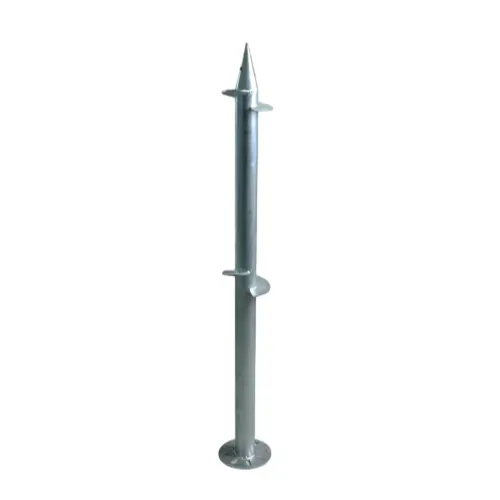
Understanding the Function of Ground Pile Systems
A ground pile is a deep foundation element used to transfer building loads to more stable soil layers or bedrock found at greater depths. In scenarios where surface soil lacks the necessary bearing capacity, ground piles serve as vertical structural members that anchor a building into the earth’s more stable strata. They are particularly beneficial in high-rise construction and infrastructure developments where large loads must be reliably supported.
Typically constructed from reinforced concrete, steel, or timber, ground piles are installed using techniques like driven, bored, or screw piling, depending on the project’s soil profile and structural requirements. One of the biggest advantages of a ground pile solution is its versatility—it can be applied to a wide range of soil types and is effective even in liquefaction-prone or waterlogged areas.
The use of ground piles enhances the structural integrity of the foundation and significantly reduces settlement over time. In seismic regions, properly designed pile foundations can also dissipate energy and increase earthquake resistance. Whether for bridges, tall buildings, or industrial facilities, ground pile technology delivers lasting performance in demanding environments.
Rigid Inclusion Piles for Controlled Settlement
When ground improvement is necessary but full-scale deep foundations are not economically viable, rigid inclusion piles provide a smart alternative. These stiff, vertical elements are installed into soft soils to reduce settlement and increase load-bearing capacity. Unlike traditional piles that support a structure directly, rigid inclusion piles transfer loads through a load transfer platform above the inclusions, distributing weight over a broader soil volume.
This technique is especially effective in areas with compressible clay or peat layers, where traditional surface foundations would result in excessive and uneven settlement. By using rigid inclusion piles, construction teams can build faster, avoid costly soil replacement, and maintain the project’s structural reliability.
Installation methods include displacement and non-displacement techniques, both of which minimize vibration and are well-suited for urban environments or near existing structures. Another benefit of this system is its environmental friendliness—it often requires less concrete and steel than other deep foundation methods.
The popularity of rigid inclusion piles is growing in transportation, logistics, commercial, and residential projects due to their balance of performance, cost-efficiency, and speed of construction.
Optimizing Soil with Compaction Piles for Ground Improvement
In sites where the primary issue is loose or granular soil with low density, compaction piles for ground improvement offer a reliable way to increase strength and reduce settlement. Unlike load-bearing piles, these piles are not meant to carry structural loads directly. Instead, they work by densifying the surrounding soil, improving its mechanical properties.
These piles are often made of sand, gravel, or concrete and are installed using vibration or impact-driven methods. As they are driven into the ground, they displace and compact the surrounding soil, increasing its bearing capacity and stiffness. This makes compaction piles for ground improvement particularly suitable for supporting highways, embankments, industrial slabs, and storage tanks.
The process also helps control liquefaction risk in seismic zones by reducing the soil’s susceptibility to shaking-induced settlement. Another advantage is the method’s ability to work in low-lying areas with a high water table, where traditional soil stabilization might fail.
Overall, compaction piles for ground improvement are a cost-effective and time-efficient solution for preparing the ground for shallow or moderately deep foundations, especially in large-area developments.
Overcoming Challenging Piling Ground Conditions
Dealing with difficult piling ground conditions is a common challenge in modern construction. Unstable soil, groundwater, obstructions, or sensitive surrounding structures can significantly complicate foundation work. Fortunately, the combination of technologies like ground pile, rigid inclusion piles, and compaction piles for ground improvement equips engineers with a toolbox of adaptable strategies.
Successful project planning begins with detailed soil investigation and geotechnical analysis. Once subsurface conditions are understood, engineers can tailor a solution that aligns with both structural needs and environmental constraints. In some cases, a hybrid approach may be used—for example, combining rigid inclusion piles beneath a load transfer mat with compaction piles for ground improvement around the perimeter for added stability.
Working with piling ground requires close coordination between design teams, contractors, and equipment specialists. Vibration control, noise mitigation, and ground displacement must all be managed carefully—particularly in urban projects where nearby infrastructure or buildings must remain unaffected.
Ultimately, mastering piling ground conditions with the right combination of tools and expertise allows even the most complex construction projects to proceed safely and efficiently.
Ground Pile FAQs
What is the difference between ground piles and shallow foundations?
The main difference lies in depth and function. Ground piles transfer structural loads to deep, stable soil layers or bedrock, making them suitable for tall or heavy structures on weak surface soils. Shallow foundations, by contrast, spread loads near the surface and are only viable when the topsoil has sufficient strength. Ground piles offer better load-bearing performance and reduced settlement, especially in challenging terrain.
How are rigid inclusion piles installed, and what are their benefits?
Rigid inclusion piles are typically installed using displacement augers or driven methods that form vertical inclusions in the soil. Once placed, a load transfer platform—usually made of granular fill—is constructed above. This setup limits settlement while avoiding full-scale deep foundations. Benefits include cost efficiency, faster construction times, and suitability for soft or compressible soils where traditional shallow footings would fail.
When should compaction piles be used instead of load-bearing piles?
Compaction piles for ground improvement are used when the primary issue is loose, granular soil with low density—not weak load-bearing capacity. These piles densify the soil rather than support the structure directly. They’re ideal for improving conditions under embankments, tanks, or slabs, and they also reduce liquefaction risk in seismic zones. Load-bearing piles are necessary when loads must be transferred to deeper strata.
Can ground pile systems be used in areas with a high water table?
Yes, ground pile systems are often the preferred choice in regions with high groundwater levels. Specialized equipment and techniques, such as casing or slurry support during drilling, allow for safe and effective installation. These piles bypass weak, saturated topsoil and anchor structures in more stable layers, providing both stability and resistance to water-related settlement issues.
What challenges are common in piling ground projects, and how are they managed?
Projects on piling ground often face obstacles like inconsistent soil profiles, existing underground utilities, groundwater intrusion, or vibration-sensitive surroundings. These are managed through site-specific design, careful equipment selection, and in some cases, hybrid foundation strategies. Modern monitoring tools help control ground movement and vibration, while experienced crews ensure safety and precision during pile installation.



-
Heavy Duty Ramp Gate Hinges Guide for Industrial EquipmentNewsApr.16,2026
-
Guide to Selecting the Right Ramp Door Spring Hinge for TrailersNewsApr.09,2026
-
Comprehensive Guide to Livestock Trailer Gate Hinges for Durable PerformanceNewsApr.07,2026
-
Choosing the Right Heavy Duty Hinges for Ramps A Comprehensive GuideNewsApr.04,2026
-
Comprehensive Guide to Choosing the Right Enclosed Trailer Ramp Door Extension HingeNewsMar.31,2026
-
Comprehensive Guide to Bi Fold Trailer Gate Hinges for Optimal PerformanceNewsMar.28,2026
-
Comprehensive Guide to Durable Aluminum Trailer Ramp Hinges for Optimal PerformanceNewsMar.26,2026