




The Ascendance of Helical Piles in Modern Foundation Engineering
In the rapidly evolving landscape of construction and infrastructure development, the demand for efficient, sustainable, and robust foundation solutions has never been more critical. Traditional piling methods, while proven, often face challenges related to prolonged installation times, significant site disruption, and environmental impact. This has catalyzed a significant industry trend towards innovative alternatives, among which the spiral pile has emerged as a frontrunner.
Hot Dip Galvanized Spiral Piles, specifically designed for steel structure foundations, represent a paradigm shift in how engineers approach ground support. Their unique design, characterized by one or more helical flights welded to a central shaft, allows them to be screwed into the ground with minimal effort and disturbance, offering immediate load-bearing capabilities. This technology addresses pressing industry needs for accelerated project timelines, reduced labor costs, and enhanced environmental stewardship.
The versatility of these piles, coupled with the superior corrosion resistance afforded by hot-dip galvanization, makes them an ideal choice across a myriad of sectors, from renewable energy and telecommunications to residential and industrial construction. As we delve deeper, we will explore the intricate technical aspects, manufacturing precision, diverse applications, and inherent advantages that position the spiral pile as a cornerstone of future-proof foundation systems, offering a compelling alternative to traditional rigid inclusion piles and complex piling ground preparation.
Mastering the Craft: The Manufacturing Process of Hot Dip Galvanized Spiral Piles
The production of high-quality Hot Dip Galvanized Spiral Piles is a sophisticated process demanding precision engineering, robust material selection, and rigorous quality control at every stage. Our commitment to excellence ensures that each spiral pile meets the highest industry standards for durability, performance, and corrosion resistance.
1. Raw Material Sourcing and Preparation
The foundation of a superior spiral pile begins with the selection of premium steel. We exclusively utilize high-grade structural steel, typically conforming to international standards such as ASTM A500 Grade B/C or equivalent EN standards (e.g., S235JR, S355JR), known for its exceptional strength-to-weight ratio and weldability. The raw steel, in the form of seamless or welded pipes (for the shaft) and steel plates (for the helical flights), undergoes thorough inspection to ensure dimensional accuracy and material integrity, free from defects or impurities.
2. Precision Cutting and Forming
Utilizing advanced CNC (Computer Numerical Control) cutting technology, the steel plates are precisely cut into the specific helical flight shapes. This automation ensures consistency and accuracy across batches, minimizing material waste. Simultaneously, the steel pipe for the shaft is cut to the required lengths, depending on the project's load-bearing and soil penetration depth specifications. Specialized machinery then cold-forms the cut steel plates into the precise helical pitch and diameter, which is critical for the pile's screwing mechanism and load transfer capabilities in various piling ground conditions.
3. Expert Welding and Assembly
The formed helical flights are then meticulously welded to the central steel shaft. Our welding processes adhere to strict international codes, such as AWS D1.1 (Structural Welding Code – Steel), employing highly skilled and certified welders. Techniques like submerged arc welding (SAW) or gas metal arc welding (GMAW) are typically utilized to ensure deep penetration, strong fusion, and a robust, defect-free weld seam. This critical step ensures the structural integrity of the spiral pile and its ability to withstand significant axial and lateral loads once installed. Post-welding, all welds undergo visual inspection, and a percentage may be subjected to non-destructive testing (NDT) methods like ultrasonic testing or magnetic particle inspection to guarantee weld quality and conformance.
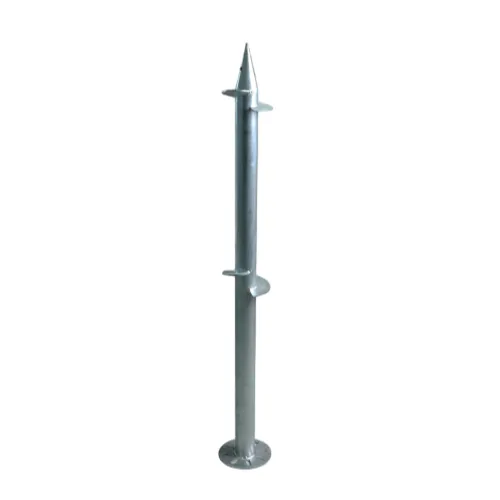
Illustration of precision welding in spiral pile manufacturing, ensuring structural integrity.
4. Hot-Dip Galvanization: The Ultimate Corrosion Protection
Following fabrication, the spiral pile undergoes the crucial hot-dip galvanization process, adhering to ASTM A123/A123M standards (Standard Specification for Zinc (Hot-Dip Galvanized) Coatings on Iron and Steel Products). This multi-step process provides an exceptionally durable and long-lasting corrosion-resistant coating:
- Surface Preparation: The piles are thoroughly cleaned through degreasing (alkaline solution), pickling (acid bath to remove rust and mill scale), and fluxing (application of zinc ammonium chloride solution to prepare the steel surface for bonding with zinc).
- Dipping: The prepared steel is then immersed in a molten bath of 98% pure zinc at temperatures typically around 450°C (840°F). During immersion, a metallurgical bond forms between the iron and zinc, creating a series of zinc-iron alloy layers and an outer layer of pure zinc.
- Cooling and Inspection: Upon withdrawal, the pile is cooled, and the zinc coating solidifies. The entire surface is then visually inspected for coating uniformity, adherence, and absence of defects. Coating thickness is measured using magnetic or eddy current gauges to ensure it meets the specified ASTM A123 requirements, typically achieving an average thickness of 85-100 microns, offering superior protection against corrosion in aggressive environments, including petrochemical and wastewater treatment facilities.
This hot-dip galvanization is paramount for extending the service life of the spiral pile, especially in corrosive soils or exposed outdoor environments. It provides both barrier protection and cathodic protection, effectively shielding the steel from rust and degradation for decades, often exceeding 50 years under normal atmospheric conditions. This significantly reduces maintenance costs and enhances the long-term sustainability of the foundation.
5. Final Inspection and Quality Assurance
Before shipment, each Hot Dip Galvanized Spiral Pile undergoes a comprehensive final inspection. This includes dimensional checks (length, diameter, helix pitch, alignment), visual inspection for surface finish and coating quality, and verification against design specifications. Our quality management system is ISO 9001 certified, ensuring adherence to stringent quality control protocols from raw material intake to finished product delivery. This commitment to quality guarantees that our products consistently meet or exceed client expectations and regulatory requirements, contributing to the reliability and safety of the structures they support across various industries, including those in critical sectors like petrochemical and metallurgy where equipment reliability is non-negotiable.
Technical Parameters and Specifications: The Engineering Core of Spiral Piles
Understanding the technical specifications of Hot Dip Galvanized Spiral Piles is crucial for engineers and project managers to ensure optimal design and performance for specific applications and varying piling ground conditions. These parameters dictate the pile's load-bearing capacity, resistance to uplift and lateral forces, and overall suitability for a given project.
Key Technical Parameters:
- Shaft Diameter (D): Typically ranging from 48 mm to 300 mm, influencing the pile's bending stiffness and load transfer to the helical plates. Larger diameters generally indicate higher load capacities.
- Shaft Wall Thickness (t): Varies from 3 mm to 20 mm, directly impacting the shaft's strength against buckling and shear stresses.
- Helix Diameter (H_D): Ranging from 150 mm to 600 mm or more, determining the bearing area and, consequently, the pile's load-carrying capacity. Multiple helices can be used.
- Helix Thickness (H_t): Usually 6 mm to 20 mm, affecting the helix's stiffness and resistance to deformation under load.
- Number of Helices: Can be single, double, triple, or more, each contributing to increased bearing capacity and uplift resistance.
- Helix Pitch: The vertical distance between corresponding points on consecutive turns of the helix. Optimal pitch ensures efficient installation and maximum soil interaction.
- Length of Pile (L): Customizable from 1 meter to over 12 meters, dictated by soil strata, frost depth, and required load capacity.
- Material Grade: High-strength carbon steel (e.g., Q235, Q345, S235, S355) for both shaft and helix, chosen for its structural integrity and weldability.
- Galvanization Thickness: Minimum 85 microns, conforming to ASTM A123/A123M, providing robust corrosion protection for a projected service life of 50+ years.
- Tensile Strength: Typically ranges from 370 MPa to 550 MPa, indicating the pile's ability to resist pulling forces.
- Yield Strength: Generally 235 MPa to 345 MPa, defining the point at which the material begins to deform plastically.
Typical Product Specifications Table:
Load Capacity Considerations:
The load capacity of a spiral pile is not merely a function of its physical dimensions but also critically depends on the characteristics of the piling ground. Unlike traditional friction piles, helical piles derive most of their compressive and tensile (uplift) capacity from the bearing resistance of the helical plates in competent soil strata. Therefore, a thorough geotechnical investigation, including soil boring logs and laboratory testing, is indispensable. Our engineering team leverages this data to perform detailed analyses, often employing established methods such as the Individual Bearing Method or the Cylindrical Shear Method, to precisely calculate the allowable load for a given pile configuration and soil profile.
For instance, in cohesive soils, the capacity is largely governed by the undrained shear strength (Su) of the soil, while in granular soils, the friction angle (φ) and unit weight play dominant roles. Load testing, specifically static load tests (compression, tension, lateral), are frequently conducted on site to confirm theoretical capacities and validate design assumptions, providing empirical data that enhances the trustworthiness of our solutions. These tests typically involve applying incremental loads and monitoring pile deflections, ensuring the pile meets the project's performance criteria with a sufficient factor of safety.
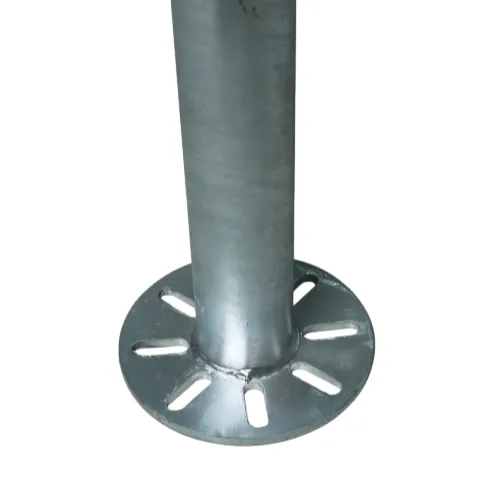
Detailed view of the helical design critical to spiral pile performance.
Unparalleled Advantages: Why Choose Hot Dip Galvanized Spiral Piles?
The strategic adoption of Hot Dip Galvanized Spiral Piles offers a compelling array of benefits that directly translate into project efficiencies, cost savings, and enhanced long-term performance. These advantages often make them superior to conventional foundation methods, particularly when contending with challenging piling ground conditions or stringent environmental regulations.
1. Rapid and Efficient Installation:
- Speed: Helical piles are screwed into the ground using hydraulic torque motors, enabling significantly faster installation compared to drilling, excavation, or concrete curing times. A single crew can install dozens of piles per day.
- Immediate Load Bearing: Unlike concrete foundations that require days or weeks to cure, spiral piles achieve their full load-bearing capacity immediately upon installation. This allows for immediate follow-on construction, drastically reducing overall project timelines.
- Minimal Site Disturbance: The screw-in process is virtually vibration-free and generates minimal spoils, eliminating the need for extensive excavation and soil removal. This is particularly advantageous in sensitive environments or urban areas.
2. Superior Corrosion Resistance and Durability:
- Hot-Dip Galvanization: As detailed in the manufacturing process, the thick zinc coating metallurgically bonded to the steel provides unparalleled protection against rust and corrosion, even in aggressive soil chemistries (e.g., highly acidic or alkaline soils) or coastal environments.
- Extended Service Life: With proper design and galvanization, our spiral piles offer a projected service life exceeding 50 to 100 years, drastically reducing long-term maintenance costs and ensuring the longevity of the supported structure. This makes them ideal for critical infrastructure in sectors like petrochemical and water treatment, where equipment must withstand harsh conditions for decades.
3. Environmental Sustainability:
- Reduced Carbon Footprint: Minimal concrete usage, less heavy machinery operation, and reduced material transport contribute to a lower carbon footprint compared to traditional concrete foundations.
- Preservation of Site Integrity: The non-disruptive installation preserves existing vegetation and minimizes damage to the surrounding landscape, crucial for projects in ecologically sensitive areas.
- Reusability and Recyclability: Spiral piles can be easily unscrewed and relocated or fully recycled at the end of their service life, promoting a circular economy in construction.
4. Cost-Effectiveness:
- Lower Labor and Equipment Costs: Faster installation times reduce labor hours and equipment rental durations. The specialized, compact equipment needed is often more cost-effective than large-scale excavation and concrete pouring machinery.
- Reduced Material Waste: The precise manufacturing and installation process minimizes material waste and the need for spoil removal, leading to further savings.
- Elimination of Concrete Curing Time: No waiting for concrete to set means earlier project completion and quicker return on investment.
5. Versatility Across Soil Types and Applications:
- Adaptability: Spiral piles perform exceptionally well in a wide range of challenging piling ground conditions, including expansive clays, high water tables, soft soils, and areas with variable bedrock depths. Their design allows them to bypass unstable surface layers and bear loads on deeper, more competent strata.
- Multi-Purpose: Suitable for both compression and tension (uplift) loads, making them ideal for structures subjected to wind forces (e.g., solar panels, communication towers) or expansive soil heaving.
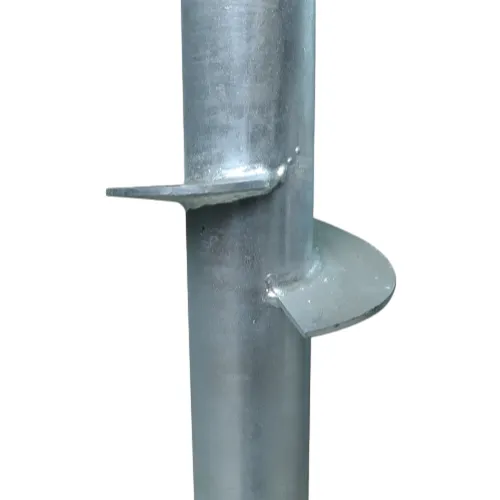
A well-installed spiral pile ready for structural integration.
Comparative Analysis: Spiral Piles vs. Traditional Piling Solutions
To truly appreciate the value proposition of Hot Dip Galvanized Spiral Piles, it is essential to compare them against conventional foundation methods, such as driven piles, bored concrete piles, and even newer approaches like rigid inclusion piles. This comparison highlights where spiral pile technology offers distinct advantages, particularly in optimizing project efficiency and sustainability on various piling ground conditions.
Detailed Comparison Table:
Distinguishing from Rigid Inclusion Piles:
It's important to differentiate spiral piles from rigid inclusion piles. While both interact with the ground, their primary functions differ significantly. Rigid inclusion piles, often stone columns or deep soil mixing columns, are primarily a ground improvement technique. They reinforce soft soil to support a shallow foundation (like a mat or raft) above, distributing the load over a wider, improved soil area. They do not typically serve as individual foundation elements directly connected to a structure in the way a spiral pile does.
In contrast, a spiral pile functions as a direct deep foundation element, transferring structural loads directly to deeper, competent soil strata via its helical plates and shaft. This makes spiral piles a true alternative to traditional piles, offering direct support, whereas rigid inclusion piles are a means of making problematic piling ground suitable for conventional shallow foundations. The choice depends entirely on the geotechnical conditions, structural loads, and project-specific constraints. For direct structural support with minimal disruption, the spiral pile often proves to be the more streamlined and cost-effective solution.
Versatile Application Scenarios and Proven Case Studies
The adaptability and robust performance of Hot Dip Galvanized Spiral Piles make them an ideal foundation solution across an extensive range of industries and project types. Their ability to deliver immediate load-bearing capacity with minimal environmental impact has led to their widespread adoption, proving their efficacy in diverse piling ground conditions and demanding applications.
Primary Application Sectors:
- Renewable Energy (Solar Farms): The efficiency of spiral piles makes them the preferred foundation for large-scale solar arrays. Their rapid installation minimizes impact on agricultural land and reduces overall project duration. For a typical 10 MW solar farm, hundreds to thousands of piles might be installed, and the speed of helical piles can cut foundation installation time by 50-70% compared to concrete footings, leading to substantial cost savings.
- Telecommunications Towers: From cellular masts to remote communication shelters, spiral piles provide stable foundations, especially crucial in remote or difficult-to-access locations where heavy concrete machinery is impractical. Their excellent uplift resistance is vital for structures subjected to high wind loads.
- Modular and Portable Buildings: For temporary or permanent modular structures, site offices, and container111 homes, spiral piles offer a rapid, reusable, and adjustable foundation system. They allow for easy relocation and minimal ground repair upon removal.
- Road Signs, Lighting Poles, and Utilities: Critical infrastructure like traffic signals, streetlights, overhead power lines, and utility cabinets benefit from the quick installation and robust support of spiral piles, minimizing traffic disruption during installation.
- Fencing and Barriers: Perimeter security fences, noise barriers, and retaining walls can be quickly and securely anchored using helical piles, particularly advantageous in uneven terrain or where excavation is undesirable.
- Residential and Light Commercial Foundations: For decks, patios, carports, small additions, and even full residential foundations in problematic soils, spiral piles offer a stable alternative to traditional concrete, especially where frost heave or expansive clays are concerns.
- Petrochemical and Industrial Facilities: In these demanding environments, the corrosion resistance of hot-dip galvanized piles is critical. They are used for pipe racks, small equipment foundations, and non-corrosive sumps, where minimizing disruption and ensuring long-term integrity is paramount.
- Water Treatment and Wastewater Facilities: Similar to petrochemical, the harsh chemical exposure in these facilities necessitates superior corrosion protection. Spiral piles support pump stations, control buildings, and process equipment.
- Metallurgy: For light structures, conveyor belt supports, or maintenance platforms within metallurgical plants, the durability and ease of installation of galvanized spiral piles offer a practical solution.
Illustrative Application Case: Solar Farm in Challenging Soil
Consider a recent project involving a 5 MW solar farm located on a former agricultural site characterized by highly expansive clay soils. Traditional concrete footings would have required extensive over-excavation, backfilling with engineered fill, and complex drainage systems to mitigate frost heave and settlement issues. The site also had a high water table, complicating open excavations. By opting for Hot Dip Galvanized Spiral Piles, the project achieved:
- Accelerated Schedule: Over 1,500 spiral piles (3m length, 89mm shaft, 250mm helix) were installed in less than three weeks, significantly ahead of the projected eight weeks for concrete foundations.
- Cost Savings: An estimated 20% reduction in foundation costs due to minimized excavation, no concrete materials, and reduced labor.
- Environmental Protection: No soil disturbance meant minimal impact on the local ecosystem and no spoil disposal costs. The galvanized coating provided excellent resistance to the aggressive clay chemistry, ensuring a long operational life.
- Performance in Challenging Ground: The helical design effectively bypassed the problematic expansive clay, achieving bearing on more stable strata below, providing reliable frost-proof support.
This case exemplifies the efficacy and strategic advantages of spiral piles when faced with complex geotechnical conditions and tight project deadlines. Our experience spans numerous such projects, where our products consistently deliver superior performance and client satisfaction.
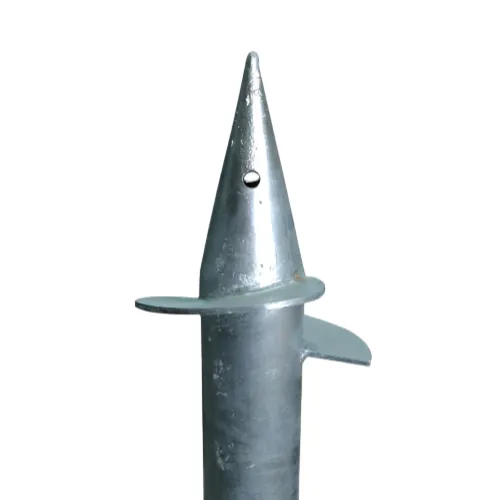
An active site showcasing the efficient installation of spiral piles.
Customization Solutions and Unrivaled Engineering Support
Every foundation project presents a unique set of challenges and requirements, influenced by soil conditions, structural loads, environmental factors, and site accessibility. Recognizing this, we offer comprehensive customization solutions for our Hot Dip Galvanized Spiral Piles, coupled with expert engineering support, ensuring that our products are perfectly tailored to meet the precise demands of your project, no matter how complex the piling ground.
Tailored Design and Manufacturing:
Our manufacturing capabilities are highly flexible, allowing us to produce spiral piles with customized specifications:
- Varying Diameters and Lengths: From smaller piles for light residential structures to large-diameter, multi-helix piles for heavy industrial applications, we can produce shaft diameters from 48mm up to 300mm and lengths exceeding 12 meters.
- Helix Configuration: We offer single, double, triple, or even quadruple helix designs, with custom helix diameters and pitches to optimize load-bearing and uplift capacities for specific soil profiles. This allows for fine-tuning based on geotechnical reports, ensuring maximum efficiency in various piling grounds.
- Material Grades: While standard steel grades are common, we can source and fabricate piles from specific high-strength or corrosion-resistant steel alloys if dictated by extreme environmental conditions or specialized structural requirements.
- Connection Adapters: We design and manufacture a wide range of top connection options, including square plates, U-brackets, bolted flanges, and custom interfaces, to seamlessly integrate with various steel structures, timber frames, or concrete caps. These adapters are also hot-dip galvanized to maintain uniform corrosion protection.
Comprehensive Engineering and Technical Support:
Our team of experienced geotechnical and structural engineers provides end-to-end support, collaborating with clients from the initial concept phase through project completion. This authoritative partnership ensures optimal design and execution:
- Geotechnical Review: We assist in interpreting soil reports (e.g., SPT N-values, CPT data, undrained shear strength) to determine the most appropriate spiral pile design and depth, accounting for factors like frost penetration, expansive soils, and seismic activity.
- Load Capacity Calculations: Utilizing industry-accepted methodologies (e.g., individual bearing theory, cylindrical shear method) and proprietary software, we provide precise calculations for axial compression, uplift, and lateral capacities based on site-specific geotechnical data.
- Design Optimization: Our engineers work to optimize pile spacing, helix configuration, and overall foundation layout to achieve the most efficient and cost-effective solution, minimizing the number of piles required while maintaining structural integrity.
- Installation Guidance: We provide detailed installation guidelines and can offer on-site technical assistance, ensuring that the piles are installed correctly to achieve the designed torque and load capacity. We understand the nuances of various piling ground conditions and can advise on best practices.
- Certification and Compliance: We ensure all designs and manufacturing processes comply with relevant international standards, including ISO 9001 for quality management, ASTM A123 for galvanization, and applicable building codes. Our rigorous internal testing protocols complement external certifications, offering an additional layer of trustworthiness.
Why Our Expertise Matters:
With years of specialized experience in helical foundation systems, we've encountered and successfully engineered solutions for thousands of projects across various industries and challenging locales. This accumulated expertise allows us to provide practical, reliable, and cost-efficient designs. Our collaborative approach ensures that clients are fully informed and confident in the foundation solution selected, transforming complex geotechnical challenges into simplified, high-performance outcomes. We pride ourselves on not just supplying a product, but providing a complete foundation solution backed by proven engineering excellence and a deep understanding of spiral pile technology.
Ensuring Trust and Reliability: Quality Assurance and Customer Commitment
At the core of our operations is an unwavering commitment to quality, reliability, and customer satisfaction. We understand that in the B2B sector, trust is built upon consistent performance, verifiable standards, and robust support. Our Hot Dip Galvanized Spiral Piles are not just products; they are critical components in your infrastructure, and we ensure their integrity through stringent quality control, comprehensive warranties, and transparent processes.
Authoritative Certifications and Testing:
- ISO 9001 Certified Quality Management System: Our manufacturing facilities operate under a certified ISO 9001 quality management system. This international standard verifies that our processes are consistently managed and controlled, from raw material procurement to final product inspection and delivery, ensuring consistent product quality and customer satisfaction.
- ASTM & EN Standards Compliance: All our spiral piles are manufactured to meet or exceed relevant international standards. The hot-dip galvanization process strictly adheres to ASTM A123/A123M and ISO 1461, ensuring optimal coating thickness and metallurgical bond for maximum corrosion protection. The steel materials conform to ASTM A500/A53 or EN 10219/10210.
- Rigorous In-House and Third-Party Testing:
- Material Testing: Prior to production, raw steel undergoes chemical analysis and mechanical testing (tensile strength, yield strength, elongation) to verify conformance to specified grades.
- Weld Integrity: Non-destructive testing (NDT), including visual inspection, ultrasonic testing, and magnetic particle inspection, is regularly performed on critical weld areas to ensure flawless fabrication.
- Galvanization Quality: Coating thickness is measured post-galvanization using calibrated instruments, and adhesion tests are performed to confirm the metallurgical bond.
- Load Testing: While theoretical calculations provide an excellent baseline, we frequently support or conduct on-site full-scale load tests (compression, tension, lateral) to empirically validate the design capacity in actual piling ground conditions. This empirical data reinforces our engineering expertise and product performance.
- Traceability: Each spiral pile is assigned a unique identifier, allowing for full traceability back to raw materials, manufacturing batch, and inspection records. This provides complete transparency and accountability.
Our Commitment to You:
- Reliable Delivery Cycle: We understand the importance of project timelines. Our streamlined manufacturing process and robust logistics network enable us to provide competitive lead times and ensure on-time delivery. Typical lead times for standard orders range from 3-6 weeks, depending on volume and customization. For urgent projects, expedited options can be discussed.
- Comprehensive Warranty: We stand behind the quality of our Hot Dip Galvanized Spiral Piles with a comprehensive warranty against manufacturing defects and premature corrosion. Specific warranty terms, including duration and coverage, are provided with each quotation, reflecting our confidence in the product's design life.
- Dedicated Customer Support: Our relationship with clients extends beyond the sale. Our dedicated customer support team and technical experts are available to provide assistance, answer queries, and address any concerns throughout the project lifecycle, from initial inquiry to post-installation. We aim to be a long-term partner in your success.
Frequently Asked Questions (FAQ):
A: Hot Dip Galvanized Spiral Piles are exceptionally versatile and can be installed in a wide range of soil conditions, including cohesive clays, granular sands, silts, and even areas with high water tables. However, their performance varies with soil density and consistency, necessitating a geotechnical report for optimal design. Installation in very dense rock or refusal layers requires specialized techniques or alternative solutions.
A: When hot-dip galvanized to ASTM A123 standards (min. 85 microns coating), our spiral piles are designed for a service life of 50 to 100 years or more, depending on soil corrosivity and environmental exposure. The zinc coating provides sacrificial protection, preventing rust and degradation for decades.
A: While primarily used for light to medium-duty structures, larger diameter and multi-helix spiral piles can be engineered to support substantial loads. Our engineering team can assess your specific load requirements and design a tailored solution, sometimes in conjunction with other foundation elements, to ensure structural integrity for industrial applications like pipe racks, equipment skids, and small buildings.
A: The initial unit cost of a spiral pile can be comparable or slightly higher than basic concrete footings. However, when considering the total installed cost, including labor, equipment rental, reduced excavation, no concrete curing time, minimal spoil disposal, and long-term maintenance savings, spiral piles frequently offer a significant overall cost advantage, often reducing project foundation costs by 15-30% on average, particularly in challenging piling ground conditions or where speed is critical.
Conclusion: The Future of Foundations is Helical
The Hot Dip Galvanized Spiral Pile represents a transformative leap in foundation engineering, offering a compelling blend of speed, sustainability, durability, and cost-effectiveness. As industries increasingly prioritize efficient construction methodologies and environmentally responsible practices, the advantages of helical piles become undeniably clear. From rapidly deployed solar farms to resilient telecommunications infrastructure and robust steel structure foundations in challenging piling ground, the spiral pile provides a proven, high-performance solution.
Our commitment to precision manufacturing, superior hot-dip galvanization, and comprehensive engineering support ensures that each spiral pile delivered is a product of uncompromising quality and reliability. By choosing our Hot Dip Galvanized Spiral Pile for your steel structure foundation needs, you are not just acquiring a product; you are investing in a future-proof foundation solution backed by expertise, experience, and unwavering trustworthiness, designed to stand the test of time and terrain.
References
- Das, B. M. (2015). Principles of Foundation Engineering. Cengage Learning. (General principles of foundation design and soil mechanics, relevant for understanding piling ground behavior).
- Perko, H. A. (2009). Helical Piles: A Practical Guide to Design and Installation. John Wiley & Sons. (Detailed technical guide specific to helical piles, covering design, installation, and performance).
- American Society for Testing and Materials (ASTM). ASTM A123/A123M-17: Standard Specification for Zinc (Hot-Dip Galvanized) Coatings on Iron and Steel Products. (Standard for galvanization quality, crucial for corrosion resistance of spiral piles).
- American Institute of Steel Construction (AISC). (2017). Steel Construction Manual. (Design standards and practices for steel structures, which often utilize spiral piles as foundations).
- FHWA-SA-98-089. (1998). Helical Anchor Foundations. U.S. Department of Transportation, Federal Highway Administration. (Government publication detailing the use of helical anchors in transportation infrastructure, providing authoritative insights into their application and performance).
-
Heavy Duty Ramp Gate Hinges Guide for Industrial EquipmentNewsApr.16,2026
-
Guide to Selecting the Right Ramp Door Spring Hinge for TrailersNewsApr.09,2026
-
Comprehensive Guide to Livestock Trailer Gate Hinges for Durable PerformanceNewsApr.07,2026
-
Choosing the Right Heavy Duty Hinges for Ramps A Comprehensive GuideNewsApr.04,2026
-
Comprehensive Guide to Choosing the Right Enclosed Trailer Ramp Door Extension HingeNewsMar.31,2026
-
Comprehensive Guide to Bi Fold Trailer Gate Hinges for Optimal PerformanceNewsMar.28,2026
-
Comprehensive Guide to Durable Aluminum Trailer Ramp Hinges for Optimal PerformanceNewsMar.26,2026