





Regional Analysis
Hardware Market Dynamics in Sri Lanka
Understanding the intersection of industrial growth and mechanical requirements.
Sri Lanka's manufacturing landscape is characterized by a blend of traditional textile industries and a growing construction sector. The demand for high-quality metal hardware is driven by the need for sustainable infrastructure and efficient production lines. In the metal products industry, there is a critical requirement for components that can withstand high humidity and salty air, particularly in coastal industrial zones. This environmental factor makes the selection of materials and coatings a primary consideration for local procurement officers.
Current market trends show a shift toward automation and precision engineering. As local factories upgrade their equipment, the transition from basic belts to specialized round belt pulley systems has become evident. There is an increasing preference for OEM solutions that allow for exact fitment, reducing the downtime associated with using non-standardized parts. This trend is further pushed by the adoption of international safety standards in warehouse management and lifting operations across the island.
The primary opportunity for growth lies in the modernization of logistics and garment manufacturing hubs. However, constraints remain in the form of limited local high-precision casting capabilities. This creates a strong reliance on specialized manufacturers who can provide BSCI-tested and ASTM-compliant hardware. The outlook suggests a steady increase in the demand for heavy-duty ceiling mount pulley systems as commercial real estate expands in urban centers like Colombo and Kandy.
Industry Progress
The Evolution of Industrial Pulley Engineering
From basic mechanical transmission to precision-engineered power systems.
Early Adoption
Basic Transmission
Reliance on cast iron pulleys with wide tolerances. Systems were prone to high vibration and frequent belt slippage in industrial settings.
Recent Development
Precision Standards
Introduction of CNC machining and alloy steels. This shift allowed for the development of more complex double pulley systems with higher efficiency.
Current Phase
Custom Integration
Focus on ODM solutions and environmental resilience. Components are now tailored to specific climate conditions and load-bearing requirements.
Material Science Advancement
The move toward composite alloys and specialized surface treatments has drastically reduced the failure rate of pulleys in humid environments. Modern hardware now incorporates corrosion-resistant layers that ensure longevity without sacrificing mechanical grip.
Smart Logistics Integration
Pulley systems are no longer viewed as standalone parts but as integrated components of a wider automated system. This requires higher precision in the manufacturing of garage door chain pulley units to synchronize with electronic controllers.
Global Compliance Shift
Adherence to BSCI and ASTM standards has become a non-negotiable requirement for exporters. This ensures that hardware supplied to international markets like Sri Lanka meets strict safety and ethical production guidelines.
Future Outlook
Emerging Trends in Hardware Manufacturing
Anticipating the next wave of mechanical engineering requirements.
Ultra-Low Friction Materials
Research into self-lubricating alloys is reducing the need for manual maintenance. This trend is critical for pulleys in inaccessible ceiling mounts where lubrication is difficult.
Modularity in Design
The industry is moving toward modular pulley assemblies that allow for the quick replacement of worn sheaves without dismantling the entire support structure.
Rapid Prototyping via AI
AI-driven design is optimizing the weight-to-strength ratio of metal pulleys, allowing for lighter components that can handle identical loads.
Eco-Friendly Metal Processing
Shift toward sustainable casting and powder coating processes to reduce the environmental footprint of hardware manufacturing.
The integration of these trends is reshaping how mechanical components are sourced globally. For the Sri Lankan market, the adoption of ultra-low friction materials is particularly promising, as it directly addresses the maintenance challenges posed by industrial dust and high humidity. When pulleys require less frequent lubrication and resist environmental degradation, the total cost of ownership for the end-user drops significantly.
Furthermore, the move toward modular design allows for a more agile supply chain. Instead of replacing entire transmission units, operators can source specific high-wear components, such as specialized wire pulley wheels, ensuring that production lines remain active. This technical shift, combined with AI-optimized designs, marks a transition from "replacement-based" maintenance to "precision-based" optimization.
Practical Application
Hardware Deployment in Sri Lankan Contexts
How our pulley systems solve real-world operational problems in different environments.
01
Colombo Logistics Hubs: Heavy-Duty Ceiling Mount Pulleys
In high-density warehouses in Colombo, ceiling mount pulley systems are used for moving materials. The high salt content in the air often corrodes standard steel. By deploying Aobang's export-grade treated pulleys, these hubs reduce their maintenance cycle by avoiding surface rust and ensuring the pulleys glide smoothly under maximum load.
02
Gampaha Manufacturing Plants: Round Belt Pulley Optimization
Small-scale factories in Gampaha often face power fluctuations and belt slippage. Implementing precision-machined round belt pulleys ensures a tighter grip and more consistent torque transfer. This operational change reduces energy waste and prevents the sudden belt snaps that typically halt production lines during peak hours.
03
Urban Residential Complexes: Garage Door Chain Pulleys
In modern residential developments in Colombo, automated garage doors require reliable chain pulleys. Standard parts often fail due to temperature-induced expansion. Aobang's specifically engineered garage door chain pulley units provide a stable interface that accommodates thermal shifts, ensuring a quiet and seamless opening experience.
04
Kandy Agricultural Processing: Wire Pulley Lifting Systems
Agricultural processing units in the highlands use wire pulley systems for lifting raw materials. The environment is often damp and dusty. Using specialized wire pulleys with reinforced grooves prevents the cable from fraying, significantly increasing the safety of the operators and the reliability of the lifting process.
05
Industrial Maintenance Workshops: Double Pulley Customization
Maintenance shops often need to repair diverse machinery where standard parts are unavailable. Aobang's ODM service allows these workshops to order a double pulley based on precise measurements, eliminating the need for improvised repairs and restoring equipment to original manufacturer specifications.
Industry Perspectives
Representative Use Cases
Illustrative outcomes from typical deployment scenarios in the hardware sector.
Typical industrial operators in coastal regions report a significant decrease in oxidation-related failures after switching to export-standard coated pulleys. The ability to specify exact tolerances for round belt systems has helped in reducing belt replacement frequency by ensuring perfect alignment.
From a procurement perspective, the transition to a direct manufacturer who offers both OEM and ODM services simplifies the supply chain. Being able to source specialized ceiling mount pulleys that meet international safety certifications reduces the risk associated with local site inspections.
In garage door automation projects, the use of precision-cut chain pulleys has resolved common issues of noise and uneven tension. The consistency in product quality ensures that installers can complete setups faster without needing to adjust for manufacturing variances.
Our Heritage
About Aobang Imp.& Exp. Co., Ltd.
A legacy of precision manufacturing and global hardware supply.
2006
Company Foundation
Established in Shijiazhuang, Hebei Province, Aobang began its journey as a dedicated manufacturer specializing in high-quality hardware and building materials, focusing on durability and international standards.
Growth Phase
Global Market Expansion
Through the integration of advanced production facilities and a commitment to quality, Aobang expanded its reach to over 50 countries, providing comprehensive OEM, ODM, and OBM solutions.
Current Era
Certification & Compliance
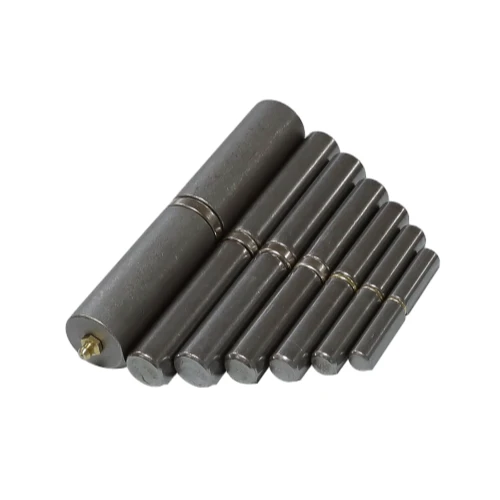
Passing the BSCI test and ensuring products meet EN71 and ASTM standards, Aobang continues to lead in producing pulleys, hinges, wrought irons, and ground screws for a global clientele.
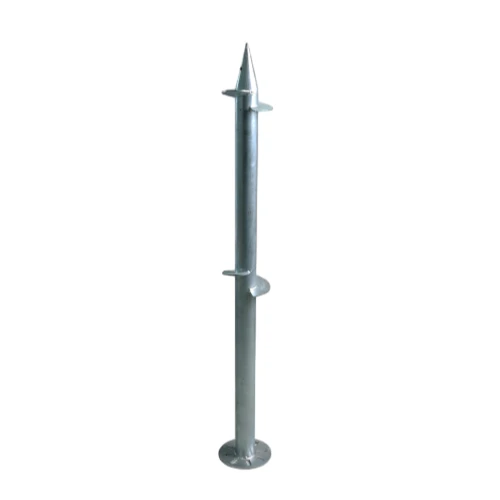
Hot Dip Galvanized Spiral Pile For Steel Structure Foundation

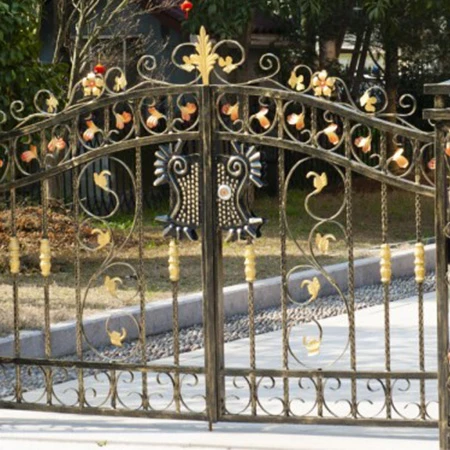
Cheap Metal Wrought Iron Decoration

Wholesale Cast Wrought Iron Ornaments
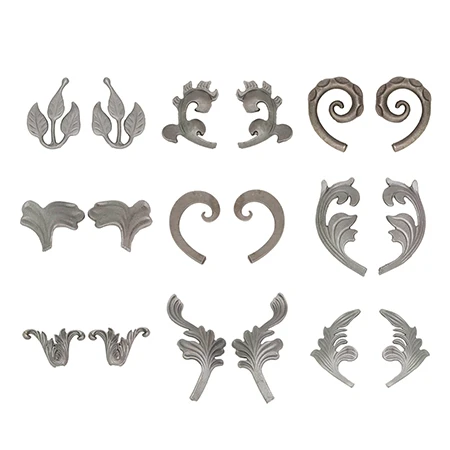
Wholesale Wrought Iron Leave
Technical Support
Frequently Asked Questions
Direct answers to common queries regarding pulley selection and procurement.
What is the primary difference between a standard pulley and an industrial double pulley?
A double pulley features two sheaves on a single axle, allowing for a change in the direction of the rope or belt or providing a mechanical advantage (reduction in effort) to lift heavier loads. In industrial settings, they are used to route cables around obstacles or to create a block-and-tackle system. The key difference lies in the load distribution and the ability to redirect tension, which is essential for complex lifting machinery.
How do I determine the correct size for a round belt pulley in a manufacturing line?
Selection depends on three main factors: the desired speed ratio (diameter of the driver vs. driven pulley), the belt width, and the shaft diameter. First, calculate the required RPM at the output; second, ensure the pulley groove matches the belt profile to prevent slippage. For Sri Lankan operations, we recommend adding a safety margin for load capacity to account for potential belt wear in humid conditions.
Can your ceiling mount pulleys be customized for specific architectural requirements in Sri Lanka?
Yes, Aobang provides full ODM services. We can customize the mounting bracket geometry, the load-bearing capacity, and the surface coating to suit specific architectural constraints or environmental needs. Whether you need specific hole patterns for reinforced concrete ceilings or specialized anti-corrosive finishes for coastal warehouses, we can develop a technical drawing and prototype to meet your exact specifications.
What are the maintenance requirements for garage door chain pulleys to avoid failure?
Regular lubrication is the most critical factor to reduce friction and wear. Additionally, check the chain tension quarterly; over-tightening can put excessive stress on the pulley axle, while under-tightening leads to jumps. Using precision-machined pulleys from Aobang reduces the frequency of these adjustments because the groove is designed to maintain a consistent grip on the chain, minimizing mechanical shock during operation.
How does Aobang ensure that wire pulley components meet international export standards?
We adhere to strict quality control protocols, including BSCI certification for social compliance and ensuring our products meet ASTM and EN71 standards. Each batch undergoes dimensional inspection and load testing to ensure that the wire pulley can handle the rated capacity without deformation. This rigorous process ensures that our products are safe for deployment in diverse global markets, including the demanding industrial sectors of Sri Lanka.
What is the best way to initiate a custom ODM project for specialized hardware?
The most efficient process begins with providing a technical drawing or a detailed specification sheet including dimensions, material requirements, and expected load. Our engineering team then reviews the feasibility and provides a proposed design. Once the design is approved, we move to prototyping and sample validation. This structured approach ensures that the final product is perfectly aligned with your operational needs and avoids costly errors during mass production.
Ready to Upgrade
Secure Precision Hardware for Your Sri Lankan Project
Whether you are upgrading a manufacturing plant in Gampaha or designing a warehouse in Colombo, Aobang provides the technical expertise and certified hardware you need. Our team is ready to discuss your OEM/ODM requirements to ensure your mechanical systems operate with maximum efficiency and safety. Reach out today to explore our full range of industrial pulleys.
Discuss Your Requirements