






Regional Analysis
The Industrial Hardware Landscape in Egypt
Analyzing the intersection of infrastructure growth and the demand for precision metal components.
Egypt's industrial sector is currently undergoing a significant transition, driven by massive infrastructure projects and the expansion of manufacturing hubs near Cairo and Alexandria. The demand for high-quality metal hardware, specifically transmission components like pulleys, is increasing as local factories upgrade to more automated systems. However, the Egyptian market often faces a dichotomy between low-cost, low-durability imports and prohibitively expensive premium brands, leaving a gap for reliable, mid-to-high range industrial components that adhere to international standards.
Current market trends indicate a shift toward energy efficiency and reduced operational downtime. This has led to an increased interest in specialized components such as double pulley systems that allow for more complex mechanical advantages and reduced motor strain. Furthermore, the rise in modern warehouse construction across Egypt is driving the adoption of synchronized lifting mechanisms, where precision-engineered pulleys are essential for the reliability of automated storage and retrieval systems (ASRS).
The primary opportunity for growth lies in the integration of customized hardware solutions that can withstand Egypt's specific environmental challenges, such as high salinity in coastal areas and extreme heat in the interior. The constraint remains the lack of local precision casting facilities, making the import of certified OEM parts from experienced manufacturers a critical necessity. Looking forward, the outlook for the Egyptian hardware market is bullish, with a projected increase in demand for ASTM and EN71 certified components as local safety regulations become more stringent.
Technical Journey
Evolution of Pulley System Engineering
From basic mechanical lifting to precision-engineered power transmission.
Early Phase
Basic Casting
Pulleys were primarily produced using basic sand casting, focusing on raw strength but lacking precision in groove geometry, resulting in significant energy loss.
Growth Phase
Precision Machining
The introduction of CNC machining allowed for tighter tolerances, enabling the use of specialized wire pulley designs for higher load capacities.
Current Phase
Material Optimization
Modern engineering now integrates advanced alloys and anti-corrosive coatings to maximize the lifecycle of components in extreme industrial environments.
Shift to Modular Design
Industry standards are moving toward modular pulley systems that can be quickly swapped or upgraded without requiring a complete overhaul of the machine's drive train, reducing maintenance windows.
Enhanced Load Distribution
There is a growing trend in using compound pulley arrangements to reduce the initial torque requirements of motors, which directly translates to lower energy consumption in large-scale Egyptian plants.
Stringent Safety Certifications
The transition from generic hardware to certified components (BSCI, ASTM) is no longer optional but a requirement for companies exporting finished goods from Egypt to the EU and North America.
Future Outlook
Emerging Trends in Metal Hardware Manufacturing
Identifying the technical shifts that will define the next decade of industrial transmission.
Smart Material Integration
Integrating wear-resistant composites with traditional metal casting to create pulleys that offer the strength of steel with the friction properties of polymers.
Energy-Efficient Transmission
Developing low-friction groove profiles that minimize belt heat buildup, which is critical for operations in high-ambient temperature regions like Egypt.
Additive Manufacturing
Utilizing 3D metal printing for rapid prototyping of custom pulleys, allowing Egyptian engineers to test unique configurations before full-scale production.
Predictive Maintenance
Integration of sensors with pulley housings to monitor vibration and heat, alerting operators to imminent failure before catastrophic breakdown occurs.
The overarching theme of these trends is the move toward "precision-on-demand." As the Egyptian economy diversifies, the need for hardware that is not just "strong enough" but "exact enough" becomes paramount. The shift toward energy-efficient transmission is particularly relevant in the context of Egypt's national energy goals, where reducing the friction loss in industrial drive systems can lead to measurable reductions in electricity costs across thousands of manufacturing units.
Furthermore, the convergence of international certification and customized design allows for a more seamless integration of foreign technology into local contexts. By combining the scale of Chinese manufacturing with the specific needs of the Egyptian market—such as dust resistance and thermal stability—the industry is moving toward a more resilient and sustainable infrastructure for power transmission and lifting hardware.
Practical Application
Deployment Scenarios in the Egyptian Market
How Aobang pulley systems solve real-world challenges across various Egyptian sectors.
01
Industrial Warehouse Automation in Cairo
In the dense logistics hubs of Cairo, facility managers utilize our ceiling mount pulley systems to optimize vertical space. Given the high turnover of goods, these pulleys must handle constant cycling without developing flat spots. By using Aobang's reinforced alloys, these operators reduce their monthly maintenance intervals by implementing hardware that resists the wear and tear of continuous 24/7 operations.
02
Agricultural Processing Plants in the Nile Delta
Agricultural machinery in the Delta region is exposed to organic debris and high humidity. Our round belt pulley systems are employed here to drive conveyor belts. The precision grooving prevents belt slippage caused by moisture, ensuring a consistent flow of produce through the processing line and reducing the energy spikes associated with slip-and-grip mechanical failure.
03
Residential Garage Installations in New Cairo
Modern villas in New Cairo often feature high-end automated garage doors. The use of a precision garage door chain pulley ensures that the door opens and closes silently and smoothly. By eliminating the "jerking" motion common in lower-quality pulleys, the entire motor assembly is preserved, and the homeowner experiences a premium, reliable entry system that requires minimal adjustment over years of use.
04
Heavy-Duty Lifting in Alexandria Port Facilities
The salty, corrosive air of Alexandria is brutal on metal hardware. For port-side lifting equipment, a double pulley system is used to multiply lifting force. Aobang provides specialized anti-corrosion coatings that prevent the rust-induced friction that typically plagues port hardware, ensuring that heavy loads are moved safely and efficiently without the risk of pulley seizure.
05
Textile Machinery Maintenance in Mahalla
The textile industry in Mahalla requires high-speed transmission. Wire pulley systems are integrated into the looms to ensure precise timing and tension. The high-strength materials used by Aobang prevent the pulley from warping under high-speed centrifugal force, which maintains the integrity of the fabric weave and reduces the frequency of machine recalibration.
Operator Perspectives
Representative Implementation Outcomes
Illustrating the impact of transitioning to precision-engineered hardware in typical Egyptian industrial contexts.
Implementing precision-machined pulleys in our conveyor systems has noticeably reduced the energy consumption of our drive motors. The elimination of belt slippage has not only increased our hourly throughput but has also reduced the frequency of emergency belt replacements, which previously caused significant production delays during peak harvest seasons.
The transition to ASTM-certified pulley components was a turning point for our compliance audits. Having a supplier that provides consistent quality and documented standards allows us to scale our operations with confidence, knowing that the hardware can handle the rated loads without risk of structural failure or excessive wear in coastal environments.
Customized ODM solutions have allowed us to solve specific mechanical bottlenecks in our legacy machinery. The ability to order pulleys with exact specifications rather than adapting generic parts has improved the overall smoothness of our production line and significantly extended the life of our primary drive assemblies.
Our Legacy
Aobang: A Legacy of Hardware Excellence
Dedicated to providing high-quality, customizable hardware solutions for a global clientele.
2006
Company Foundation
Aobang Imp. & Exp. Co., Ltd. was established in Shijiazhuang, Hebei Province, with a vision to become a leading manufacturer in the hardware and building materials industry, specializing in pulleys and hinges.
Operational Growth
Global Market Expansion
Through a commitment to international export standards, Aobang expanded its reach to over 50 countries, integrating advanced technology and production facilities to meet diverse global needs.
Certification Milestone
Quality Assurance Excellence
The factory successfully passed the BSCI test, and the majority of the product line achieved EN71 and ASTM certifications, ensuring trust and reliability for high-specification industrial projects.
Service Diversification
OEM, ODM & OBM Integration
Aobang evolved beyond standard supply to offer comprehensive customized solutions, working closely with professional teams to develop products meeting unique client specifications.
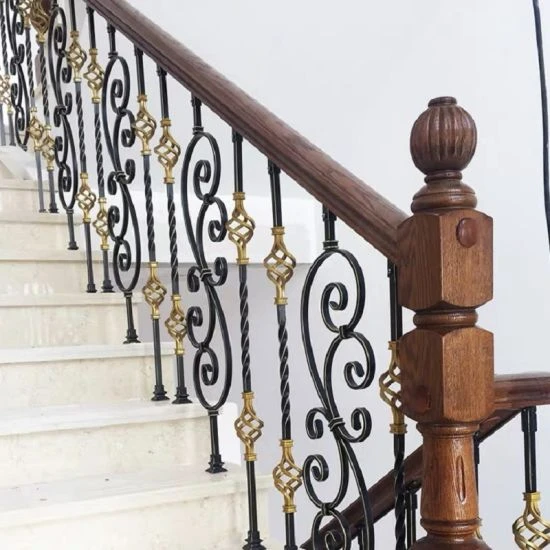
Wrought Iron Designs

Forging Wrought Iron Rosettes And Panels

Wholesale Cast Wrought Iron Ornaments

Ornamental Wrought Iron Fence Spears
Technical Support
Frequently Asked Questions about Industrial Pulleys
Clarifying the technical and commercial aspects of sourcing high-performance pulleys for Egypt.
What is the primary difference between a standard pulley and a double pulley system?
A standard pulley typically provides a simple redirection of force or a single mechanical advantage. In contrast, a double pulley system allows for a compound mechanical advantage, which significantly reduces the input force required to lift a heavy load. This is particularly beneficial in industrial lifting and crane operations where reducing the load on the drive motor is critical for energy efficiency and system longevity.
How do I determine the correct round belt pulley size for my industrial application?
Selection depends on the required torque ratio, the belt diameter, and the maximum load. First, determine the desired speed reduction or increase between the driver and driven shafts. Then, calculate the pulley diameters based on this ratio. It is crucial to ensure the groove profile matches the belt material to prevent slippage. We recommend providing your technical specifications to our ODM team for a precision-calculated recommendation.
Are your pulleys suitable for the high-temperature and dusty environments found in Egypt?
Yes, our pulleys are engineered with materials and coatings specifically designed to resist abrasive particulates and thermal expansion. By utilizing high-density alloys and specialized surface treatments, we ensure that the pulley grooves do not erode prematurely due to sand infiltration, which is a common issue in Middle Eastern industrial sites. This maintains a consistent grip on the belt and extends the replacement cycle.
What certifications should I look for when importing pulleys for construction projects in Egypt?
For industrial and construction safety, look for ASTM (American Society for Testing and Materials) and EN71 certifications. These ensure the material strength and structural integrity of the component under stress. Additionally, BSCI certification of the manufacturer indicates a commitment to ethical production and consistent quality management, which is vital for maintaining supply chain stability in large-scale government or private infrastructure projects.
Can you provide custom pulley designs if standard sizes are not available for my machinery?
Absolutely. We specialize in ODM (Original Design Manufacturing) services. If you provide us with the technical drawings or specific requirements—such as bore size, outer diameter, and groove depth—our engineering team will develop a custom prototype. Once approved, we can scale production to your required volume, ensuring a perfect fit for your machinery and eliminating the need for inefficient field modifications.
What is the typical lead time for bulk orders shipped to Egyptian ports?
Lead times vary based on whether you are ordering standard stock or customized ODM products. Standard items are typically processed and shipped quickly from our integrated facilities. For custom projects, the timeline includes design, prototyping, and mass production. We work closely with our logistics partners to ensure timely delivery to Egyptian ports, providing full documentation to facilitate smooth customs clearance.
Ready to Upgrade
Optimize Your Industrial Power Transmission in Egypt
Whether you are managing a large-scale factory in Cairo or a specialized workshop in Alexandria, Aobang provides the precision pulleys you need to eliminate downtime. Our team is ready to help you select the perfect components or develop a custom ODM solution that meets your exact technical requirements.
Discuss Your Requirements