






Industry Analysis
The Landscape of Metal Hardware in Germany
Exploring the intersection of high-precision engineering and sustainable industrial growth.
Germany's industrial sector is characterized by a profound commitment to "Industrie 4.0," where precision and reliability are non-negotiable. The demand for high-quality metal products, particularly pulleys and fasteners, is driven by the automotive, machinery, and construction industries. In these sectors, the operational environment often involves heavy loads and continuous duty cycles, necessitating hardware that can withstand extreme stress without deformation. The German market prioritizes longevity and technical certification over low initial cost, creating a demand for suppliers who can provide documented quality standards and customized engineering.
Current trends indicate a shift toward energy-efficient transmission systems. There is an increasing move from traditional belt drives to optimized round belt pulley systems that reduce friction and power waste. Furthermore, the integration of smart automation in warehouses and garage systems has increased the requirement for high-precision garage door chain pulley components that minimize vibration and noise. This transition is fueled by a broader corporate drive toward sustainability and the reduction of carbon footprints across the manufacturing supply chain.
The primary constraint for German operators remains the balance between customization and lead time. While the need for specialized ODM solutions is high, the reliance on global supply chains can introduce volatility. This creates a significant opportunity for manufacturers who can integrate comprehensive OEM services with reliable logistics. The outlook for the German hardware market remains positive, with growth expected in the sectors of green building and automated logistics, where specialized lifting and transmission hardware will be critical for infrastructure deployment.
Technological Journey
Evolution of Industrial Pulley Systems
From simple mechanical rotation to high-precision automated transmission.
Early Phase
Basic Cast Iron Era
Early systems relied on heavy cast iron pulleys with wide tolerances. While durable, these components suffered from significant vibration and high friction, limiting their use in precision machinery.
Mid-Adoption
Precision Alloy Shift
The introduction of alloy steels and precision machining allowed for tighter tolerances. This reduced energy loss and enabled the development of high-speed round belt pulleys.
Current Phase
Smart Integration
Modern pulleys are now designed using CAD/CAM for specific load-bearing scenarios, incorporating specialized coatings and geometry to maximize lifespan and efficiency.
Advanced Material Science
The transition toward composite and high-tensile alloys has enabled pulleys to become lighter without sacrificing load capacity. This reduction in rotating mass directly translates to faster acceleration and lower energy requirements in automated systems.
Dynamic Load Optimization
Engineering focus has shifted toward optimizing the contact area between the belt and the pulley. By refining the groove geometry, manufacturers have significantly reduced heat buildup during continuous operation.
Modular Hardware Design
There is a growing trend toward modularity, where pulleys and mounting brackets can be quickly swapped or adjusted. This reduces maintenance time and allows facilities to reconfigure production lines with minimal disruption.
Future Outlook
Emerging Trends in Metal Hardware Manufacturing
Analyzing the drivers of innovation in the global hardware supply chain.
Eco-Friendly Surface Treatments
Shift toward chrome-free and low-VOC coatings to meet European environmental regulations. This reduces toxic runoff during production and improves the sustainability profile of the final product.
Automated Quality Inspection
Implementation of AI-driven vision systems to detect micron-level defects in pulley grooves. This ensures 100% consistency across large batches, eliminating the risk of early-stage failure.
Customization via Rapid Prototyping
Using additive manufacturing for initial mold design allows for faster iteration of custom pulley shapes. This drastically shortens the OEM cycle from design to mass production.
Integration with Smart Monitoring
Designing pulleys that are compatible with vibration sensors for predictive maintenance. This allows operators to replace components based on actual wear rather than fixed schedules.
The convergence of metallurgy and digitalization is redefining the hardware sector. For German firms, the value proposition has shifted from simply purchasing a component to acquiring a precision-engineered solution that integrates into a larger automated ecosystem. This requires suppliers to be more than just manufacturers; they must be technical partners capable of providing ODM services that account for the specific load-bearing and environmental conditions of the local installation site.
Moreover, the global push for supply chain resilience is encouraging the adoption of "Quality-First" sourcing. Rather than focusing on the lowest unit price, companies are evaluating the total cost of ownership, including the reduced downtime and energy savings associated with high-precision pulleys. This trend favors manufacturers who invest in BSCI compliance and rigorous quality control, ensuring that exported components are immediately ready for high-stress industrial application upon arrival.
Application Context
Practical Applications in German Infrastructure
How specialized pulley systems solve real-world engineering challenges in local environments.
01
Automated Logistics Hubs in Hamburg
In large-scale sorting facilities, high-speed conveyors utilize round belt pulley systems. The high-humidity coastal environment requires corrosion-resistant coatings to prevent oxidation, while the high-throughput demand necessitates precision grooving to prevent belt slippage during peak sorting hours, ensuring seamless package flow.
02
Industrial Ceiling Lifts in Bavarian Factories
Precision manufacturing plants often deploy ceiling mount pulley systems for tool retrieval. Because these are installed in high-ceiling environments with strict safety regulations, the pulleys must feature reinforced mounting brackets and high-tensile strength to ensure load stability and operator safety during vertical transport.
03
Residential Garage Automation in Berlin
Modern urban homes increasingly use automatic door systems. The installation of a garage door chain pulley ensures that the heavy insulated doors move smoothly. By reducing the friction in the chain drive, these pulleys extend the life of the electronic motor and reduce noise pollution in dense residential areas.
04
Heavy-Duty Material Handling in Ruhr Valley
In the industrial heartland, heavy-duty cranes use double pulley configurations to multiply lifting force. Given the extreme load requirements, these components are manufactured from high-density alloys to prevent deformation under pressure, ensuring that heavy machinery can be moved with precision and safety.
05
Specialized Cable Systems for Architectural Projects
Modern German architecture often incorporates visible cable-driven elements. The use of a precision wire pulley allows for clean aesthetic lines without sacrificing mechanical function. These pulleys are custom-finished to match architectural specifications while maintaining the structural integrity required for public spaces.
Deployment Insights
Representative Use Case Perspectives
Illustrative scenarios based on typical hardware deployments in the European industrial sector.
Implementing high-precision round belt pulleys in a conveyor system typically results in a noticeable reduction in belt wear and energy consumption. The key is the exact profile match, which prevents the micro-slippage common in generic hardware, thereby stabilizing the overall throughput of the sorting line.
For residential automation, the shift to optimized chain pulleys reduces the mechanical noise of garage doors. By focusing on the tooth geometry and alloy hardness, the system maintains consistent tension, which prevents the jerky movements that often lead to motor burnout in lower-quality installations.
In heavy industrial lifting, the reliability of a double pulley system is paramount. Using components that meet international export standards ensures that the safety factors are maintained under full load, which is critical for compliance with European occupational health and safety regulations.
Our Legacy
Commitment to Hardware Excellence
Building trust through precision manufacturing and global service since 2006.
2006
Company Foundation
Aobang Imp. & Exp. Co., Ltd. was established in Shijiazhuang, Hebei Province, starting as a specialized provider of hardware and building materials with a focus on quality and reliability.
Growth Phase
Global Market Expansion
Through a commitment to international export standards, Aobang expanded its reach to over 50 countries, providing OEM, ODM, and OBM solutions for pulleys and wrought irons.
Certification
BSCI and Quality Approval
The factory successfully passed the BSCI test, ensuring ethical production and quality management that allows products to pass EN71 and ASTM standards for global markets.
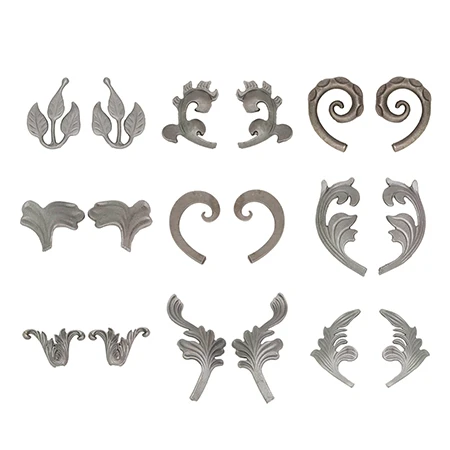
Wholesale Wrought Iron Leave
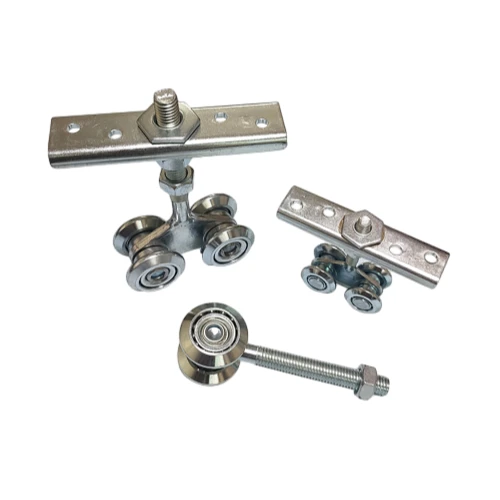
National Standard Bearing Industrial Pulley Ball Bearing Double Wheel And Single Wheel Sliding Door Hanging Wheel
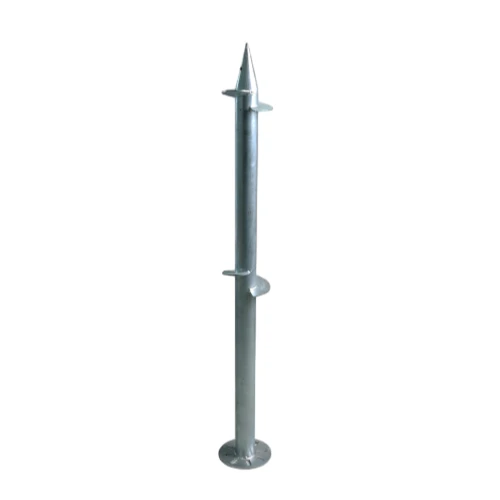
Hot Dip Galvanized Spiral Pile For Steel Structure Foundation
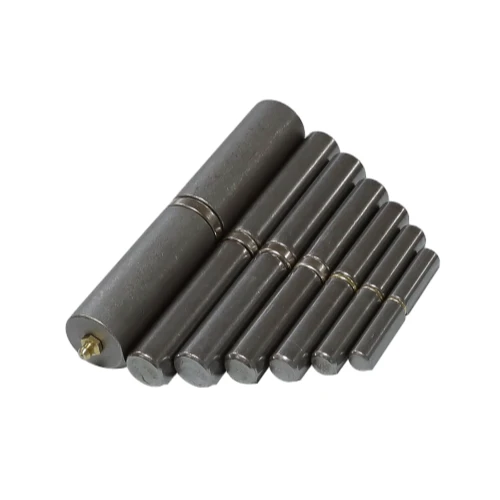
Bullet Hinges, Carbon Steel Weldable Barrel Hinges
Technical Support
Common Inquiries on Pulley Systems
Expert answers to help you select the right hardware for your specific application.
What is the primary difference between a single and a double pulley system in industrial lifting?
A double pulley system provides a mechanical advantage by distributing the load across more rope or belt segments. This effectively reduces the amount of force required to lift a specific weight, making it ideal for heavy-duty material handling where energy efficiency and reduced motor strain are priorities. It is commonly used in industrial cranes and complex hoisting mechanisms.
How do I determine the correct pulley material for a high-humidity environment in Germany?
For high-humidity areas, we recommend alloys with specialized anti-corrosion coatings or stainless steel options. The choice depends on the load requirements; while stainless steel offers superior corrosion resistance, alloy steels with industrial-grade zinc plating provide a balance of strength and protection. We evaluate the specific environmental exposure to suggest the most durable finish.
Can your ceiling mount pulley systems be customized for heritage building installations?
Yes, we provide comprehensive ODM solutions. We can customize the mounting brackets, hole patterns, and overall dimensions to fit existing structural beams in older buildings. Our team works from your technical drawings to ensure that the hardware integrates seamlessly without requiring destructive modifications to the building's architecture.
What technical indicators should I prioritize when choosing a garage door chain pulley?
You should prioritize tooth profile accuracy and surface hardness. A precise profile prevents "jumping" or slipping of the chain, while high surface hardness reduces wear over thousands of cycles. We recommend checking the alignment with the motor drive to ensure that the pulley operates on a perfectly linear axis, which minimizes vibration.
Does Aobang provide certifications to ensure components meet European safety standards?
Absolutely. Our factory is BSCI certified, and our products are designed to meet and exceed international export standards, including EN71 and ASTM where applicable. We can provide the necessary documentation to help your company maintain compliance with local German safety and quality regulations for industrial hardware.
What is the typical lead time for a custom OEM pulley order for the German market?
Lead times vary based on complexity, but our integrated production facilities allow for efficient prototyping. Once technical specifications are finalized, we move quickly from mold creation to mass production. We recommend detailed initial consultations to minimize revisions and ensure timely delivery to your facility in Europe.
Ready to Optimize
Upgrade Your Industrial Hardware with Precision German-Standard Pulleys
Whether you are managing a logistics hub in Hamburg or optimizing automated systems in Munich, our high-performance pulley solutions provide the reliability and precision your operations demand. Contact our engineering team today to discuss your custom OEM requirements and ensure your infrastructure meets the highest international standards.
Discuss Your Requirements