




Regional Analysis
The Hardware Landscape in Kenya's Industrial Sector
Analyzing the shift toward high-durability mechanical components in East Africa.
Kenya serves as a critical industrial hub for East Africa, with a growing demand for robust hardware in construction, agriculture, and manufacturing. The local market is characterized by a transition from manual labor to semi-automated mechanical systems, increasing the requirement for precision pulleys. However, the harsh operational environments—ranging from the humid coast of Mombasa to the dusty highlands of Nairobi—place extreme stress on metal components, necessitating hardware that exceeds standard specifications in terms of corrosion resistance and load capacity.
Current market trends indicate a strong shift toward customized ODM solutions. Kenyan businesses are increasingly moving away from "one-size-fits-all" imports in favor of components tailored to their specific machine specifications to reduce energy loss. There is a growing preference for high-tensile steel and treated alloys that can withstand the rigorous duty cycles of the local construction industry. Furthermore, the adoption of safety-compliant hardware is rising as regional regulations align more closely with international ASTM and EN standards.
The outlook for the Kenyan hardware market remains positive, driven by infrastructure expansion and the growth of small-scale industrialization. The primary constraint remains the availability of high-precision, export-grade components that offer a balance between cost-effectiveness and long-term durability. Companies that can provide integrated OEM services, ensuring that pulleys are compatible with diverse global machinery brands, are positioned to capture the largest share of the professional procurement market in Kenya.
Industry Progress
The Evolution of Pulley Technology
From basic mechanical wheels to precision-engineered transmission systems.
Early Adoption
Standard Cast Iron
Initial usage of basic cast iron pulleys focused on simple load bearing with high friction and limited lifespan in humid environments.
Recent Development
Precision Machining
Integration of CNC machining and alloy steels allowed for tighter tolerances, reducing slip and increasing energy efficiency in transmission.
Current Phase
Customized Engineering
The focus has shifted to application-specific designs (OEM/ODM) with advanced coatings to meet regional environmental challenges.
Materials Science Integration
The transition from basic iron to treated alloys has reduced component weight while increasing tensile strength, allowing for higher load capacities in vertical lifting systems.
Environmental Adaptation
Development of specialized coatings has addressed the critical issue of corrosion in coastal industrial zones, extending hardware life by several years.
Regulatory Standardization
Global alignment with BSCI and ASTM standards ensures that pulleys used in international projects meet stringent safety and quality benchmarks.
Future Outlook
Emerging Trends in Hardware Manufacturing
Driving the next generation of mechanical efficiency and longevity.
Adaptive Alloy Composites
Manufacturers are adopting new alloy blends that provide higher hardness-to-weight ratios, reducing the inertia of moving parts in high-speed pulley systems.
Energy-Efficient Transmission
Focus is shifting toward reducing friction loss via nano-precision grinding, allowing round belt pulley systems to operate with minimal heat generation.
Modular Hardware Design
The trend toward modularity allows for easier replacement of individual pulley components without dismantling entire transmission lines, reducing maintenance downtime.
Smart Material Sourcing
Integration of sustainable and traceable metal sourcing ensures that hardware meets both industrial performance and ESG (Environmental, Social, and Governance) criteria.
The convergence of precision engineering and material science is fundamentally changing how pulleys are deployed. By focusing on the intersection of load capacity and friction reduction, modern manufacturing can now produce garage door chain pulley and industrial hoisting units that operate with significantly lower wear rates than previous generations. This is particularly impactful for the Kenyan market, where the cost of frequent replacement often outweighs the initial investment in higher-quality components.
Furthermore, the move toward a service-oriented manufacturing model means that OEM and ODM providers are no longer just selling a product, but a calculated solution. This involves analyzing the specific torque, speed, and environmental variables of the end-user's site to determine the ideal pulley diameter and material grade. Such a data-driven approach ensures that the hardware is neither under-engineered (leading to failure) nor over-engineered (leading to unnecessary cost), providing the optimal balance for industrial efficiency.
Practical Application
Industrial Deployment Scenarios in Kenya
How our pulley systems solve real-world mechanical challenges in diverse Kenyan settings.
01
Nairobi Logistics Warehouse Hoisting
In a high-volume Nairobi distribution center, operators required a reliable wire pulley system for vertical cargo movement. The local condition involved constant 24/7 operation with heavy loads. By implementing high-tensile steel pulleys with precision-ground grooves, the facility reduced rope wear by 30% and eliminated slippage, significantly improving operational safety and speed.
02
Mombasa Port Equipment Maintenance
Equipment operating near the Mombasa coastline faced severe salt-air corrosion. Standard pulleys were failing within six months. We deployed specialized ceiling mount pulley units with advanced zinc-nickel coatings. This technical shift prevented oxidation and surface pitting, extending the hardware lifespan to over two years despite the extreme humidity.
03
Agricultural Processing Plant in Nakuru
A grain processing facility in Nakuru utilized multiple belt-driven conveyors. The existing pulleys caused excessive belt slippage, leading to energy waste. The implementation of precision round belt pulley systems with customized diameters ensured a perfect fit, stabilizing the transmission speed and reducing monthly electricity costs through improved mechanical efficiency.
04
Commercial Garage Door Systems in Nairobi
High-end commercial properties in Nairobi's business district required silent and smooth operation for large automated entrances. We provided garage door chain pulley systems engineered with low-friction alloys. This solved the problem of mechanical noise and jarring movements, providing a seamless luxury experience for tenants and reducing chain tension failures.
05
Industrial Workshop Tooling in Kisumu
A metal fabrication shop in Kisumu needed a versatile hoisting solution for heavy dies. They implemented our double pulley configurations to create a mechanical advantage system. This allowed operators to lift heavier loads with less physical effort, reducing workplace injuries and increasing the throughput of the production line.
Deployment Evidence
Representative Industrial Perspectives
Illustrative outcomes from typical hardware deployments in Kenyan industrial contexts.
The transition to precision-engineered wire pulleys solved our chronic slippage issues in the warehouse. The increased load stability has noticeably improved our daily safety metrics and reduced rope replacement frequency.
Finding hardware that can withstand the coastal humidity of Mombasa is a challenge. The anti-corrosive coatings on these pulleys have performed exceptionally well compared to our previous generic imports.
The ability to customize pulley diameters to fit our existing belt drives has eliminated the need for costly machine modifications. The efficiency gain in our transmission lines is immediately apparent.
Company Legacy
Aobang: Engineering Reliability Since 2006
A legacy of precision manufacturing and global hardware supply excellence.
2006
Company Establishment
Aobang Imp. & Exp. Co., Ltd. was established in Shijiazhuang, Hebei Province, focusing on the production and customization of high-quality hardware and building materials to serve global markets.
Growth Phase
Global Market Expansion
Through integrated production facilities and advanced technology, Aobang expanded its reach to more than 50 countries, becoming a leading supplier of pulleys, hinges, and wrought iron solutions.
Certification
Quality Standards Validation
The factory successfully passed the BSCI test, and most products achieved compliance with EN71 and ASTM standards, ensuring reliability for international export.
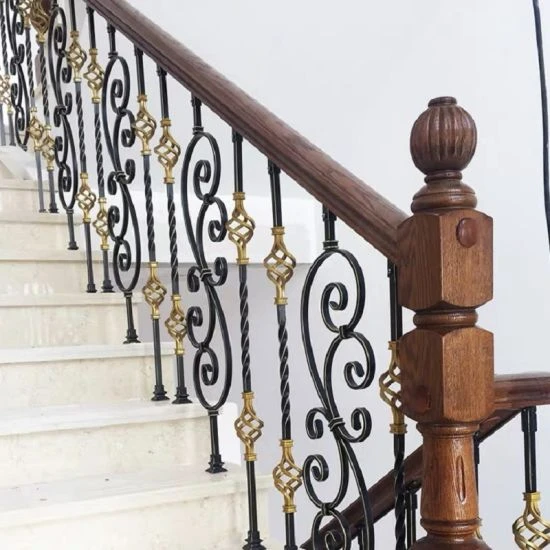
Wrought Iron Designs
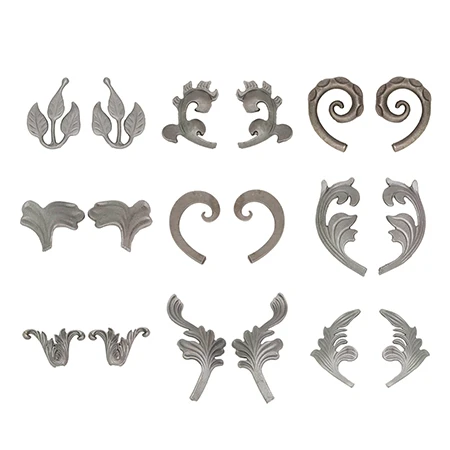
Wholesale Wrought Iron Leave

Bullet Hinges

Wholesale Cast Wrought Iron Ornaments
Knowledge Base
Common Technical Inquiries
Expert answers to help you select the right pulley system for your operational needs.
What is the primary difference between a single and a double pulley system?
The primary difference lies in the mechanical advantage. A double pulley system allows for the redirection of force and typically reduces the effort required to lift a heavy load by distributing the weight across more rope segments. This is critical for Kenyan industrial sites where heavy machinery must be moved manually or with low-power motors. However, this comes at the cost of needing more rope and slightly slower lifting speeds compared to single-pulley setups.
How do I determine the correct pulley material for humid coastal areas like Mombasa?
For humid and saline environments, standard cast iron is insufficient due to rapid oxidation. We recommend pulleys made from treated alloys with high-grade galvanization or zinc-nickel plating. These coatings act as a sacrificial barrier against salt spray. When selecting, consider the "coating thickness" and the "base metal grade." For heavy-duty maritime use, we suggest customized ODM solutions that integrate reinforced anti-corrosive layers specifically for coastal climates.
Can Aobang provide pulleys that match existing European or American machinery?
Yes, we specialize in OEM and ODM solutions. Since many Kenyan factories use a mix of global equipment, we can manufacture pulleys to precise specifications including specific diameters, groove profiles, and bore sizes. To ensure a perfect fit, we require the technical drawings or a physical sample of the original part. Our production process ensures that the final product meets the exact dimensions required for seamless integration without manual modification.
What are the signs that a round belt pulley needs replacement to avoid power loss?
Key indicators include visible wear or "grooving" on the pulley surface, unusual squealing noises during operation, and excessive vibration in the transmission line. If the belt is slipping or the motor is running hotter than usual while delivering less torque, it often indicates that the pulley surface has lost its precision profile. Regular inspection of the surface smoothness is recommended to maintain energy efficiency and prevent sudden belt failure.
Which pulley is best for a residential or light-commercial garage door system?
For these applications, a garage door chain pulley made from low-friction, precision-cast alloys is ideal. The focus here is on smooth, quiet operation and long-term reliability without heavy lubrication. We recommend systems that feature high-quality bearings and a balanced wheel design to prevent "jitter" during the door's movement. This ensures a professional finish for commercial properties and reduces the wear on the drive motor.
What quality certifications should I look for when importing pulleys to Kenya?
You should look for BSCI certification for the factory to ensure ethical production, and product-level certifications like ASTM (American Society for Testing and Materials) or EN71 for safety and material integrity. These certifications guarantee that the metal grade and structural strength meet global safety standards. At Aobang, we adhere to these export standards to ensure our products exceed the basic requirements for industrial safety and durability.
Ready to Upgrade
Secure High-Precision Pulley Systems for Your Kenyan Operations
Whether you are managing a warehouse in Nairobi or a processing plant in Nakuru, the right hardware is the foundation of operational safety. Aobang provides the technical expertise and manufacturing precision to deliver customized pulleys that withstand the local environment. Contact our engineering team today to discuss your specific torque, load, and material requirements for a seamless industrial upgrade.
Discuss Your Requirements